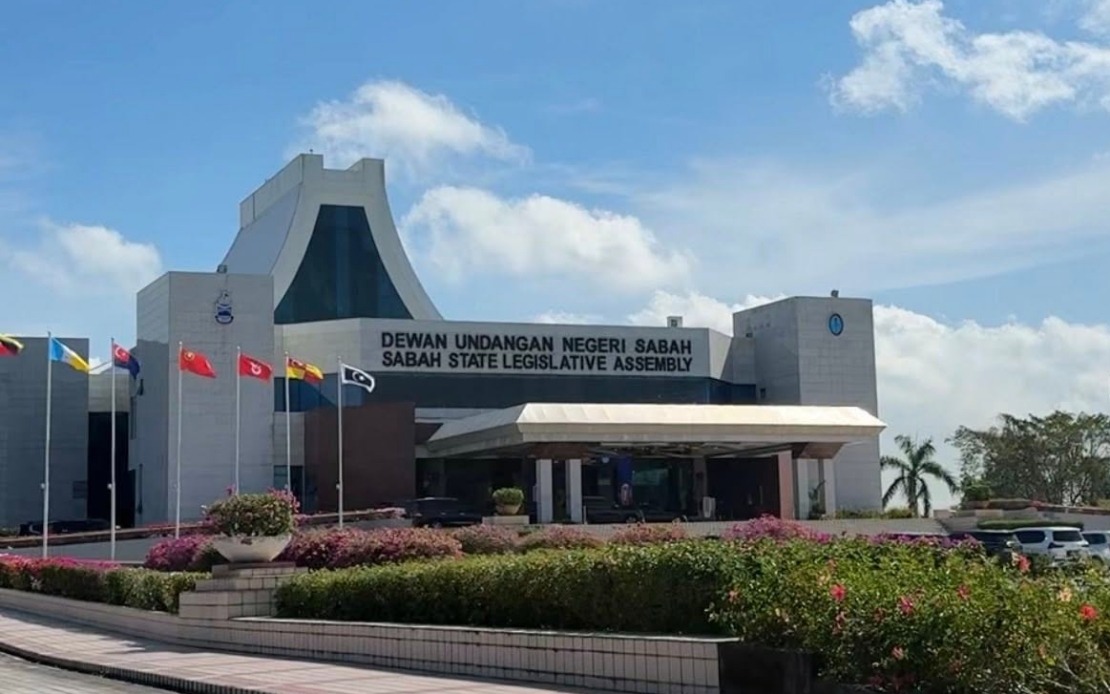
Datuk Seri Wilfred Madius Tangau, the assemblyman representing Tamparuli under the Gabungan Rakyat Sabah coalition, has initiated a push to fundamentally reshape how Sabah's Native Court is perceived within the Malaysian judicial hierarchy. Speaking during recent legislative proceedings focused on the Native Court Bill 2026, he highlighted a constitutional imbalance that has long constrained the authority and prestige of this customary legal institution. The core of his concern centres on a distinction that many observers in Sabah view as incongruous with the state's constitutional position within the federation.
Under the current legal framework, the Native Court operates in a diminished capacity, classified essentially as a tribunal rather than a court with full constitutional recognition. This distinction carries significant implications for how judgments are perceived and enforced, and importantly, how the institution itself is regarded by both the judiciary and the public it serves. In contrast, the Syariah Court enjoys explicit constitutional status and the accompanying judicial authority that flows from such recognition. Madius argues this disparity is fundamentally unfair given Sabah's unique history and the legal promises made at the federation's founding.
Crucially, Madius has been careful to frame his proposal in terms of institutional recognition rather than functional expansion. He has explicitly rejected any suggestion that elevating the Native Court's status would involve usurping the responsibilities or jurisdiction of either the Civil Court or the Syariah Court. Instead, his position reflects a conviction that Sabah's customary judicial mechanisms warrant constitutional acknowledgment commensurate with their cultural and social significance to the communities they serve. This measured approach seeks to address a legitimacy deficit without triggering concerns about institutional overlap or jurisdictional conflicts.
The constitutional grounding for this initiative derives substantially from the Malaysia Agreement 1963, the foundational document that brought Sabah into the federation. That agreement contained protections and recognition for Sabah's distinct constitutional position, including provisions regarding the preservation of indigenous institutions and practices. Madius contends that his proposal to grant the Native Court constitutional status aligns precisely with the spirit and intent of that original agreement, asserting that recognizing customary courts was fundamentally part of what the negotiators in 1963 envisioned for Sabah's place within Malaysia.
Beyond the constitutional and historical arguments, Madius articulated a philosophy of judicial legitimacy that challenges conventional metrics for measuring institutional success. He rejected the notion that the strength or importance of a court system should be gauged primarily through the volume of cases processed or the monetary value of disputes handled. Instead, he proposed that genuine judicial authority emerges from public confidence—a belief among the communities served that decisions are rendered fairly, with wisdom, and free from improper external influence. By this measure, a court that hears fewer cases but commands genuine respect may possess greater institutional authority than a busier tribunal that suffers from reputational deficits.
This philosophical stance carries particular resonance in Sabah's context, where customary law and indigenous justice mechanisms remain deeply embedded in community life, especially among the state's diverse native groups. When native populations perceive the Native Court as genuinely impartial and grounded in authentic customary principles, the institution gains legitimacy that formal codification alone cannot provide. Conversely, relegating such a court to subordinate constitutional status undermines both its legitimacy and the broader recognition of the indigenous legal traditions it represents.
The proposal also touches on broader questions of constitutional recognition and federalism within Malaysia. Sabah's position as a state that joined the federation with specific constitutional protections and arrangements differs significantly from the peninsular states. The Native Court Bill 2026 and accompanying constitutional amendment proposals represent an attempt to honour those distinctive constitutional arrangements. Other Malaysian stakeholders, particularly those in peninsular states, may view this development through the lens of competitive federalism or jealously guard their own institutional arrangements.
Implementing such an amendment would require careful navigation of Malaysia's constitutional amendment procedures, which demand substantial parliamentary support. Beyond the technical legal steps, the proposal would benefit from building consensus among Sabah's diverse communities and ensuring that indigenous groups themselves support formalizing the Native Court's status. Educational efforts explaining the distinction between constitutional recognition and functional expansion would likely prove essential to forestalling misunderstandings.
For Malaysian observers broadly, this initiative reflects ongoing tensions in how post-colonial constitutions balance centralized national frameworks with regional distinctiveness and indigenous recognition. Sabah's push to formalize its Native Court's status joins other contemporary movements across Southeast Asia examining how customary and state law can coexist within unitary or federal systems. The outcome in Sabah may influence how other regions approach similar questions of institutional recognition and constitutional justice.

