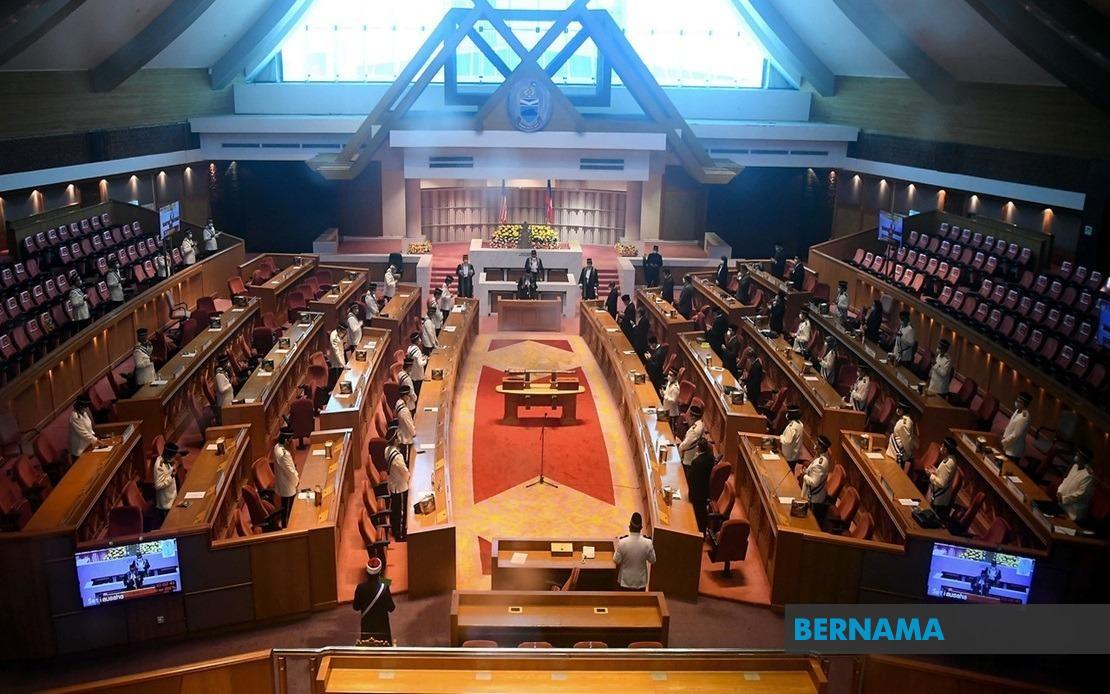
The Sabah State Legislative Assembly endorsed the Sabah Ports Authority (Amendment) Bill 2026 on July 22, marking an administrative refinement designed to harmonise governance structures with the state's overhauled cabinet portfolio system. Deputy Chief Minister III Datuk Ewon Benedick, who doubles as Minister of Industrial Development, Entrepreneurship and Transport, steered the legislation through parliament with support from six assemblymen during a substantive parliamentary debate chaired by Deputy Speaker Datuk Al Hambra Tun Juhar.
The amendment fundamentally restructures the legal framework governing Sabah's ports by updating the Sabah Ports Authority Enactment 1981, a statute that had remained largely unamended for over four decades. This legislative update responds to sweeping changes made to the state cabinet architecture that became effective on December 3, 2025. Such administrative reorganisations, while appearing technical on the surface, often signal broader strategic shifts in how state governments prioritise economic sectors and institutional accountability.
Prior to this restructuring, port-related functions and regulatory oversight resided within the Sabah Ministry of Public Works and Utilities, a traditional portfolio grouping that reflected earlier assumptions about infrastructure management. The cabinet reshuffle transferred these responsibilities to Ewon's ministry, recognising ports as critical economic development infrastructure rather than viewing them primarily through a public works lens. This repositioning reflects a growing emphasis across Malaysia on treating maritime commerce and port development as core components of industrial policy and entrepreneurial ecosystems.
The legislative language itself required careful amendment. The original 1981 enactment defined the relevant minister as the official responsible for communications and public works—language that had become obsolete following the portfolio transfer. The amendment updates this definitional framework to reflect current governance reality, ensuring that Section 2 of the enactment now correctly identifies the Minister of Industrial Development, Entrepreneurship and Transport as the authority with statutory responsibility for port affairs. This seemingly minor terminological shift carries significant implications for administrative accountability and decision-making authority.
Sabah's ports hold strategic importance for the state's economy and for broader East Malaysia logistics networks. The state manages several significant port facilities handling regional and international trade, particularly for resource extraction, agricultural exports, and container shipping. By elevating ports to prominence within an industrial development ministry rather than treating them as auxiliary to public works, the state government signals intentions to develop these facilities more aggressively as engines for economic growth and private sector engagement. The restructuring positions ports alongside entrepreneurship promotion and industrial policy, suggesting a more entrepreneurial and commercial orientation toward port management.
Crucially, Ewon clarified during the assembly debate that this amendment carries no new financial burdens for the state treasury. The restructuring remains essentially a reallocation of existing administrative functions and responsibilities rather than an expansion of government activity requiring additional budget allocations. This fiscal neutrality removes potential obstacles to legislative passage and reflects the amendment's nature as administrative tidying rather than a substantive policy innovation requiring new investment.
The legislation preserves the operational powers and institutional independence of the Sabah Ports Authority itself. The amendment does not alter the authority's policies, functions, or existing powers—it simply clarifies which minister exercises statutory oversight and retains the power to issue directives. This preservation of institutional continuity is important for port operators, shipping companies, and traders who depend on regulatory stability. By maintaining the authority's existing framework while only adjusting ministerial nomenclature, the state government minimises disruption to commercial operations.
A transitional provision embedded within the amendment ensures that all prior decisions, authorisations, and administrative actions taken by the former minister responsible for port affairs retain full legal validity. This safeguarding clause prevents any vacuum or dispute regarding the legitimacy of pre-amendment administrative acts. Such provisions are standard legislative practice when institutional responsibilities shift, but their inclusion here reflects careful attention to legal continuity and the practical realities of port operations, which often involve complex multi-year contracts and regulatory commitments made under the previous administrative structure.
The amendment reflects a pattern visible across Malaysian state governments and federal agencies: the use of legislative updates to formalise administrative reorganisations undertaken by the executive. Cabinet reshuffles frequently occur in response to political dynamics, leadership priorities, or strategic reorientation, but they create legal inconsistencies that must eventually be resolved through legislative amendment. The Sabah assembly's passage of this bill represents the necessary formal reconciliation between executive reorganisation and statutory framework.
For Malaysian business observers, particularly those engaged in shipping, logistics, or trade commerce, this amendment signals continuity and institutional confidence. The Sabah state government has demonstrated sufficient confidence in the restructured arrangement to formalise it legislatively, suggesting that the December 2025 cabinet reshuffle is not a temporary expedient but a durable reorientation of governance priorities. The elevation of ports to equal standing with industrial development and entrepreneurship messaging indicates that Sabah intends sustained focus on maritime commerce as a development lever.
The legislative process itself—involving substantive debate among six assemblymen—indicates that opposition voices or policy concerns were heard, even if ultimately the bill proceeded to passage without significant amendment. This parliamentary engagement, however limited, suggests the assembly functioned as a deliberative body rather than a mere rubber stamp, an important indicator for those monitoring governance quality within Malaysia's state parliaments.
Looking forward, this amendment establishes the legal foundation for the Ewon-led ministry to develop and implement port policy under its new administrative authority. The restructuring may eventually lead to strategic initiatives around port modernisation, capacity expansion, or commercial development strategies, as the ministry now owns direct accountability for port performance. Malaysian state governments increasingly compete to attract private investment and develop competitive advantages; Sabah's reorganisation positions ports as a central element of that competitive strategy, with clear ministerial ownership and accountability for results.

