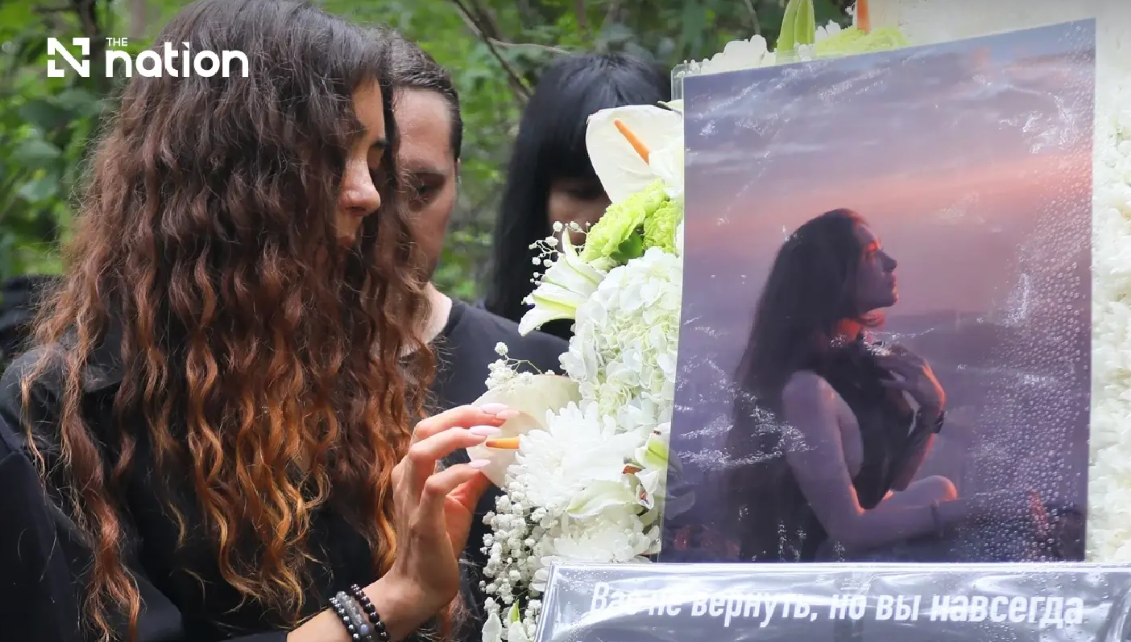
In a solemn ceremony at the location where two Russian siblings met their deaths, their grieving mother Sharina Nazimova gathered with mourners in Chon Buri province on Thursday to honour Diana and Roman alongside three members of a Thai family believed to have fallen victim to the same perpetrators. The Buddhist memorial service, held in Huai Yai subdistrict of Bang Lamung district, drew Thai and international mourners alongside provincial officials, law enforcement personnel and public servants who paid their respects to the five deceased.
The ceremony reflected the spiritual traditions of the siblings' faith, with Buddhist monks chanting sacred verses and performing ritual rites intended to transfer merit to those who had died. Mourners stood in solemn silence, pressed their palms together in prayer, and laid white flowers—carnations, lilies and roses—at the memorial site as symbols of purity, reverence and peaceful passage. Among the tributes was a personal touch that underscored the intimate nature of loss: a cup of coffee, Diana's preferred beverage, placed by family members as a tangible reminder of everyday moments shared with her.
Nazimova, who had raised both siblings alone, visibly struggled with emotion throughout the proceedings. Supported by relatives, friends and fellow mourners, she expressed profound gratitude towards the Thai people, government agencies, police officers and volunteer organisations whose assistance and encouragement had sustained her family through an unbearable period of grief and uncertainty. Her remarks recognised the compassion shown by Thai citizens and institutions during a time when her family's tragedy dominated news coverage across the region.
The memorial marked a pivotal moment in what has become a significant criminal case with international dimensions. The circumstances surrounding the siblings' deaths appear to have escalated from what authorities characterise as a straightforward robbery attempt. According to police investigations, Diana and Roman encountered two men beside a roadside who falsely identified themselves as law enforcement officials. The suspects allegedly restrained the siblings and transported them to a wooded area, with investigators suggesting the motive centred on stealing the pair's motorcycle—a seemingly modest target that ended in tragedy.
Police arrested Thana "Pong" Kerdthong, aged 43, and Thongchai "Thong" Srinil, aged 39, on July 31 following an intensive manhunt that concluded in Wang Sombun district of Sa Kaeo province. The apprehension of these two primary suspects represented a crucial breakthrough in an investigation that had drawn considerable public attention and concern from both Thai authorities and international observers tracking the case.
The investigative process has revealed troubling inconsistencies in the suspects' accounts of events. Following their arrest, the pair guided investigators to burial sites containing the remains of the Russian siblings. The expanded investigation subsequently uncovered the graves of a Thai family of three in close proximity, suggesting a possible pattern of criminal activity. Police indicated that the suspects' statements contain significant discrepancies and have not been fully accepted by investigators, who are carefully cross-referencing their accounts against forensic evidence and other investigative materials.
The case has raised questions about security and criminal activity in popular tourist areas of Thailand, where foreign visitors encounter a complex landscape of opportunities and risks. The apparent ease with which the suspects allegedly impersonated police officers highlights vulnerabilities in roadside safety and the potential for predatory criminals to exploit the trust that visitors place in authority figures. The targeting of foreign nationals for robbery, particularly in circumstances that escalated to multiple murders, underscores ongoing challenges that Thailand faces in protecting its international visitors while managing crime in outlying districts.
For Malaysian and Southeast Asian travellers, the incident serves as a sobering reminder of the importance of vigilance and awareness in unfamiliar environments. The case demonstrates that even routine interactions with individuals claiming official authority warrant caution, and travellers should verify credentials through official channels rather than relying on appearance or verbal assertions. The regional implications extend beyond individual tourist safety to broader questions about cross-border cooperation in criminal investigations and the coordination required to pursue suspects across provincial boundaries.
The Buddhist memorial ceremony reflected not only the family's religious traditions but also their integration within Thai society and the broader acknowledgement that grief transcends national boundaries. The presence of Thai mourners alongside international attendees underscored the human dimension of the tragedy and collective recognition that the loss of life—whether foreign visitors or local residents—constitutes a shared sorrow affecting entire communities.
As the judicial process advances, those who gathered at the memorial expressed determination that justice be pursued thoroughly and equitably against those ultimately found responsible. The case represents a significant test of Thailand's investigative capabilities and commitment to accountability, with implications for how the kingdom addresses serious crimes involving both foreign nationals and local residents. The investigation continues as forensic evidence is analysed and prosecutors prepare their case against the detained suspects, with outcomes that may influence Thailand's reputation as a destination and its effectiveness in addressing violent crime.

