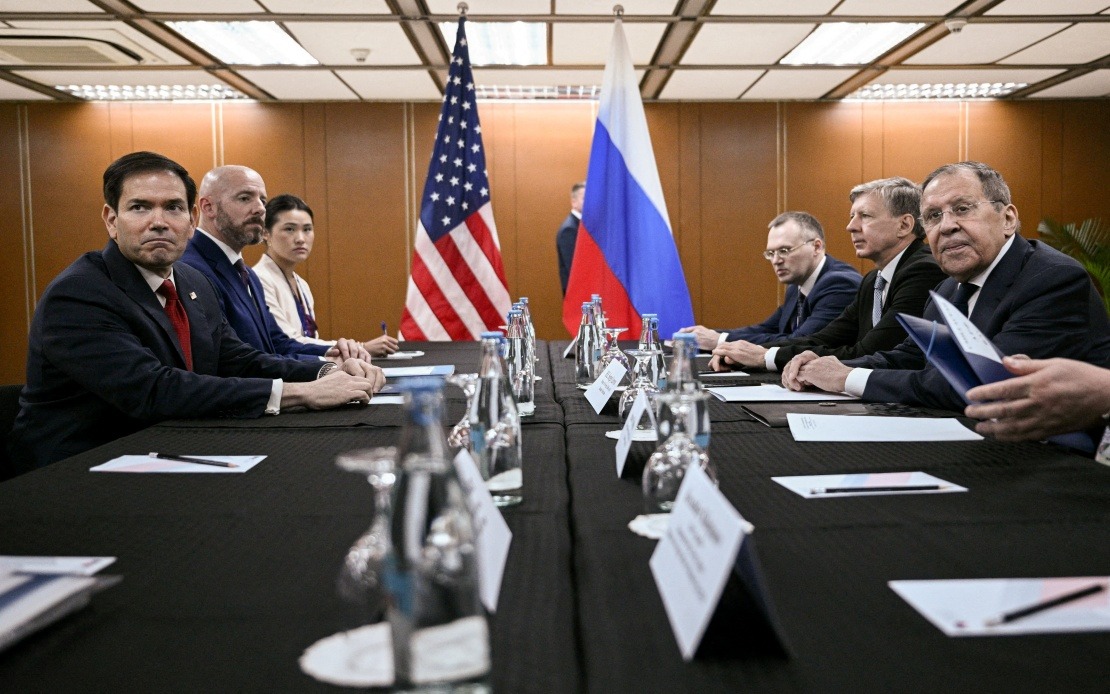
Russian Foreign Minister Sergey Lavrov and United States Secretary of State Marco Rubio have reached an accord to sustain official communications between their respective foreign ministries, with particular emphasis on coordinating through multilateral international bodies. The understanding emerged following their encounter in Manila, marking a significant development in maintaining dialogue between Moscow and Washington despite broader geopolitical tensions that have strained bilateral relations in recent years.
According to a statement released by Russia's Foreign Ministry, the two top diplomats specifically acknowledged the importance of preserving channels of communication within the institutional frameworks of global organisations where both nations maintain membership. This approach reflects a pragmatic recognition that even amid complex political circumstances, maintaining basic diplomatic infrastructure through established international venues remains essential for managing potential misunderstandings and pursuing shared interests where they align.
Beyond the commitment to ongoing ministerial contact, Lavrov and Rubio devoted attention to addressing practical obstacles affecting the operational capacity of diplomatic missions. Specifically, they examined issues surrounding the normalisation of working conditions at Russian and American embassies, reflecting longstanding concerns about impediments to normal diplomatic functioning. These obstacles have accumulated over years of deteriorating bilateral relations, creating logistical and administrative complications that complicate routine diplomatic operations and, by extension, the ability of both nations to conduct official business effectively.
A particularly noteworthy dimension of their discussion involved space cooperation. The two officials welcomed the restoration of comprehensive engagement between Roscosmos, Russia's state space corporation, and NASA, the American space agency. This resumption of full operational collaboration represents a meaningful gesture toward compartmentalising scientific and technical cooperation from the broader landscape of geopolitical disagreements, acknowledging that space exploration and research offer domains where collaboration can proceed despite political divergence elsewhere.
The rekindling of Roscosmos-NASA cooperation holds substantial implications for the broader international space community, especially for Southeast Asian nations with emerging space capabilities and interests in accessing satellite technology and launch services. The resumption suggests that practical, results-oriented partnerships in technical fields can withstand political strain, a principle with relevance for regional powers seeking to diversify their international partnerships while maintaining strategic autonomy.
In addition to space collaboration, Lavrov and Rubio underscored their commitment to expanding people-to-people contact through parliamentary exchanges. These interparliamentary initiatives serve as alternative channels for dialogue, enabling legislators and officials from both countries to maintain communication and understanding beyond the formal diplomatic apparatus. Such exchanges historically have facilitated relationship-building and informal problem-solving that sometimes proves more flexible than high-level state negotiations.
The emphasis on cultural ties further reflects recognition that soft power and cultural exchange constitute important dimensions of bilateral relations. Despite political tensions, maintaining vibrant cultural interaction—through academic partnerships, artistic collaborations, and educational opportunities—helps preserve underlying human connections and mutual understanding that prove resilient across political cycles and diplomatic crises.
For Malaysia and Southeast Asia, the agreement to maintain Russian-American diplomatic channels carries indirect but meaningful implications. Regional stability partly depends on the major powers managing their competition through institutional mechanisms rather than allowing disputes to spiral into confrontation. The signal that Russia and the United States are deliberately preserving communication pathways, including through multilateral forums where ASEAN nations participate, suggests a commitment to rules-based international engagement that benefits smaller nations with limited influence over superpower relations.
The Manila setting for this high-level encounter also merits attention, as it underscores the continuing centrality of Asia-Pacific forums for addressing global diplomatic challenges. The Association of Southeast Asian Nations and its various mechanisms have increasingly become venues where major powers manage their relations and address transnational issues, reflecting the region's growing geopolitical weight and the acknowledgment that Asian locations now host critical conversations shaping international order.
The agreement's focus on continuing dialogue within international organisation frameworks rather than pursuing bilateral normalization suggests realistic expectations about what is achievable in near-term Russian-American relations. Rather than attempting comprehensive rapprochement, both sides appear focused on maintaining functional coexistence and preventing escalation through institutional channels that provide structure and precedent for engagement.
Moving forward, whether these commitments translate into substantive improvements in Russian-American relations or represent largely symbolic gestures aimed at preventing further deterioration remains uncertain. However, the very decision to articulate such agreements publicly signals that both capitals recognise the costs of complete breakdown and the benefits of preserving at least minimal operational frameworks for managing inevitable differences and, where possible, pursuing cooperation on narrowly defined shared concerns.

