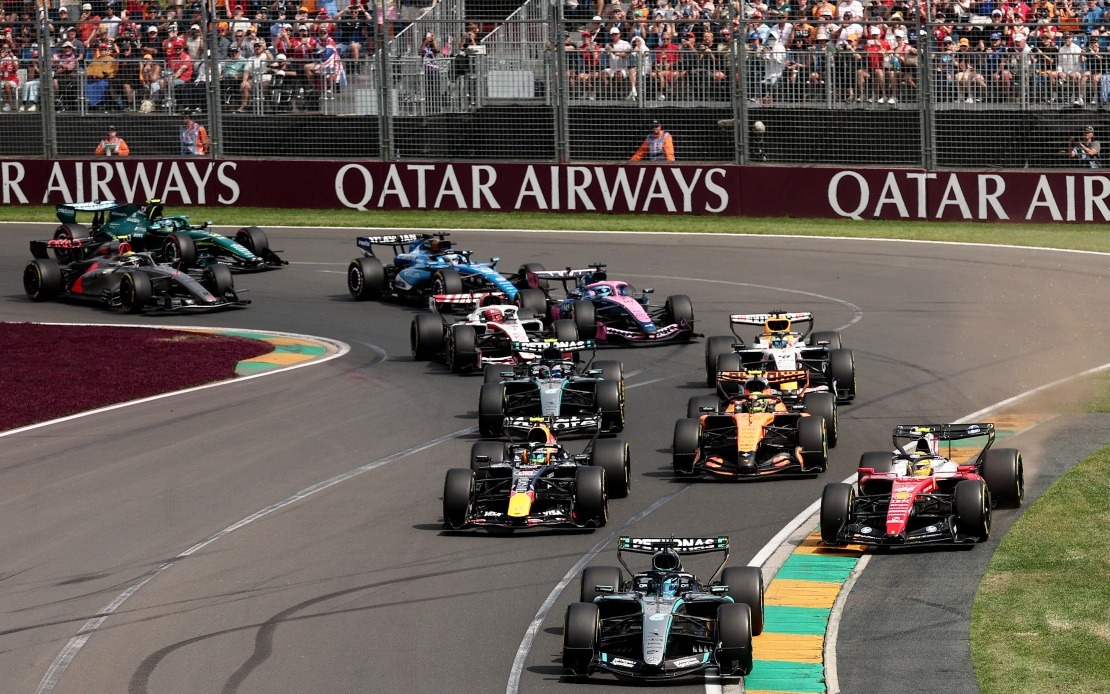
George Russell's already troubled championship campaign took another damaging turn at the Belgian Grand Prix, as a power unit failure contributed to his retirement from the race and sparked a heated radio transmission that laid bare his mounting frustration with Mercedes. The British driver's race ended following a collision with teammate Lewis Hamilton, but the underlying issue stemmed from a deployment problem that had compromised his qualifying position and ultimately his competitiveness throughout the Spa-Francorchamps weekend.
With only ten rounds completed so far, Russell now finds himself trailing teammate Kimi Antonelli by a substantial 50 points in the driver's championship standings. The Italian teenager's commanding form has been on full display, evidenced by his sixth victory of the season, which underscores the performance gap that has developed between the two Mercedes drivers. For Russell, the contrast is particularly acute given his reputation as one of Formula 1's most technically gifted drivers and his previous success with the Silver Arrows marque.
The technical gremlins that plagued Russell throughout the Spa weekend proved telling. A first-lap engine irregularity exposed him to pursuing rivals, setting off a cascade of problems that ultimately culminated in his collision with Hamilton. What made the situation more frustrating was the mysterious nature of the power unit deployment issue, which initially left both Russell and his engineering team baffled. The problem manifested itself most acutely on the straights, where energy management is crucial to lap time.
In an unbroadcast radio exchange following his retirement, Russell's frustration boiled over into an expletive-laden tirade directed at his team. The driver questioned what had transpired with the state of battery charge management during the race, emphasizing that he had been left without sufficient electrical power precisely when it mattered most on the straights. His comments revealed not merely disappointment at a single mechanical failure, but a cumulative exhaustion born from a season punctuated by reliability problems.
Qualifying had already suggested the magnitude of the technical challenge Russell faced. He lined up half a second behind Antonelli, a gap that Mercedes initially theorized resulted from his driving approach or setup preferences. However, as engineers delved deeper into the telemetry and data, this explanation quickly unravelled. The problem, they discovered, was definitively mechanical rather than driver-related, a revelation that brought its own frustration even as it exonerated Russell's performance.
Russell articulated his determination to overcome the setback, expressing optimism that the Mercedes technical team would identify and resolve the deployment issue before the next round in Hungary—the final event before the mid-season break. His comments also conveyed a sense of emotional exhaustion, describing himself as having grown "numb to disappointment" following the relentless string of mechanical setbacks that have characterized his 2024 campaign. For a driver of his caliber, such resignation represents a significant psychological toll.
Toto Wolff, Mercedes' team principal, responded with measured understanding while simultaneously projecting confidence in the team's ability to recover. He acknowledged that emotional reactions from drivers facing such circumstances are entirely natural and indeed expected at the elite level of motorsport. Wolff's comments suggested a deliberate effort to provide perspective, reminding Russell that virtually all drivers of the highest caliber experience difficult periods and that the path forward requires sustained motivation and team unity.
Wolff's subsequent technical explanation shed light on the precise nature of the power unit problem. He emphasized that modern Formula 1 power units represent extraordinarily complex systems where energy harvesting and deployment involve intricate interactions between multiple systems and driver inputs. The new regulations, while producing a competitive package that Mercedes considers strong overall, have introduced reliability challenges that the team is actively working to resolve. Such technical teething problems, Wolff suggested, occasionally accompany regulatory change.
The specific malfunction affecting Russell involved an energy deficit at the critical turn 18 position, where drivers typically rely on electric boost to maintain competitive pace through and out of the corner. Wolff noted with some irony that the identification of this particular problem at Spa, an energy-demanding circuit, provided a silver lining—had the issue persisted undetected to Budapest, a circuit less reliant on energy deployment, diagnosis would have proven considerably more difficult. Nevertheless, as Wolff candidly acknowledged, identifying a problem offers little solace to a driver losing substantial championship points and morale.
Wolff's estimate that the power unit issue accounted for approximately half of the qualifying deficit between Russell and Antonelli indicates the magnitude of the technical handicap the British driver has been operating under. This disclosure raises questions about what Russell's true performance level might be were he operating with the same technical reliability as his teammate. For Malaysian and Southeast Asian motorsport fans, the situation highlights how unforgiving Formula 1's technical complexity can be, and how equipment failures can derail even championship-capable drivers.
The broader implications for Mercedes are significant. The team faces a credibility challenge in restoring confidence to a driver who has already endured numerous setbacks. Russell's emotional response, while perhaps unguarded, reflects legitimate frustration with a situation largely beyond his control. The team principal's supportive public comments suggest Mercedes recognizes the need to rebuild Russell's morale alongside fixing the mechanical issues.
With Hungary approaching as the final round before the summer break, Mercedes faces a compressed timeframe to diagnose and rectify the power unit deployment problem. The test of the team's competence and commitment will come not through sympathetic words, but through whether Russell arrives in Budapest with a fully functioning power unit. His comment about "praying" for a solution captures the reality that, despite the team's assurances, the path forward remains uncertain.
The situation also underscores the volatility that technical issues introduce into championship battles. Antonelli's 50-point lead, while substantial, exists partly due to circumstances beyond pure driving performance. As the season progresses and Mercedes hopefully resolves its reliability woes, the championship picture could shift dramatically. For now, Russell must channel his evident frustration into remaining mentally prepared for what comes next, knowing that driver capability alone cannot overcome mechanical deficiency.

