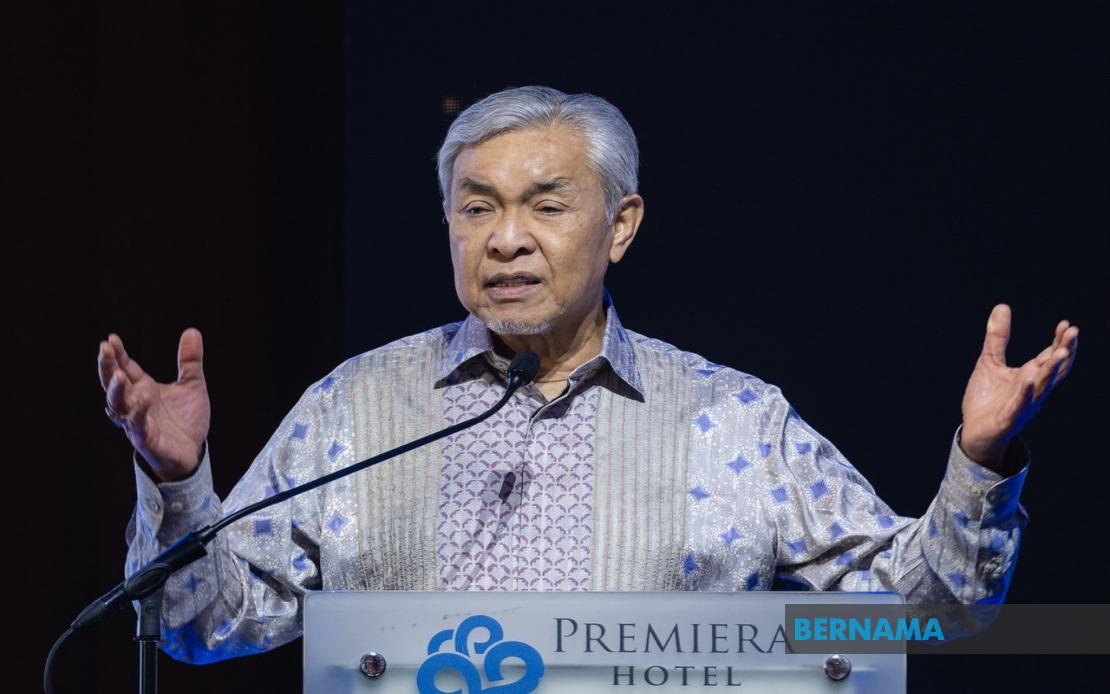
Deputy Prime Minister Datuk Seri Dr Ahmad Zahid Hamidi has signalled that requests for new rural road infrastructure across Sabah and Sarawak will receive consideration during the 2027 budget planning cycle. Speaking after attending the Ministry of Rural and Regional Development's (KKDW) annual awards ceremony in Kuala Lumpur, Ahmad Zahid, who doubles as Minister of Rural and Regional Development, underscored his commitment to improving last-mile connectivity in both East Malaysian states where communities remain isolated from major commercial and administrative hubs.
The deputy premier's pronouncement reflects a strategic pivot within the ministry's operations. Rural road development, Ahmad Zahid emphasized, remains squarely within KKDW's mandate, with the overarching goal of bridging the physical and economic divide between remote settlements and established urban centres. This framing positions road infrastructure not merely as a civil engineering undertaking but as a foundational element for rural prosperity and inclusive development. For regions in Sabah and Sarawak where geography and terrain pose formidable obstacles, such connectivity initiatives carry particular weight in unlocking economic potential and improving quality of life.
However, Ahmad Zahid qualified his commitment by noting that the actual execution of any approved projects will hinge upon compliance with established frameworks administered by the Ministry of Finance and the Public Works Department (JKR). This stipulation underscores the bureaucratic gatekeeping mechanisms that remain integral to major infrastructure allocation in Malaysia. The implication is that while KKDW may champion proposals, final budgetary endorsement and implementation timelines will follow conventional procedures, potentially extending timescales for beneficiary communities awaiting infrastructure improvement.
The ministry has initiated a detailed consultation process with relevant stakeholders to flesh out specific road construction proposals. This phased approach suggests that Ahmad Zahid's remarks should be interpreted as opening a window for submissions rather than guaranteeing immediate funding commitments. Communities and state governments in Sabah and Sarawak are being invited to formally articulate their infrastructure needs within parameters that align with KKDW's development philosophy and financial realities.
Beyond the immediate announcement, Ahmad Zahid articulated a broader operational philosophy for KKDW that extends well beyond bricks-and-mortar development. He called for a "new discipline" within the ministry, explicitly directing staff to jettison programmes that fail to generate tangible community impact. This represents a departure from maintenance-mode governance toward performance-driven allocation. Under this rubric, initiatives demonstrating measurable results warrant expansion, lagging projects require acceleration or remediation, and underperforming interventions face discontinuation. Such rhetoric, while procedurally sound, reflects a governance environment where accountability and demonstrable outcomes increasingly shape resource distribution.
Crucially, Ahmad Zahid reframed rural development as transcending infrastructure provision alone. Contemporary rural policy, he contended, must catalyse ecosystem creation—specifically generating income streams and employment pathways for agricultural and non-agricultural sectors. This signals recognition that roads without corresponding economic opportunities represent incomplete interventions. The implicit challenge is ensuring that improved connectivity to Sabah and Sarawak's interior translates into functional markets, viable livelihoods, and institutional support systems for rural producers and entrepreneurs.
The deputy premier further connected infrastructure advancement to broader public sector transformation. Reform, Ahmad Zahid argued, encompasses more than digitising processes or transitioning from manual administration to technological systems. Instead, sustainable change demands psychological and institutional reorientation—institutional cultures predicated on decisive leadership, adaptability, and willingness to depart from established practice. For a ministry operationalizing rural development across Malaysia's geographically diverse landscape, this mindset shift proves essential to responsiveness and contextual appropriateness.
Ahmad Zahid's exhortations to KKDW personnel extended to professional development and ethical comportment. Staff were urged to embrace continuous learning, pursue innovative methodologies, and embed integrity and accountability into operational protocols. These directives, while seemingly self-evident, reflect organisational challenges within the ministry that presumably prompted their reiteration at a formal public function. The emphasis on personal and institutional virtue suggests concern that bureaucratic momentum or complacency had compromised service delivery standards.
For Sabah and Sarawak, Ahmad Zahid's pronouncements carry regional significance. Both states remain underserved in terms of rural infrastructure relative to peninsular counterparts, a disparity traceable to historical investment patterns and the logistical complexities of East Malaysian terrain. The 2027 budget cycle presents a window wherein community and state advocacy could yield tangible resource allocation. However, the provisional nature of Ahmad Zahid's commitment—contingent upon consultation completion and Finance Ministry approval—cautions against premature optimism. Road projects in remote areas typically encounter implementation delays stemming from procurement complexities, supply chain vulnerabilities, and weather-related disruptions.
The pathway Ahmad Zahid outlined involves sequential steps: submissions of road construction proposals, completion of consultations with affected communities and state authorities, integration into Budget 2027 planning assumptions, Finance Ministry and JKR review and approval, and ultimately, project implementation subject to standard public procurement regulations. Each juncture presents opportunities for project advancement or deferment. Communities and local governments in Sabah and Sarawak must therefore view Ahmad Zahid's remarks as an invitation to participate in structured advocacy processes rather than assurance of imminent infrastructure investment.
Contextually, Ahmad Zahid's emphasis on disciplined evaluation aligns with broader government emphasis on expenditure efficiency and outcomes-based budgeting. In an environment where fiscal constraints and competing demands shape allocative choices, rural road projects must demonstrate compelling justifications—population served, economic catalytic potential, or gap-filling necessity—to command budgetary prioritization. The rural development minister has signalled readiness to champion deserving proposals while simultaneously acknowledging that bureaucratic and financial guardrails necessarily circumscribe ministry latitude.
Looking forward, communities in Sabah and Sarawak confronting connectivity challenges should initiate formal engagement with KKDW to articulate infrastructure needs, supported by demographic and economic data substantiating development rationales. State governments, similarly, possess leverage to coordinate submissions and advocate for prioritization within their respective territories. The 2027 budget cycle represents a bounded temporal opportunity; whether individual road projects ultimately secure funding will hinge on advocacy effectiveness, proposal quality, and competitive positioning within KKDW's portfolio of pending initiatives.

