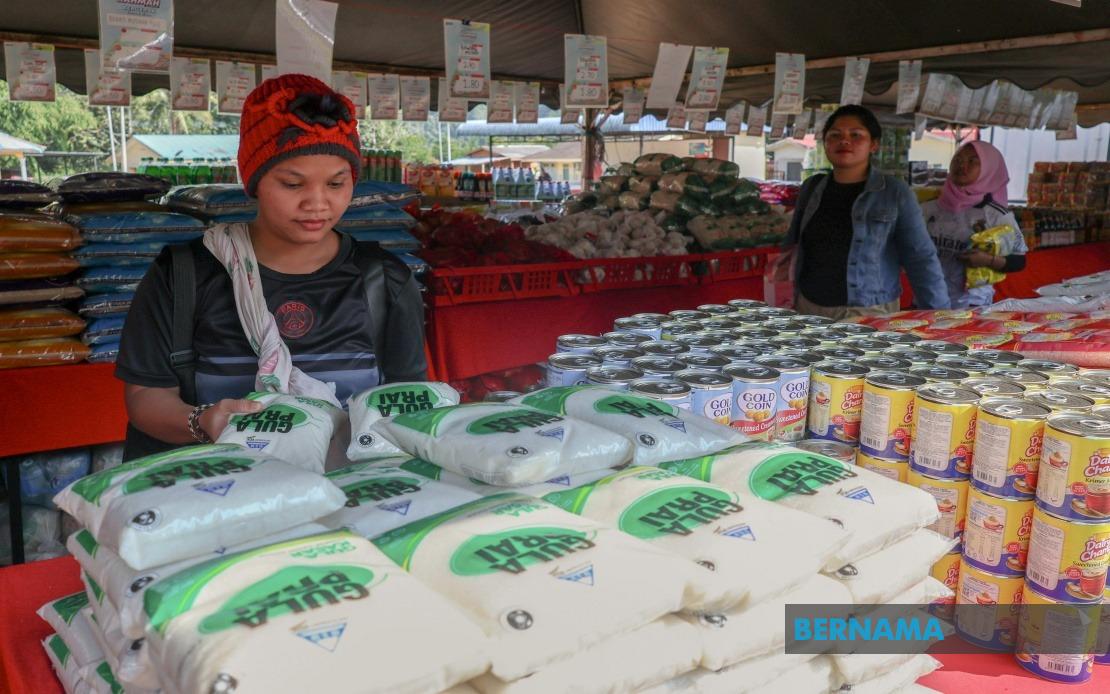
The Domestic Trade and Cost of Living Ministry (KPDN) reports that its Essential Goods Distribution Programme is delivering tangible benefits to Malaysia's rural population by closing price gaps that have historically burdened remote communities. The scheme targets seven essential commodities—sugar, wheat flour, packet cooking oil, white rice, liquefied petroleum gas, RON95 petrol and diesel—bringing them into line with controlled pricing mechanisms that operate in urban centres.
Before the programme's rollout, residents in isolated regions faced a double burden: unavoidable price premiums imposed by logistics costs and limited competition, combined with fewer consumer protection mechanisms. The disparity proved particularly acute for items like LPG, a basic household fuel. In Pulau Libaran in Sabah, cylinders previously commanded RM39 before the intervention brought them down to the controlled price of RM26.60 per unit—a reduction exceeding one-third. Cooking oil demonstrated similar trends, dropping from RM3.50 per packet to the standard controlled price of RM2.50, a 28 per cent decrease that compounds significantly over a household's annual consumption.
The 2024 initiative operates on a RM250 million budget directed toward 1.03 million beneficiaries spread across Sabah, Sarawak, Terengganu, Kelantan, Pahang and Kedah. This represents a strategic concentration on Malaysia's most geographically challenging states, where terrain and infrastructure constraints most severely inflate distribution costs. The programme's reach extends through 212 distribution zones, 828 distinct distribution areas, and 1,532 retail points-of-sale, creating a network designed to minimise the final-mile logistics burden that typically generates rural price premiums.
Sabah, the most resource-intensive target area, receives RM107.3 million in annual allocation, covering 78 zones and 587 retail outlets that serve nearly half a million residents. Within Sabah, the Libaran constituency—the area cited in parliamentary questioning—operates with a dedicated RM1.76 million allocation supporting nine points-of-sale serving 17,061 people across eight distribution areas. This granular allocation suggests the ministry recognises that effective rural outreach requires decentralised operational structures rather than centralised distribution hubs.
Implementation challenges in sprawling regions demand robust oversight mechanisms. KPDN has established standardised operating procedures governing delivery schedules and product handling, recognising that transparency and consistency form the foundation of public trust in price-control schemes. The ministry operates Programme Monitoring and Coordination Committees at both ministerial and state levels, creating accountability layers that theoretically prevent diversion, hoarding, or black-market activity. Such administrative architecture becomes essential in remote areas where conventional market mechanisms provide weaker self-regulation.
The programme's social legitimacy rests partly on demonstrated public acceptance. An official Programme Outcome Evaluation Committee found that surveyed beneficiaries reported the initiative directly alleviated cost-of-living pressures and expressed strong preference for its continuation. This bottom-up validation carries particular weight in policy contexts where government price interventions sometimes trigger criticism regarding market distortion. When rural constituencies themselves affirm programme effectiveness, political sustainability increases considerably.
For Malaysian policymakers, the scheme illustrates how targeted intervention can address genuine market failures in geographically dispersed populations. Rural communities in Southeast Asia typically face a structural disadvantage: the per-unit logistics cost of serving dispersed customers inherently exceeds costs in dense urban areas, yet purchasing power in rural regions remains lower. Without intervention, this dynamic produces regressive price structures where poorest households pay highest prices. The Essential Goods Distribution Programme directly confronts this inequality.
The programme's focus on essential items rather than attempting comprehensive price controls reflects pragmatic policy design. By concentrating resources on non-discretionary goods—fuel, cooking oil, staple carbohydrates—the ministry maximises welfare impact relative to budget expenditure. These categories form the foundation of household expenditure among low-income populations and represent items where price elasticity of demand remains low, meaning cost reductions translate directly into improved living standards rather than substitution effects.
Longer-term sustainability requires attention to underlying structural factors. While the programme effectively redistributes subsidy benefits to rural populations, it does not fundamentally alter the geographic cost structure that generates rural price premiums. As fuel prices fluctuate globally and logistics costs evolve, maintaining alignment between urban and rural pricing requires continuous administrative adjustment. The programme's durability ultimately depends on political commitment to fund it despite competing budgetary pressures and evolving economic circumstances.
For Southeast Asian observers, Malaysia's experience offers instructive lessons regarding price control administration in geographically fragmented markets. The combination of modest budget allocation (RM250 million annually), careful geographic targeting, and transparent monitoring structures provides a template that neighbouring countries might adapt to their own circumstances. The emphasis on evaluation and beneficiary feedback similarly suggests sophisticated understanding that programme legitimacy flows from demonstrated effectiveness rather than bureaucratic assertion.
The programme addresses a distinctly Malaysian challenge: ensuring that economic development and cost-of-living improvements reach populations that geography renders difficult to serve through ordinary market mechanisms. By explicitly acknowledging rural disadvantage and deploying proportionate resources to address it, the scheme represents redistributive policy operating through controlled-item pricing rather than direct transfers. This approach maintains market mechanisms for other goods while protecting vulnerable populations from geographic price discrimination on essentials.

