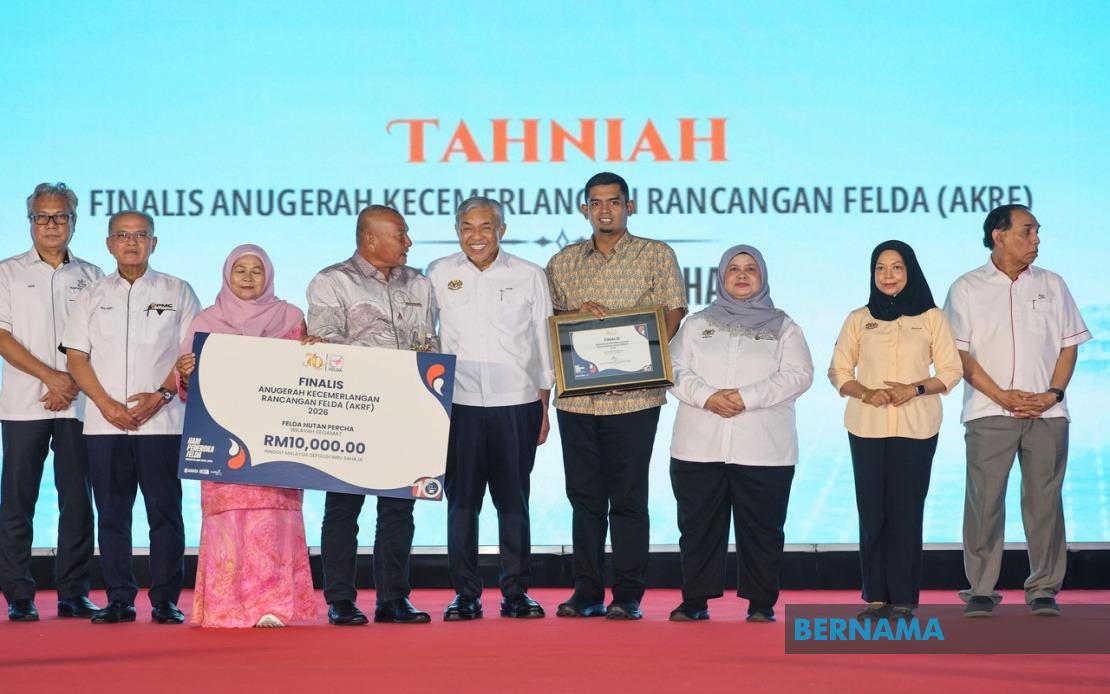
Deputy Prime Minister Datuk Seri Dr Ahmad Zahid Hamidi has signalled a fundamental shift in Malaysia's approach to rural development, arguing that policymakers can no longer confine their vision to national boundaries. Speaking at the World Rural Development Day 2026 celebration in Maran, Ahmad Zahid, who also holds the portfolio of Rural and Regional Development Minister, stressed that the country's rural entrepreneurs possess untapped potential to compete on the regional and global stage. His remarks represent a departure from traditional rural policy frameworks that have historically emphasised infrastructure and domestic market integration, instead positioning rural development as an international economic endeavour.
The Deputy Prime Minister's call for transnational thinking reflects a pragmatic recognition of the constraints inherent in a domestic-only approach. With Malaysia's rural population numbering in the millions and many communities producing goods with distinctive characteristics, limiting these products to local distribution channels represents a significant missed opportunity. Ahmad Zahid pointed specifically to two major market expansions worthy of rural entrepreneurs' attention: the ASEAN economic zone and the burgeoning global halal industry. Both sectors offer considerable scope for Malaysian rural products, particularly in agribusiness, handicrafts, and value-added food production. By positioning rural entrepreneurs within these broader commercial ecosystems, the government aims to unlock revenue streams and employment opportunities that would otherwise remain inaccessible to communities traditionally operating at subsistence or small-scale commercial levels.
Understanding the scale of transformation already underway proves crucial for contextualising Ahmad Zahid's vision. Over the past three years, the Rural and Regional Development Ministry has introduced flagship initiatives including RisSMart and IkonDesa, both specifically designed to facilitate market access for rural enterprises. These programmes have yielded quantifiable results: more than 7,000 new rural entrepreneurs have entered the formal economy, generating 15,000 employment opportunities and producing cumulative sales exceeding RM1.77 billion. These figures demonstrate that when rural communities receive targeted support for market integration, their capacity to generate economic value extends far beyond their local geography. The trajectory suggests that scaling these efforts to encompass regional and international markets could multiply these outcomes substantially.
The human capital dimension of rural development featured prominently in Ahmad Zahid's remarks, underscoring the recognition that infrastructure and market access alone prove insufficient without accompanying investment in skills and education. Notably, nearly 500 Orang Asli students gained university admission in recent years, representing the highest ever intake from this demographic group. This expansion of educational opportunities addresses a long-standing equity gap within rural Malaysia and represents a significant investment in developing the intellectual capital necessary for rural communities to navigate increasingly sophisticated economic landscapes. When combined with entrepreneurship training and market access initiatives, education creates a comprehensive ecosystem enabling rural residents to participate meaningfully in knowledge-intensive industries rather than remaining confined to primary production.
Infrastructure investment during the 12th Malaysia Plan has laid important physical foundations enabling this expanded economic vision. The upgrade of nearly 5,000 kilometres of rural roads addresses one of the most fundamental constraints on rural economic activity: connectivity. Poor road infrastructure increases transport costs, limits market access, and impedes the movement of goods and people. Simultaneously, electricity extension to over 7,000 homes and clean water provision to more than 10,000 households address basic development deficits that constrain both human wellbeing and productive economic activity. Approximately 10,000 homes constructed or renovated, benefiting nearly 40,000 residents, signal an emphasis on living standards improvement alongside economic growth. Together, these investments create the enabling environment necessary for rural entrepreneurs to focus on business expansion rather than struggling with fundamental infrastructure inadequacies.
The National Rural Economy Agenda, which Ahmad Zahid identified as the overarching blueprint for the next development phase, represents an institutional commitment to mainstreaming the international perspective he articulated. Rather than treating rural development as a peripheral concern addressed through periodic infrastructure spending or poverty alleviation programmes, formalising a comprehensive agenda signals that rural prosperity forms a strategic national priority. This institutional embedding increases the likelihood that resources will flow consistently to rural development initiatives and that coordination across multiple ministries and agencies will be enhanced. For Malaysian rural communities and entrepreneurs, this represents a significant shift from ad-hoc support to systematic, long-term engagement with the formal economy.
The global context for this initiative takes particular significance given that World Rural Development Day was proclaimed by the United Nations General Assembly just in September 2024, with July 6 designated as the annual observance date. Malaysia's official participation from 2026 onwards positions the country alongside other member states in recognising rural development's role in national prosperity and international development. The timing of Ahmad Zahid's remarks, delivered during Malaysia's first World Rural Development Day celebration following the UN's proclamation, demonstrates the government's commitment to engaging with this newly established international framework. This positioning suggests that Malaysian rural development policy will increasingly interface with global best practice, funding mechanisms, and collaborative initiatives.
For Southeast Asian observers, Ahmad Zahid's emphasis on ASEAN market integration carries particular relevance. The region comprises over 600 million people with rapidly growing middle classes and increasing consumer spending on food products, handicrafts, and artisanal goods. Malaysian rural entrepreneurs possess geographical proximity, cultural connections, and existing trade frameworks facilitating market entry within ASEAN. However, competing with rural producers across Thailand, Vietnam, and Indonesia requires not merely quality products but also branding, certification, digital marketing capabilities, and supply chain management expertise. This reality underpins the strategic importance of initiatives like RisSMart and IkonDesa, which must evolve to prepare rural entrepreneurs for regional competition.
The halal economy angle represents a distinctive competitive advantage for Malaysia. As a predominantly Muslim nation with well-established halal certification infrastructure and a reputation for rigorous halal standards, Malaysia-based rural producers enjoy credibility within global Muslim-majority markets spanning the Middle East, North Africa, and parts of Asia. The worldwide halal food market reportedly exceeds USD 1 trillion, with growth trajectories outpacing conventional food sectors. Rural entrepreneurs equipped with proper halal certification, quality management systems, and market knowledge can access this vast consumer base. However, realising this potential requires moving beyond informal production methods to adopt food safety standards, traceability systems, and regulatory compliance mechanisms that international trade demands.
Challenges accompanying this expansion agenda warrant acknowledgement even as Ahmad Zahid outlined achievements. Rural entrepreneurs typically operate with limited capital, restricted access to business advisory services, and often lack formal business education. Digital literacy remains uneven across rural communities, complicating participation in e-commerce platforms essential for reaching distant markets. Supply consistency presents difficulties for small-scale producers attempting to fulfill bulk orders from regional or international customers. Currency volatility, regulatory complexity across different markets, and logistics costs create additional barriers. Successfully translating Ahmad Zahid's vision into widespread rural prosperity will require not merely rhetorical emphasis on international markets but sustained, intensive technical and financial support systems.
The presence of Pahang Menteri Besar Datuk Seri Wan Rosdy Wan Ismail at the Maran celebration underscores the subnational dimension of rural development implementation. While national policy frameworks and ministry initiatives establish the strategic direction, actual programme delivery depends heavily on state governments and local administrators. Pahang, encompassing diverse communities from urban Kuantan to remote rural areas, represents a microcosm of Malaysia's rural development challenges and opportunities. State-level engagement ensures that national initiatives remain adapted to local circumstances and that implementation obstacles are identified and addressed. This multi-level governance approach increases the probability that Ahmad Zahid's outlined initiatives will generate tangible benefits for rural communities rather than remaining confined to policy announcements.
Looking forward, the implications of Ahmad Zahid's statement extend beyond rural development ministry operations to encompass broader questions about Malaysia's economic trajectory. As automation reshapes urban manufacturing and digital services concentrate in major cities, rural development becomes increasingly central to inclusive economic growth and spatial equity. Rural communities containing substantial portions of Malaysia's poor and lower-income populations require economic opportunities sufficient to reduce urban migration pressures and enable dignified livelihoods within their home communities. By explicitly positioning rural development within international economic frameworks rather than as a domestic welfare concern, Ahmad Zahid's framing acknowledges rural communities' rightful claim to participate in high-value economic activities traditionally concentrated in urban centres.
The narrative arc from domestic poverty alleviation to international market integration reflects broader shifts in development thinking recognising that sustainable prosperity emerges not from redistribution or subsidy programmes but from enabling productive engagement in dynamic markets. For Malaysian policymakers, this represents a maturation of rural development philosophy from treating rural areas as problems requiring amelioration to recognising them as repositories of entrepreneurial potential requiring unleashing. Whether government mechanisms and institutional frameworks can successfully facilitate this transformation remains an open question, but Ahmad Zahid's statement indicates serious commitment to attempting this ambitious reconfiguration of rural Malaysia's economic role.

