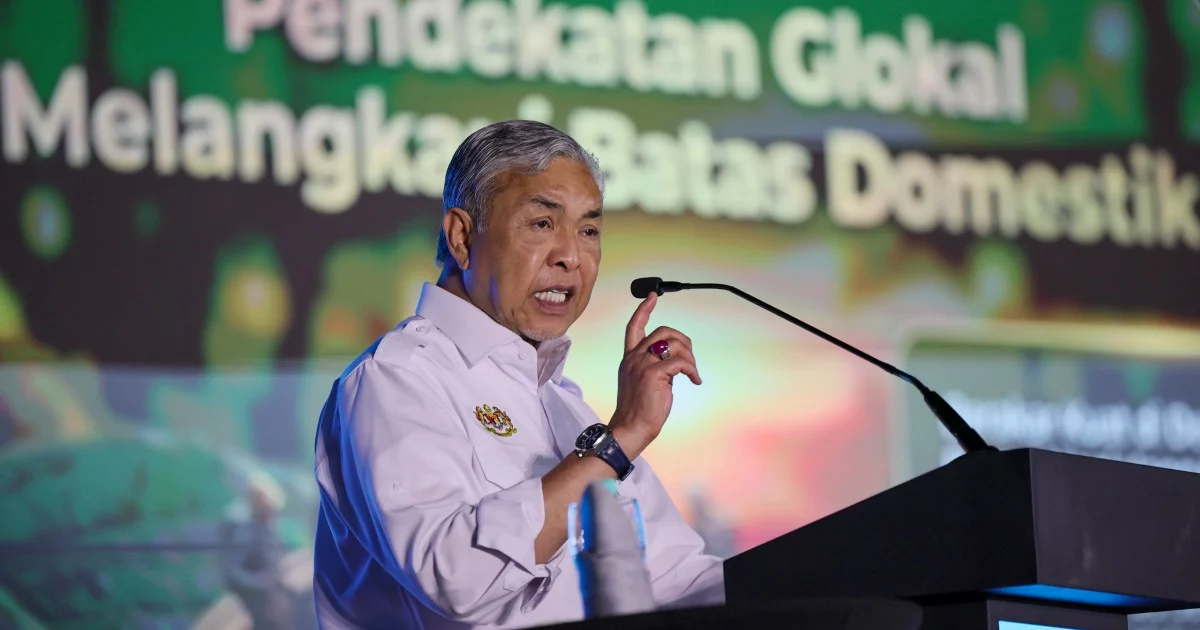
Deputy Prime Minister Datuk Seri Dr Ahmad Zahid Hamidi has made a compelling case for Malaysia's rural regions to embrace a modernised development framework that keeps pace with international economic shifts and priorities. Speaking in Maran, Zahid characterised the proposed National Rural Economic Agenda as a foundational document capable of launching a transformative new phase in how the country approaches village and small-town economies.
The Deputy Prime Minister's remarks underscore a growing recognition within government circles that Malaysia's rural heartlands cannot afford to remain isolated from global economic currents. For decades, rural development policies have often been confined to domestic considerations—agricultural support, basic infrastructure, and social programmes. Yet as global supply chains reshape, digital commerce expands, and climate priorities intensify, the calculus has shifted fundamentally. Zahid's framing suggests that without deliberate alignment between local rural strategies and worldwide economic governance, Malaysian villages risk falling further behind their urban counterparts and losing competitiveness on international markets.
The call for synchronisation with a global agenda carries particular significance for Southeast Asia's development trajectory. Malaysia, as the region's second-largest economy, carries outsized influence over how other nations approach rural modernisation. If the National Rural Economic Agenda succeeds in integrating village economies with global supply chains, green technology initiatives, and digital commerce platforms, it could establish a template for neighbouring countries facing identical challenges. Conversely, failure to bridge the gap between rural Malaysia and global economic systems would widen internal inequality and constrain the nation's overall growth potential.
One of the implicit tensions Zahid's statement addresses is the need to preserve rural character and community cohesion while simultaneously opening these regions to international influences and market forces. Rural development has traditionally emphasised self-sufficiency and land-based livelihoods. Modern global agendas, by contrast, stress integration into digital networks, adoption of sustainable practices aligned with international environmental standards, and participation in value-added production chains rather than commodity exports. Reconciling these competing pressures requires sophisticated policy design that neither romanticises the village nor surrenders it to homogenising global forces.
The timing of this announcement reflects Malaysia's broader economic repositioning. With traditional commodity exports—especially palm oil—facing mounting international scrutiny and sustainable sourcing demands, rural regions producing these goods face structural pressure to diversify. A National Rural Economic Agenda calibrated to global standards could facilitate transition into higher-margin sectors: organic and certified sustainable agriculture, rural tourism, digital entrepreneurship, and light manufacturing. These sectors offer pathways for rural populations to capture greater value while meeting the environmental and social expectations of international markets and consumers.
Malaysia's experience with previous rural development initiatives provides cautionary lessons. Past programmes, while successful in extending basic infrastructure and services to villages, have often lacked the strategic coherence necessary to stimulate sustained income growth or stem rural-to-urban migration. Young people, particularly the educated, continue leaving villages for cities because economic opportunities appear concentrated in urban centres. A genuinely globalised rural agenda could reverse this dynamic by demonstrating that profitable, meaningful work exists in rural areas—provided those areas connect effectively to international networks and standards.
The global dimensions Zahid references likely encompass several overlapping frameworks. Sustainable development goals established by the United Nations set expectations for poverty reduction, environmental stewardship, and inclusive growth that influence development finance, trade partnerships, and international reputation. Similarly, the regional groupings Malaysia participates in—from the Association of Southeast Asian Nations to various bilateral trade arrangements—increasingly embed sustainability and social governance requirements into market access. A rural agenda attuned to these realities positions Malaysia's villages to benefit from green finance, trade preferences for sustainably produced goods, and investment flows directed toward meeting global commitments.
Implementing such an agenda requires coordination across multiple government agencies and potentially private sector actors. Agricultural ministries, environmental regulators, telecommunications authorities, and trade bodies must align their policies and investments. Infrastructure investment in rural broadband, for instance, becomes not merely a social good but an essential platform for participation in global digital commerce. Similarly, technical training and certification programmes must meet international standards rather than purely domestic benchmarks, enabling rural workers to compete in global labour markets and global value chains.
For Malaysian readers, the implications extend beyond policy frameworks. Rural families watching their children migrate cityward might see in Zahid's vision a potential reversal of that trend. Rural entrepreneurs struggling to find viable markets beyond local consumption might discover opportunities in certified sustainable products or digital platforms. Investors interested in Malaysia's countryside would gain confidence from a coherent, internationally-calibrated development strategy. Yet realising these benefits demands genuine commitment to execution, substantial investment, and consistent follow-through across multiple electoral cycles and government transitions—a challenge that transcends rhetoric.
The Deputy Prime Minister's call for a National Rural Economic Agenda that marches in step with global priorities thus represents both an acknowledgment of contemporary economic realities and a recognition that rural Malaysia's future prosperity depends on connection rather than isolation. Whether the government can translate this aspiration into durable institutional change and tangible improvements in rural incomes and opportunities remains the crucial test ahead.

