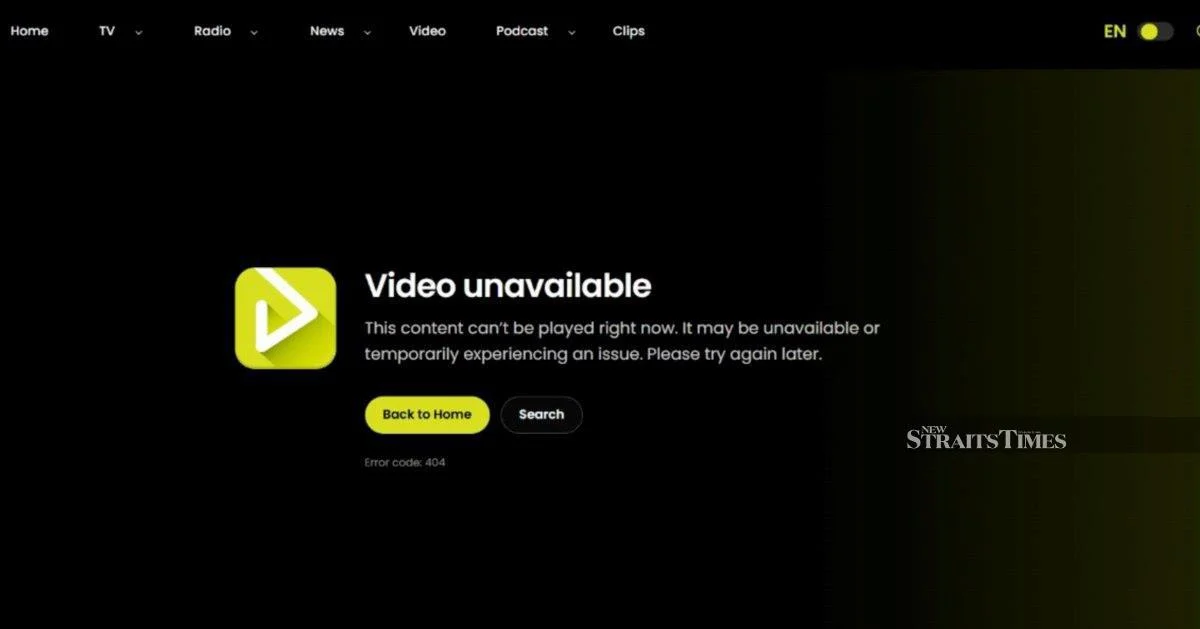
Malaysian football enthusiasts encountered significant disruptions on RTMKlik when attempting to stream the France vs Senegal World Cup fixture early Wednesday morning, with the platform's service proving inaccessible throughout the match's opening 45 minutes. The outage prompted widespread frustration among viewers who had deliberately risen at 3am to catch the encounter live, only to find themselves locked out of the national broadcaster's streaming platform when they needed it most.
The technical failure represents a fresh setback for RTMKlik's credibility as a reliable conduit for major sporting events. Broadcast coverage of international tournaments demands consistent, uninterrupted service, particularly when matches commence during unsociable hours in the Malaysian timezone. Supporters who make considerable effort to wake during the pre-dawn period, disrupting their sleep schedules specifically to follow their preferred teams, understandably react with frustration when infrastructure failures prevent them from accessing the agreed-upon content.
For Malaysian football aficionados, particularly those with vested interest in France's campaign given the nation's global profile and the significance of the Senegal encounter within Group A's competitive dynamics, the inability to stream the opening period represented a genuine loss. The first half of any World Cup fixture carries substantial narrative weight, establishing tactical foundations and momentum that shape outcomes. Missing this critical window meant supporters were essentially relegated to catch-up viewing rather than experiencing the match as it unfolded.
RTMKlik operates as Malaysia's official digital gateway for football's premier global tournament, a responsibility that carries substantial public expectation. When the service falters during high-profile encounters, it undermines the broadcaster's fundamental mission to democratise access to world-class sporting content. Streaming platforms have become increasingly integral to how Malaysian audiences consume international events, particularly younger demographics accustomed to on-demand viewing options and simultaneous multi-platform access.
The platform's vulnerability to outages during peak usage periods raises pertinent questions about its technical infrastructure and capacity planning. Anticipating heightened concurrent viewer numbers during marquee World Cup matches should form part of basic operational preparation. The France vs Senegal fixture, featuring one of the tournament's pre-eminent sides facing an African qualifying team, would naturally attract substantial Malaysian viewership across multiple time zones, yet the system apparently proved insufficient for the demand.
Such technical failures possess broader ramifications for Malaysian media consumption patterns. Public broadcasters face mounting competition from global streaming services and alternative viewing channels, many unlicensed. When official platforms disappoint, viewers increasingly gravitate toward irregular distribution channels that operate outside regulatory frameworks. This creates a cycle of declining confidence in legitimate services and simultaneously undermines intellectual property protections that content creators and rights holders depend upon.
The incident also illustrates the infrastructural challenges confronting Southeast Asian broadcasters attempting to compete globally. Streaming World Cup matches to millions simultaneously demands sophisticated technical architecture, content delivery networks, and redundancy systems. Malaysian broadcasters must balance investment in such capabilities against competing budgetary pressures, yet the alternative—delivering substandard service during high-stakes events—carries its own reputational costs.
Responsees from affected viewers across social media platforms highlighted the inconvenience and disappointment generated by the outage. Spectators who had adjusted their sleep schedules and potentially made social arrangements around the broadcast expressed frustration at the wasted effort. Such incidents accumulate, gradually eroding audience confidence in the service's reliability and contributing to a perception that alternative viewing methods, however inconvenient or legally dubious, might prove more dependable.
RTMKlik's handling of the technical crisis and subsequent communication to affected viewers would prove significant in determining whether the incident generates lasting reputational damage. Transparent acknowledgment of the problem, clear explanation of causes, and concrete assurances regarding preventive measures could partially mitigate frustration. Conversely, silence or deflection would amplify the sense that the platform regards subscriber needs as secondary to operational convenience.
Looking forward, the World Cup's remaining matches present opportunities for RTMKlik to demonstrate improved technical reliability and capacity. The tournament's schedule ensures multiple matches across varying timezones, each presenting fresh chances to either reinforce viewer confidence or compound disappointment. Malaysian football fans investing substantial emotional and temporal energy in following the competition deserve platforms capable of delivering uninterrupted access to the sporting narratives they follow.
The broader context suggests that as digital streaming becomes increasingly central to sports consumption, Malaysian media infrastructure must evolve accordingly. Public broadcasters require sustained investment in technical capabilities to ensure that national audiences can access world-class sporting content without the frustrations that drive viewers toward irregular alternatives. The France vs Senegal outage represents not merely an isolated technical glitch, but rather symptomatic of broader questions about Malaysia's readiness to serve digital media audiences during major international events.