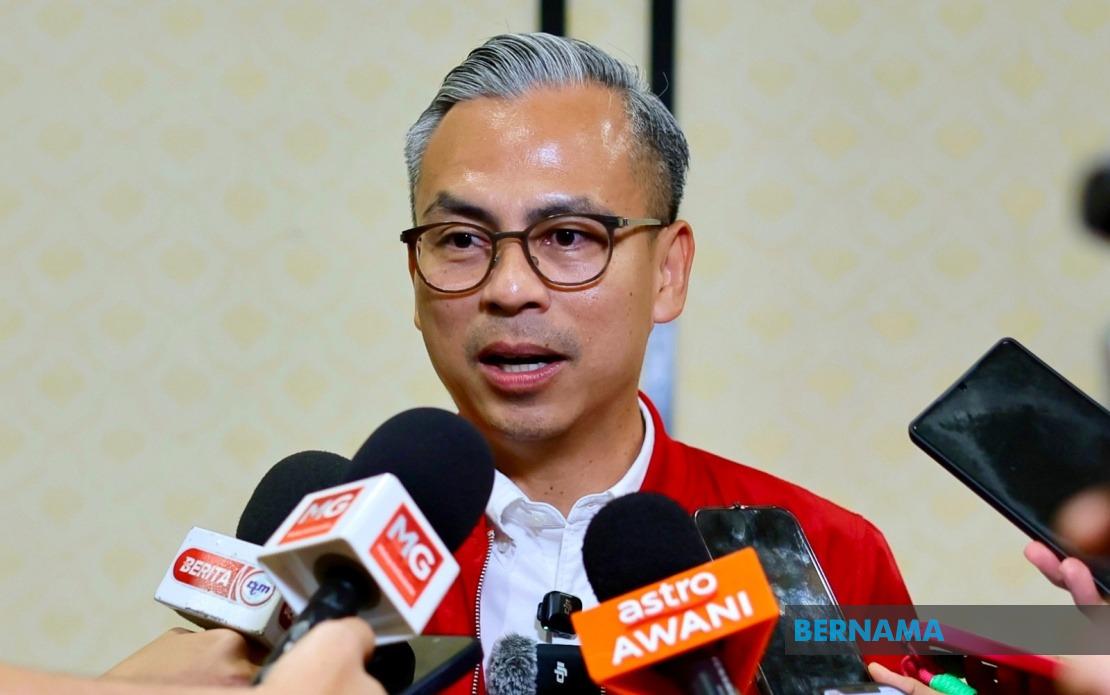
Communications Minister Datuk Fahmi Fadzil has extended an olive branch to the main contenders in Johor's upcoming state election, offering Malaysia's national broadcaster as a neutral venue for substantive discussion on the state's development trajectory. The proposal comes as campaigning intensifies for the July 11 polling day, with Fahmi suggesting that RTM TV1 could host an interactive dialogue between Menteri Besar Datuk Onn Hafiz Ghazi and Pakatan Harapan's Puteri Wangsa candidate Dr Maszlee Malik. Speaking in Muar, Fahmi emphasised that such a platform would be flexible in timing and location, with Johor Bahru mentioned as a potential venue, and crucially, would focus entirely on developmental priorities rather than partisan rhetoric.
The minister's initiative reflects a deliberate effort to elevate public discourse around the 16th Johor state election beyond conventional campaign tactics. By positioning RTM as a facilitator rather than a political actor, Fahmi signalled that Pakatan Harapan sees value in a head-to-head engagement on substantive issues affecting the state's 4.2 million residents. This approach diverges markedly from the mutual avoidance that typically characterises Malaysian electoral contests, where candidates often decline opportunities to face opposing camps directly. The framing of the dialogue as an exchange of ideas rather than a debate suggests Pakatan's confidence in its message while simultaneously challenging Barisan Nasional to demonstrate openness to public scrutiny.
Fahmi's comments were prompted by recent suggestions that Pakatan should first publicly commit its Menteri Besar candidate before engaging in any public platform discussions. By offering the RTM facility preemptively, the Communications Director positioned his coalition as the more accommodating party, willing to engage regardless of whether the opposition formalises its leadership choice. This tactical move carries electoral implications, as it allows Pakatan to claim the mantle of transparency and accessibility during a crucial period when voter perceptions are still crystallising. For Malaysian observers, the offer also underscores how state-funded media institutions can serve democratic discourse when deployed neutrally, a principle that carries broader relevance across Southeast Asia where media independence remains contested.
The minister also articulated a philosophical argument about leadership qualities essential for Johor's future prosperity. He contended that the capacity to engage respectfully with opposing viewpoints, rather than retreat into echo chambers, distinguishes leaders genuinely committed to progressive governance. This framing appeals to younger voters and professionals seeking competence-based rather than patronage-based leadership. Fahmi specifically commended Dr Maszlee for his engagement with 41 youths to discuss the state's future aspirations, drawing a contrast with established political figures who may view direct voter interaction as risky. For a state like Johor, which has historically been Barisan's fortress and the country's economic engine, the question of which coalition can best articulate a modern development vision carries stakes extending beyond Johor's borders.
The Puteri Wangsa contest represents a microcosm of broader electoral dynamics in Johor. Dr Maszlee faces a crowded field that includes Barisan's Teow Chia Ling, independent candidate Wang Wee Seong, Bersama's Nicholas Paul Vincent, and MUDA's Rashifa Aljunied. This fragmentation suggests that anti-Barisan sentiment exists but remains diffuse, with opposition votes potentially splintering across multiple non-BN candidates. The seat's demographics and voting history will prove critical; if Puteri Wangsa leans younger and more educated, Maszlee's academic background and policy-focused approach may resonate, whereas more traditional constituencies might reward BN's incumbent advantage and organisational machinery. Teow's positioning as the establishment candidate benefits from both resources and the weight of incumbency, though Barisan's performance in urban areas has shown vulnerability in recent electoral cycles.
Meanwhile, in Machap, the contest takes a different shape with Menteri Besar Onn Hafiz facing a straight fight against Pakatan's Nor Hafiz Roslan. This two-candidate race strips away the noise of multiple challengers and forces voters into a clearer binary choice. Onn Hafiz's position as the sitting Menteri Besar provides substantial advantages, including governmental resources, media exposure, and the ability to announce development projects during the campaign period. However, the straight contest also means that any anti-incumbent sentiment lacks alternative outlets, potentially benefiting Nor Hafiz if dissatisfaction with the Onn Hafiz administration runs deep. For Pakatan, concentrating resources on this seat represents a calculated risk, betting that ousting the state's chief minister would deliver psychological and political momentum regardless of overall seat count.
The election's timing carries significance for Malaysian politics beyond Johor itself. The July 11 polling day falls during mid-year, a period when voters may be less engaged than during festive seasons or year-end electoral calendars. Early voting on July 7 provides an outlet for those facing mobility constraints, though Fahmi's call for young voters to overcome logistical challenges suggests awareness that turnout could present challenges. Higher youth participation would likely favour Pakatan, which has traditionally mobilised younger, more educated cohorts, whereas lower turnout typically benefits Barisan's superior ground machinery and ability to activate older, more settled voter blocs.
For Malaysian readers, this election offers insights into how different coalitions approach governance and public engagement. Pakatan's offer of televised dialogue and focus on policy substance reflects a strategy that emphasises intellectual credibility and openness. Barisan, meanwhile, typically relies on incumbency, developmental credentials, and grassroots networks cultivated over decades. The outcome will signal whether Johor voters, often considered among Malaysia's most pragmatic, prioritise continuity and proven delivery or seek change and fresh approaches. The state's economic importance—its port, manufacturing base, and position as a gateway to Singapore—means that the victor will shape not merely local policy but influence Malaysia's broader economic trajectory and regional positioning within Southeast Asia.
For the broader region, Johor's election demonstrates how Malaysian states remain laboratories for competitive democracy. Unlike some neighbouring countries where electoral contests are predetermined or heavily weighted toward incumbents, Johor presents genuine uncertainty. The outcome will partly depend on whether Fahmi's RTM offer is accepted and whether such a dialogue occurs; if Onn Hafiz declines, it may reinforce perceptions of reluctance to engage, while acceptance could elevate the campaign's tenor. Either way, the election crystallises ongoing tensions between establishment politics and reform movements, between developmental achievements and calls for greater transparency and accountability—tensions that reverberate throughout Southeast Asia as societies grapple with balancing growth, governance, and democratic participation.

