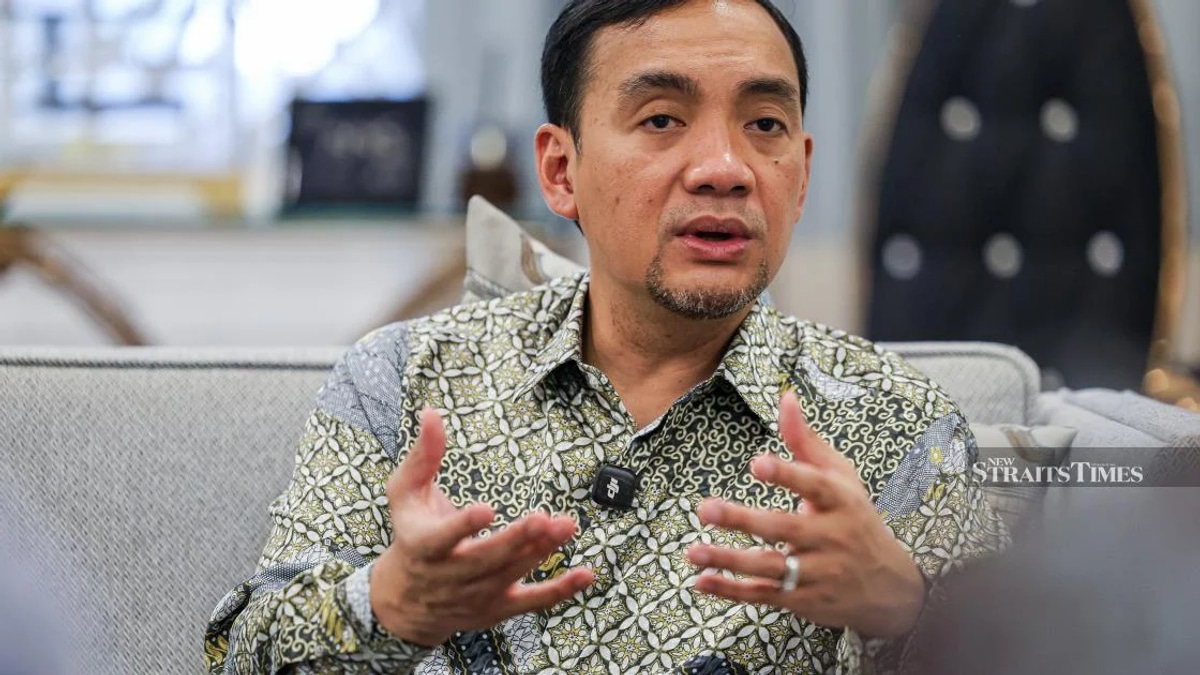
The Radio Television Malaysia (RTM) has moved to dispel speculation surrounding the employment status of sports commentator Azlan Johar, issuing a statement to clarify the nature and scope of his contractual arrangements with the national broadcaster. The clarification comes amid reports suggesting that Johar's activities outside his broadcasting role may have influenced his standing with the organisation.
According to RTM's official position, Johar never held a comprehensive contract covering commentary duties for the entirety of the 2026 FIFA World Cup's 104-match tournament. This distinction is significant in understanding the broadcaster's relationship with the commentator, as it establishes that his engagement with RTM for World Cup coverage was never structured as an all-encompassing arrangement from start to finish. The statement effectively counters interpretations that suggested a sudden termination or suspension of previously secured broadcasting rights.
The timing of RTM's clarification appears deliberate, arriving in the wake of public attention drawn to Johar's recent political involvement. Reports indicate that the commentator has joined the Pan-Malaysian Islamic Party (PAS), a development that coincided with renewed scrutiny of his broadcasting commitments. By explicitly defining the parameters of his contractual relationship with RTM, the broadcaster has sought to establish that any changes to his assignment schedule reflect the ordinary course of business rather than punitive action related to his personal political choices.
For Malaysian media observers, the distinction between having a full tournament contract and maintaining a flexible arrangement carries considerable weight. Broadcasting rights for major international sporting events are typically allocated through various contractual frameworks, ranging from comprehensive arrangements where a single commentator covers most matches to more limited engagements where broadcasting duties are distributed among multiple personnel. RTM's statement suggests that Johar's role fell into the latter category, meaning his involvement was always expected to be partial rather than comprehensive.
The clarification also touches upon broader questions regarding the relationship between Malaysian public institutions and employees' personal political participation. RTM, as a government-owned broadcaster, operates within a context where questions about institutional neutrality and fairness arise periodically. By framing the matter as a contractual technicality rather than a disciplinary measure, RTM appears intent on maintaining institutional objectivity while simultaneously addressing public perception.
Understanding the structure of broadcasting contracts for major sporting events is essential context for Malaysian readers assessing this situation. Major tournaments typically require broadcasters to assign multiple commentators to different matches and match groups, with different commentators handling preliminary rounds, knockout stages, and potentially the final. This rotation system ensures fresh perspectives and accommodates commentators' other commitments. Within this framework, Johar's engagement with RTM would have been limited to a specific subset of matches rather than comprehensive coverage.
The political dimensions of this controversy warrant careful examination within Malaysia's contemporary context. The PAS party occupies a significant position in the country's political landscape, commanding substantial support in certain regions and holding ministerial positions in both federal and state governments. Johar's decision to formally associate himself with the party represents a personal political choice, and the timing of public discussion around his broadcasting status has naturally invited scrutiny regarding potential institutional responses.
RTM's statement may also be read as a preemptive measure to forestall further speculation and potential accusations of political discrimination. By establishing the factual parameters of Johar's contract before broader political narratives could crystallise around his situation, the broadcaster has positioned itself to defend its decisions on purely technical and professional grounds. This approach reflects an awareness that any appearance of political influence on broadcasting decisions could undermine public confidence in the national broadcaster's impartiality.
For Southeast Asian media systems more broadly, such situations illustrate the delicate balance required when public broadcasters navigate the intersection of employee personal freedoms and institutional neutrality. Malaysia's experience with these questions adds to a broader regional conversation about how state-owned media organisations can maintain credibility and public trust while operating within political environments where the line between institutional interests and political interests sometimes blurs.
The resolution of this matter, though framed in technical contractual terms by RTM, carries symbolic significance beyond the specific case of one commentator. It speaks to how Malaysian institutions address questions of employee political participation and whether such participation can coexist with employment in public sector organisations. The broadcaster's emphasis on the limited scope of Johar's original contract arrangement serves to reframe the narrative around professional practices rather than political considerations, though observers will assess whether this framing adequately addresses underlying concerns about institutional fairness.