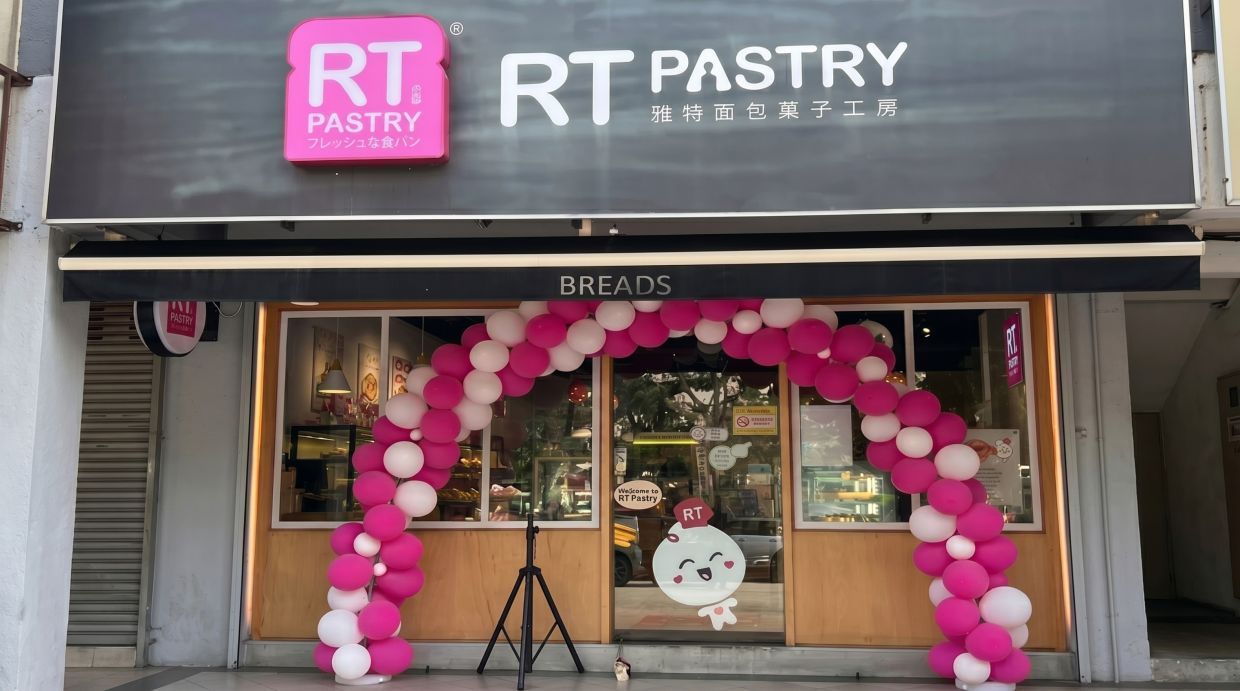
RT Pastry Holdings Bhd has successfully obtained halal certification from the Department of Islamic Development Malaysia (JAKIM) for Plant 1, its main production facility located in Taman Bukit Serdang, Seri Kembangan. The accreditation represents a significant milestone for the bakery manufacturer and underscores its commitment to meeting Malaysia's stringent halal standards while expanding its footprint in the domestic confectionery market.
The certification was formally issued on July 1 and remains valid through June 30, 2028, providing the company with a seven-year window of validated halal compliance across its comprehensive product portfolio. This extended validity period allows RT Pastry to operate with regulatory certainty and market confidence as it pursues growth strategies in a sector where halal assurance is fundamental to consumer purchasing decisions.
The approved manufacturing scope encompasses RT Pastry's diverse range of offerings, including conventional cakes, Swiss rolls, pastries, cookies, specialty desserts and various other bakery products manufactured at the Seri Kembangan facility. The breadth of product coverage demonstrates that the plant's entire production ecosystem—from raw material intake through packaging—meets the rigorous criteria established by Malaysia's halal regulatory framework.
The certification was awarded following a comprehensive audit conducted in accordance with the Malaysian Halal Standard MS1500:2019, which establishes detailed requirements spanning sourcing protocols, manufacturing processes, product handling procedures and sanitation protocols. These standards ensure that every stage of production aligns with Islamic dietary law and consumer expectations. The framework reflects Malaysia's position as a regional leader in halal standards development and enforcement, establishing benchmarks that influence halal certification practices across Southeast Asia and beyond.
This achievement complements RT Pastry's existing halal-certified operations at Plant 2 in Glelmarie, which obtained JAKIM certification in 2023. The dual-facility certification strategy provides operational redundancy and production capacity assurance while demonstrating consistent compliance across multiple production environments. For a bakery company operating in a market where halal credentials significantly influence retail placement and consumer loyalty, maintaining certified capacity at multiple sites offers competitive advantage in meeting large-scale customer demands from retail chains, institutional buyers and e-commerce platforms.
According to Lu Chun-Neng, the company's executive director and group chief executive officer, the certification transcends its function as a regulatory compliance requirement. Instead, the company frames halal accreditation as a concrete expression of its operational philosophy emphasizing quality assurance, business integrity and consumer protection. This positioning reflects broader industry understanding that halal certification in Malaysia serves as a quality proxy beyond religious observance, influencing purchasing behaviour among diverse consumer segments including non-Muslim demographics who associate halal standards with hygiene and safety.
The company indicated that the newly certified Plant 1 facility strengthens its capacity to serve an expanding customer base across Malaysia's retail, food service and institutional sectors. RT Pastry's halal certification pathway enables the organization to access procurement opportunities within government institutions, airline catering, hospital supply chains and other organizations where halal-certified suppliers are mandatory requirements. These market segments represent significant volume opportunities that remain inaccessible without JAKIM validation.
For RT Pastry, the certification also positions the company favorably within Malaysia's increasingly competitive bakery sector, where multiple manufacturers pursue similar accreditations. Among Malaysian food manufacturers, halal certification has become a baseline expectation rather than a differentiation factor, yet its absence represents a disqualifying liability. The seven-year validity of the Plant 1 certification provides strategic stability for capital planning and market development initiatives without the uncertainty of frequent recertification cycles.
The timing of this Plant 1 certification reflects industry-wide trends toward supply chain consolidation and operational standardization among Malaysian food manufacturers. As consumer awareness of halal credentials increases and retail buyers enforce stricter supplier requirements, manufacturing facilities without valid JAKIM certification face marginalisation in key distribution channels. RT Pastry's investment in maintaining certified production capacity across two major facilities demonstrates confidence in sustained demand for its product range and commitment to long-term market presence.
Looking forward, the dual-facility certification framework positions RT Pastry to pursue product innovation and market expansion while maintaining regulatory compliance. The company's framing of halal certification as a manifestation of consumer confidence and brand integrity suggests potential strategies around premium positioning and supply chain transparency that appeal to increasingly conscious consumers. Within Malaysia's evolving retail landscape, where halal assurance intersects with broader quality and safety expectations, manufacturers with comprehensive certifications across multiple facilities enjoy enhanced credibility with institutional and retail partners.

