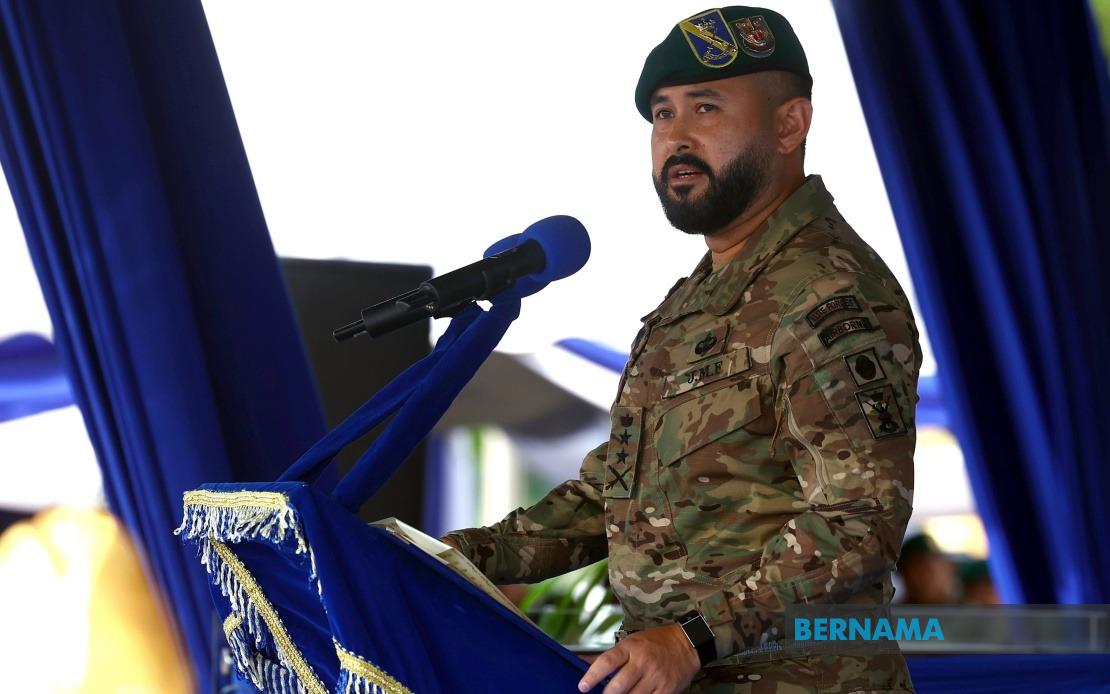
The Johor Regent, Tunku Mahkota Ismail, has issued a stern directive that all parties must strictly adhere to development and planning decisions for the Regimen Gerak Khas (RGK) that have already received the formal consent of His Majesty Sultan Ibrahim, the nation's King and Colonel Commandant of the elite military unit. Delivered during a ceremonial address at the RGK's 61st anniversary parade in Mersing, the message underscores growing tensions over institutional governance within Malaysia's defence establishment and signals the Regent's active engagement in protecting the strategic autonomy of this specialised force.
The Regent's remarks carry particular weight given his formal role as Colonel Commandant's representative and reflect deeper concerns about what he characterised as attempts by vested interests to redirect previously agreed-upon procurement and development initiatives. Using a traditional Malay metaphor—"harapkan pagar, pagar makan padi" (trusting the protector only for them to betray that trust)—Tunku Mahkota Ismail framed the issue as a matter of institutional integrity. His language suggests not merely technical disagreements about resource allocation, but rather fears that predetermined strategic choices are being compromised by individuals seeking personal or organisational advantage.
Central to the Regent's intervention is his argument that the RGK, as the sharp edge of Malaysia's defensive capabilities, requires unwavering commitment to equipment modernisation, technological upgrading, and operational readiness. He emphasised that current global dynamics—including geopolitical competition in the Indo-Pacific region and the increasingly complex security environment in the South China Sea—demand that the unit maintain capabilities at the highest possible level. This framing positions adherence to approved plans not as bureaucratic procedure but as essential to national security, effectively elevating the Regent's intervention beyond matters of administrative tidiness into questions of sovereignty and strategic resilience.
The Regent also took the unusual step of directly criticising the Ministry of Defence's administrative leadership, noting that he was aware of who controls the secretary-general position and indicating he would seek meetings to address what he termed "cancer" within the Malaysian Armed Forces. While avoiding specific allegations, this language suggests institutional dysfunction of sufficient severity to warrant high-level royal concern. Such forthright criticism from a senior royal figure signals that governance failures within the defence ministry have reached a threshold where informal channels and conventional bureaucratic remedies are considered inadequate.
A significant component of Tunku Mahkota Ismail's message focused on the necessity for transparent and merit-based management systems governing personnel advancement, welfare, and career progression within the RGK. He warned explicitly against favouritism, vested interests, and non-transparent processes in determining servicemembers' futures. This emphasis reflects a broader pattern of concern among institutional guardians about whether organisational decisions are being made on grounds of professional competence and national interest, or whether personal networks and factional interests are distorting outcomes. The Regent positioned such integrity as foundational to the RGK's effectiveness, arguing that systemic corruption undermines operational capability.
The Regent stressed that all development and procurement activities must be evaluated rigorously against criteria including operational effectiveness, technological suitability, cost-efficiency, and long-term strategic value. He particularly highlighted the importance of prioritising RGK initiatives under the 13th Malaysia Plan framework, suggesting that competing budgetary claims or departmental rivalries should not deflect resources from previously approved strategic commitments. This emphasis suggests concern that defence procurement decisions may be subject to political or bureaucratic pressure inconsistent with professional military assessment of genuine operational needs.
Tunku Mahkota Ismail's intervention reflects the complex governance structures within Malaysia's military establishment, where constitutional monarchs retain formal authority over certain armed forces elements, creating overlapping chains of authority. The Regent's direct engagement in strategic planning matters demonstrates how these formal constitutional roles can become vehicles for exercising substantive influence over institutional direction when senior royal figures perceive that established procedures or approved policies are being undermined. For Malaysian readers, this signals that defence governance involves not merely professional military hierarchies but also engagement from senior palace figures when institutional integrity is questioned.
The broader implications of the Regent's address extend beyond the RGK itself. His warnings about institutional capture, merit-based decision-making failures, and the need for transparent governance reflect systemic concerns that likely extend across multiple defence and security agencies. The specificity of his criticism—identifying particular individuals and promising intervention—suggests that current problems are perceived as neither marginal nor amenable to routine bureaucratic correction. This level of concern from a senior royal figure typically indicates that institutional confidence in existing management has eroded significantly.
For Southeast Asian security observers, the Regent's emphasis on geopolitical complexity and the evolving threat environment in the South China Sea and Indo-Pacific underscores why Malaysia considers the RGK's readiness as strategically central to national defence posture. The warning against deviating from approved modernisation plans suggests that the unit faces genuine equipment and capability gaps that require sustained commitment, not reallocation to other priorities. The Regent's intervention thus serves both to protect specific institutional interests and to signal to defence bureaucrats that strategic neglect of the RGK would face royal oversight.
The Regent concluded by reminding RGK personnel of their fundamental obligations to maintain exceptional standards of physical and mental resilience, professional integrity, and unwavering loyalty to the monarchy and nation. By invoking the Commando Soldier's Oath, he positioned institutional reform and adherence to approved strategic plans as matters of sacred military obligation rather than mere administrative procedure. This rhetorical move elevates concerns about governance lapses into questions of fundamental national duty, creating a framework where resistance to the Regent's directives becomes difficult to justify in professional or patriotic terms.
The significance of this intervention for Malaysia lies in demonstrating how formal constitutional mechanisms can activate when elected officials and appointed bureaucrats are perceived to be compromising institutional integrity or strategic priorities. While the Regent carefully avoided naming specific individuals beyond reference to the defence ministry secretary-general, his evident determination to intervene directly signals that concerns about governance in the defence establishment have reached levels demanding royal attention. For observers of Malaysian governance, the episode illustrates both the utility and the limitations of royal oversight in addressing institutional dysfunction within sensitive security agencies where technical expertise, political dynamics, and factional interests often collide.

