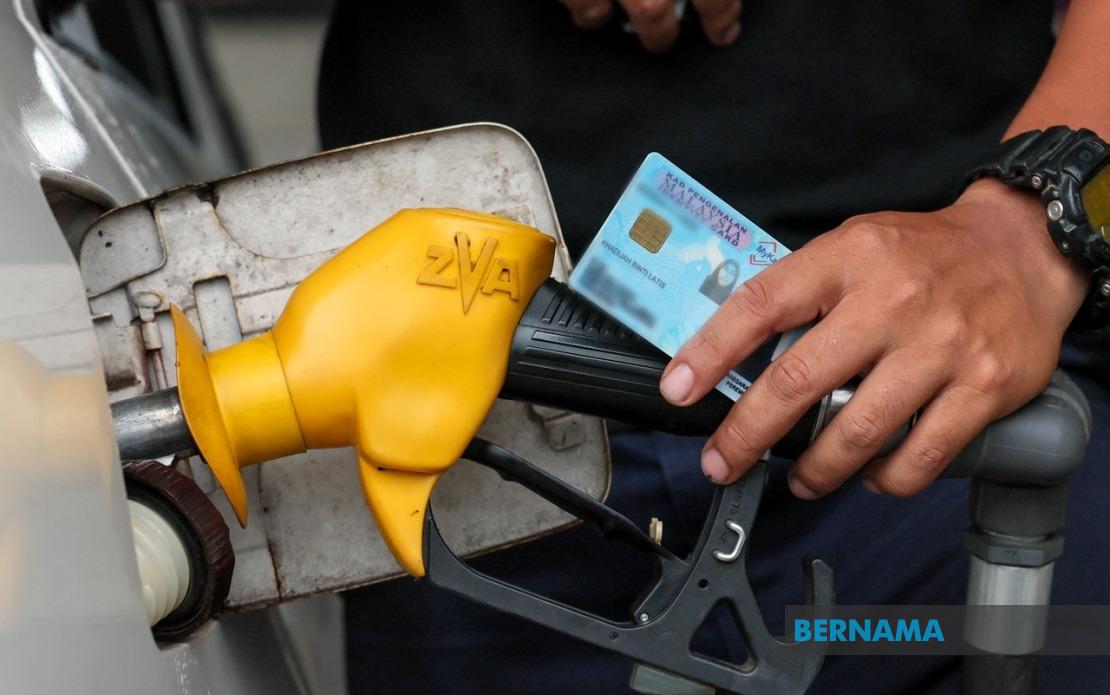
Prime Minister Datuk Seri Anwar Ibrahim announced on National Day that the government would reinstate the monthly BUDI95 petrol quota to 300 litres per household, a significant reversal from the 200-litre restriction imposed during previous fiscal pressures. The adjustment takes effect September 1 and will serve more than 16 million registered users of the subsidised RON95 fuel scheme. Additionally, over half a million owners of diesel-powered pickup trucks and jeeps will gain access to up to 400 litres of BUDI Diesel monthly under the same timeline, signalling a broader commitment to easing transportation costs across different vehicle categories.
The restoration addresses mounting pressure from households struggling with cumulative transport expenses, particularly in regions where fuel represents an outsized share of monthly budgets. For many Malaysian commuters, the previous 200-litre allowance proved inadequate for sustained mobility, forcing individuals to purchase petrol at unsubsidised market rates once quotas depleted. This layered spending creates a regressive burden that disproportionately affects lower-income families who lack alternatives to private vehicles and cannot absorb sudden fuel price spikes. The decision reflects recognition that subsidies, while fiscally demanding, serve a critical stabilisation function in household economics.
Economics specialist Herniza Roxanne Marcus from Universiti Teknologi MARA's Sabah campus emphasizes that the benefit will prove especially tangible for B40 and M40 income groups—those earning between RM3,000 and RM8,000 monthly—whose fuel expenditure typically consumes 8–12 percent of disposable income. In states like Sabah, where sprawling geography and limited public transit networks necessitate frequent vehicle use, the quota expansion carries magnified impact compared to urban centres like Kuala Lumpur or Penang. Without adequate fuel access, these households face cascading trade-offs: reducing medical visits, cutting educational investments, or compromising nutrition. By freeing additional resources from fuel budgets, the subsidy restoration creates breathing room for families to redirect spending toward education, healthcare, and food security.
The measure also demonstrates government recalibration of subsidy policy in response to shifting global conditions. Marcus notes that previous quota reductions occurred amid geopolitical turbulence and volatile international energy markets that threatened Malaysia's fiscal sustainability. As conditions stabilise and the government reassesses cost trajectories, the capacity for subsidy expansion grows correspondingly. This flexibility suggests policymakers are weighing actual fuel consumption patterns against household purchasing power protection, rather than pursuing rigid austerity regardless of economic circumstances. The decision indicates nuanced understanding that subsidies function as countercyclical tools, adjustable based on fiscal room and real-world impact.
However, economists caution that the quota increase, while beneficial, operates as a modest intervention rather than inflationary pressure relief. The restoration should help moderate transportation cost pressures and prevent spillover effects into prices of goods and services that depend on logistics and distribution networks. Yet it will not single-handedly reverse inflation or significantly reshape consumer price indices. Instead, it functions as one element within broader cost-of-living management, working alongside wage policies, housing assistance, and food security programmes. The subsidy therefore occupies a specific economic niche: addressing transport affordability without creating demand-side inflation that erodes the benefit.
Practical realities illuminate why the restoration matters. Rozainah Abdul Rahim, a 36-year-old journalist, exemplifies the constraints faced by professionals with irregular commuting patterns. Her work requires daily vehicle use for assignments, while weekly travel between Port Dickson, Negeri Sembilan, and Kuala Lumpur for family obligations created a monthly fuel demand consistently exceeding 200 litres. Under the previous quota, she exhausted her subsidy allocation by mid-month, then purchased unsubsidised RON95 at rates approximately 70–80 sen per litre higher—a burden accumulating to hundreds of ringgit monthly. The 300-litre restoration alleviates this squeeze, transforming fuel access from precarious to manageable within typical middle-class income patterns.
The dividend extends beyond individual households to supply chains and broader economic activity. When transport costs become predictable and affordable, businesses reduce logistical expenses, potentially stabilising prices for delivered goods and services. Small enterprises dependent on vehicle transport—delivery services, mobile vendors, skilled tradespeople—gain operational relief that may translate into service improvements or modest price moderation. Public transport operators also benefit indirectly, as subsidised fuel for private vehicles, while reducing environmental efficiency, prevents congestion-driven spillover demand that would strain bus and taxi networks beyond current capacity. The subsidy thus functions as a stabiliser across multiple economic tiers.
Regional variation in subsidy value deserves recognition. In densely populated Klang Valley and George Town, where public transport alternatives exist, the quota expansion may prove less transformative than in Sabah, Sarawak, and peripheral peninsular regions. Families living in metropolitan areas can substitute between private vehicles and rapid transit systems, whereas those in dispersed settlements possess no such flexibility. This geographic heterogeneity means the subsidy's protective effect varies substantially, benefiting rural and semi-urban households disproportionately. Policymakers therefore cannot assess impact through uniform national metrics; localised analysis is essential for understanding who genuinely receives relief.
The fiscal implications warrant scrutiny as well. Restoring the quota expands government subsidy expenditure, reducing fiscal space for alternative spending or deficit reduction. During a period when Malaysia pursues medium-term fiscal consolidation and debt sustainability, this commitment represents a deliberate choice prioritising household welfare over rapid fiscal consolidation. The calculus reflects political economy considerations: governments typically find maintaining popular subsidies less costly politically than pursuing aggressive austerity, particularly when inflation and cost-of-living concerns dominate public discourse. Whether this allocation proves optimal depends on assessing forgone opportunities—infrastructure investment, healthcare expansion, education quality—that might generate longer-term economic dynamism.
Looking forward, the sustainability of the 300-litre quota hinges on global energy price trajectories and Malaysia's fiscal performance. Should international crude oil prices spike unexpectedly or the ringgit weaken dramatically, subsidy costs could surge beyond comfortable fiscal limits, forcing renewed reductions. Conversely, prolonged global energy oversupply might allow quota expansion even further, enhancing household relief. This volatility underscores the temporary nature of subsidy policy adjustments; they remain hostage to external shocks and macroeconomic conditions beyond government control. Long-term transport affordability likely requires structural reforms: enhanced public transit networks reducing vehicle dependency, electric vehicle transition lowering fuel consumption, and wage growth enabling households to absorb costs without subsidy dependence.

