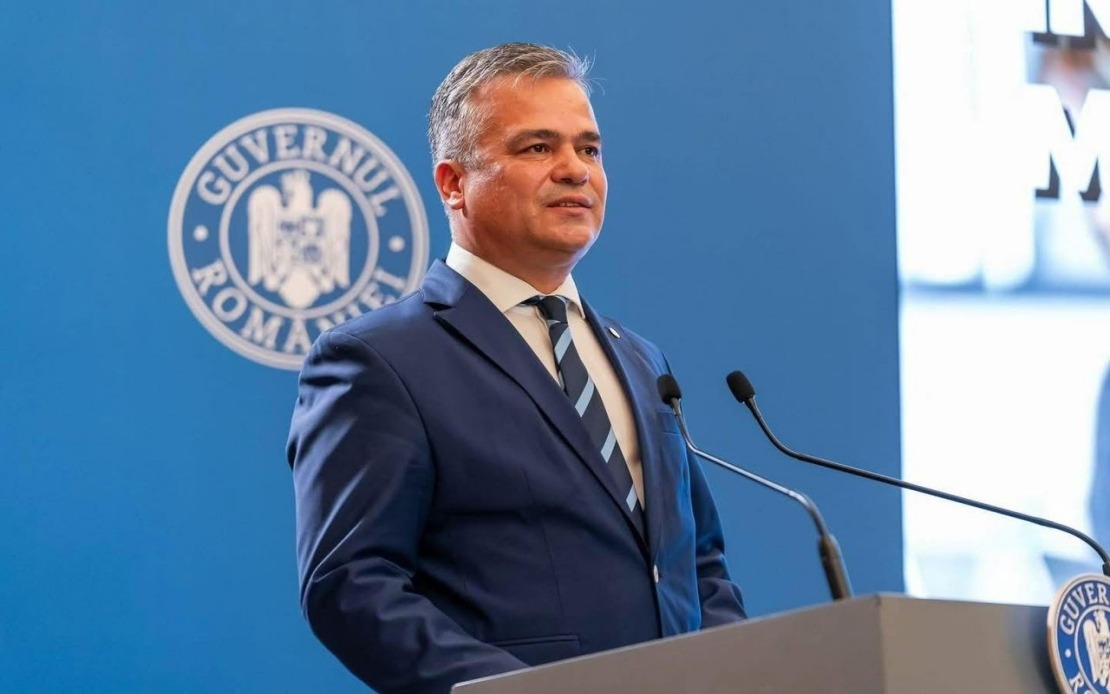
Adrian Vestea, Romania's prime minister-designate, formally presented his cabinet composition and governing agenda to parliament on Monday, marking a significant step toward resolving the political uncertainty that has gripped the country. The submission of both the government programme and the list of proposed ministers represents a procedural milestone in establishing a functional executive following a prolonged period of institutional stalling. Through a statement posted on social media, Vestea emphasised that this action constitutes a necessary intervention to conclude the uncertainty phase and reestablish the stability, predictability, and proper operation of Romania's governmental institutions.
The backing of the Social Democratic Party, confirmed at a party meeting the previous day, provides crucial parliamentary support for Vestea's bid to form the next administration. This endorsement proves particularly significant given the intricate political dynamics at play, as it enables forward momentum despite competing interests and stated positions by other political actors. The alignment between Vestea, who holds the position of first vice-chair within the National Liberal Party, and the broader Social Democratic coalition represents a pragmatic approach to government formation in a fragmented political landscape where no single party commands an outright parliamentary majority.
Vestea's proposed administration has identified five core pillars upon which its agenda will be constructed. Political stability emerges as the foundational priority, acknowledging that sustained institutional functioning depends on reducing the partisan volatility that has characterised recent Romanian politics. The government intends to accelerate the absorption of European Union funding, an objective with profound implications for national development given Romania's ongoing infrastructure deficits and the time-sensitive nature of EU financial mechanisms. Economic stability represents a third priority, reflecting concerns about inflationary pressures, currency volatility, and growth prospects in a regional context marked by geopolitical tension and supply chain disruptions.
The administration's commitment to infrastructure investment addresses long-standing development gaps across transport networks, energy systems, and digital connectivity that have constrained economic competitiveness. Beyond these domestic concerns, the government explicitly prioritises strategic national security initiatives, a commitment that reflects Romania's NATO membership, its proximity to the Ukraine conflict, and broader security concerns within Eastern Europe. These five pillars collectively suggest a programme balancing immediate stabilisation needs with longer-term development objectives and security imperatives.
The composition of Vestea's proposed cabinet presents an intriguing political configuration that complicates the surface narrative of party allegiances. Although the National Liberal Party's formal leadership has publicly rejected coalition arrangements with left-wing forces, the cabinet list includes representatives from the Social Democratic Party alongside National Liberal members. This apparent contradiction is resolved through the identification of National Liberal parliamentarians and officials willing to serve under Vestea despite their party's official stance, effectively creating a de facto coalition that operates outside traditional party-line discipline. Such arrangements are not uncommon in Central and Eastern European politics, where personal networks and pragmatic interests sometimes supersede formal party positions.
The political manoeuvre reflects the complex calculus required to construct a governing majority when parliamentary fragmentation prevents any single faction from wielding unilateral control. Vestea's ability to attract support from multiple political directions suggests either significant personal political capital or a widespread recognition among parliamentarians that the costs of continued political paralysis outweigh the benefits of continued opposition. This cross-party cooperation, while functional, also introduces potential instability into the government's operations, as coalition partners may prove vulnerable to defection or shifting allegiances if parliamentary circumstances change or policy disputes emerge.
Romanian media reporting indicates that the parliament's formal approval of the cabinet composition remains subject to uncertainty, suggesting that while preliminary endorsements have materialised, the final legislative vote has not yet occurred. This outstanding formal approval creates a window during which objections might still crystallise or additional negotiations might unfold. The timing of the approval vote, the scale of the parliamentary majority that will ultimately support the cabinet, and any conditions that parliamentary parties might attach to their endorsement remain unresolved questions that could yet influence the character and policy direction of the incoming administration.
For regional observers, Romania's political realignment carries implications extending beyond its borders. As a NATO member state and EU participant situated along Europe's eastern frontier, Romania's political stability directly affects European security architecture and the cohesion of Western responses to regional challenges. A government that successfully consolidates authority and pursues consistent policies provides greater predictability for security planning and coordinated action. Conversely, continued political friction or weak executive authority could complicate coordination on critical issues ranging from energy security to military support for Ukraine and broader NATO defence commitments.
The focus on EU fund absorption particularly resonates with Southeast Asian readers accustomed to examining how regional economies leverage international development financing. Romania's determination to accelerate the utilisation of European resources reflects broader dynamics visible across developing and middle-income economies worldwide: the imperative to capture time-limited international financing before budgets shift or conditions change. Malaysia and other ASEAN nations face comparable pressures regarding multilateral development bank financing, regional cooperation funds, and bilateral development assistance, making Romania's experience instructive regarding the institutional and administrative capacity required to convert available international resources into concrete domestic development.
The infrastructure investment commitment addresses infrastructure deficits that, while perhaps less acute than in lower-income developing nations, remain significant constraints on Romanian competitiveness and living standards. The parallel with Southeast Asian development priorities is instructive, as infrastructure quality and expansion continue driving economic divergence among ASEAN members. Romania's deliberate repositioning of infrastructure investment as a governmental priority suggests recognition that such investment generates broader economic multiplier effects beyond the sectors directly affected.
The emphasis on national security within the formal government programme reflects the geopolitical realities confronting Eastern Europe, where security concerns have moved from abstract strategic considerations to immediate practical implications. This security prioritisation, while rooted in Romania's particular geographical and alliance circumstances, resonates with Southeast Asian security dynamics, where rising great power competition and regional territorial disputes similarly force governments to integrate security considerations throughout domestic governance and development planning. The Romanian case demonstrates how security imperatives increasingly structure governmental priorities across diverse regions facing distinct but structurally comparable challenges.
As Romania moves toward formal parliamentary approval of Vestea's cabinet, the success of this coalition arrangement will depend substantially on whether the participating political forces maintain sufficient discipline and alignment to sustain the government through inevitable policy disputes and parliamentary challenges. The broader European audience will monitor whether this administration successfully translates its stated priorities into concrete policy achievements, particularly regarding EU fund utilisation and economic stabilisation. For Southeast Asian observers, the Romanian experience provides valuable perspective on how political systems navigate the tension between party discipline and pragmatic governance requirements in fragmented parliamentary environments.