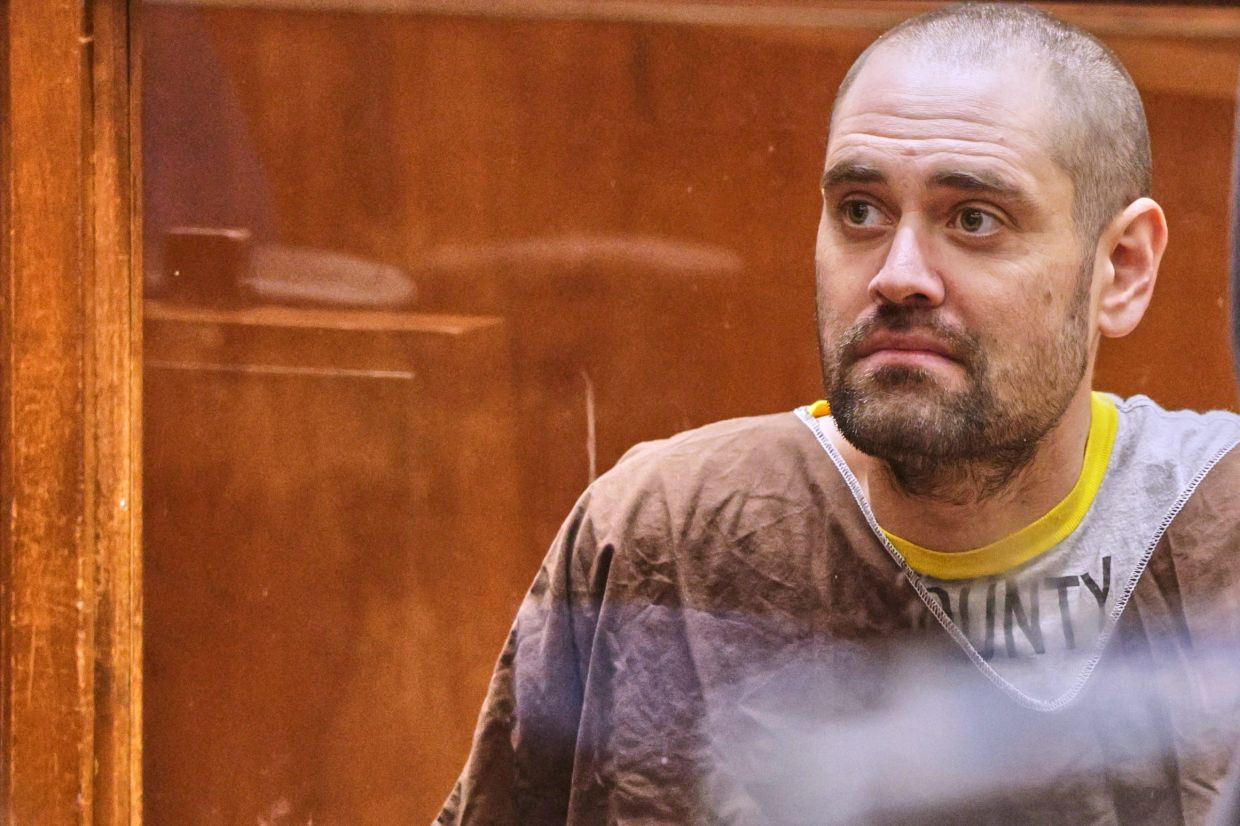
Nick Reiner, the 32-year-old son of acclaimed Hollywood director Rob Reiner, has filed a petition in Los Angeles County court seeking immediate access to trust funds his parents established for him, money he says he desperately needs to mount a defence against murder charges. The civil filing, submitted by his attorneys on Monday, argues that the trustees managing the funds have unlawfully withheld payments without legitimate grounds, depriving him of resources that are rightfully his own under the terms of the trust document.
Rob Reiner and his wife, Michele Singer Reiner, a photographer and producer, were fatally stabbed in their Brentwood home on December 14. Nick Reiner was apprehended within hours and has since entered a not guilty plea to two counts of murder. The case has drawn significant media attention given the family's prominence in the entertainment industry and the shocking nature of the allegations.
The timing of Reiner's trust petition reveals the practical difficulties he faces in securing adequate legal representation. He initially retained renowned defence attorney Alan Jackson, but Jackson withdrew from the case less than a month later, citing reasons he declined to disclose publicly. The new filing indicates that Reiner's siblings, Jake and Romy, had initially pledged to cover Jackson's fees, but subsequently reversed their decision. Jackson's declaration, included with the petition, states that his firm remains prepared to resume representation once funding becomes available, underscoring how financial constraints are directly impacting Reiner's access to quality legal counsel at a critical juncture.
The trust in question was established in 1993 by Rob and Michele Reiner with explicit directives regarding distribution. According to the petition, Nick was to receive half of the trust's assets upon turning 30 and the remainder at 35. The filing contends that he never received the funds due at age 30, and that the current trustee, attorney Paul R. Kanin—who assumed control in February—has employed varying pretexts to deny the payout. Kanin's cited justifications have included vague concerns about Reiner's mental competence, which the petition argues bears no legitimate relationship to a distribution schedule that is mandatory under the trust's terms.
The magnitude of the financial dispute is substantial. Court documents indicate the trust holds at least $1.5 million in assets, though Kanin has resisted disclosing the precise total value. Reiner's petition argues that he requires access not only to the funds owed at age 30 but also the balance designated for age 35, citing both his legal defence needs and basic living expenses incurred while in custody. This dual claim underscores the mounting pressure faced by defendants navigating complex murder cases, where mounting legal fees rapidly deplete personal resources.
Separate from this specific trust, the Reiner family maintained a larger consolidated family trust, which remains uninvolved in the current dispute. The petition establishes that Rob and Michele created smaller individual trusts for each of their children, a structure designed to provide each son with dedicated financial security. The challenge now centres on whether trustee discretion—typically broad in trust law—can be exercised to withhold distributions when the beneficiary faces criminal jeopardy.
The legal struggle over the trust funds reflects broader questions about access to justice and the ability of accused individuals to mount robust defences. While the defence petition asserts that Nick Reiner is entitled to draw upon his own lawfully inherited resources, the trustees appear to view the criminal charges as grounds for caution, if not outright withholding. This tension between beneficiary rights and trustee discretion will likely become a focal point as the case proceeds, particularly if judicial review occurs.
Murder proceedings in Reiner's case have advanced at a measured pace. A pretrial hearing is scheduled for September, providing time for additional motions and legal maneuvering. Notably, District Attorney Nathan Hochman has announced that his office has not yet determined whether to pursue capital punishment, despite Reiner being eligible for the death penalty. This decision, expected in coming months, could significantly alter the trajectory and complexity of the case.
Public information about the homicides remains remarkably limited. Authorities have declined to comment on any possible motives, and information leakage from either side of the investigation has been minimal. A court order has sealed most autopsy findings, leaving substantial gaps in the publicly available narrative. High-profile defence attorney Alan Jackson, on the day he departed the case, made an unusually explicit statement outside the courthouse, declaring that "pursuant to the laws of California, Nick Reiner is not guilty of murder." Such declarations from departing counsel are rare and suggest Jackson's personal assessment of the evidence.
In April, Jake Reiner, Nick's brother, provided the most comprehensive public account of the family's circumstances since the deaths, characterizing the ordeal as "a living nightmare" that remains "too devastating to comprehend." His statement acknowledged both the grief of losing his parents and the trauma of having his brother accused of their murders—a cascade of losses that has fractured the Reiner household. For Malaysian readers following high-profile criminal cases, this situation illustrates how wealth and professional standing offer limited protection against the devastation of violent crime and how family fortunes can become entangled in legal disputes even as loved ones face the most serious accusations.