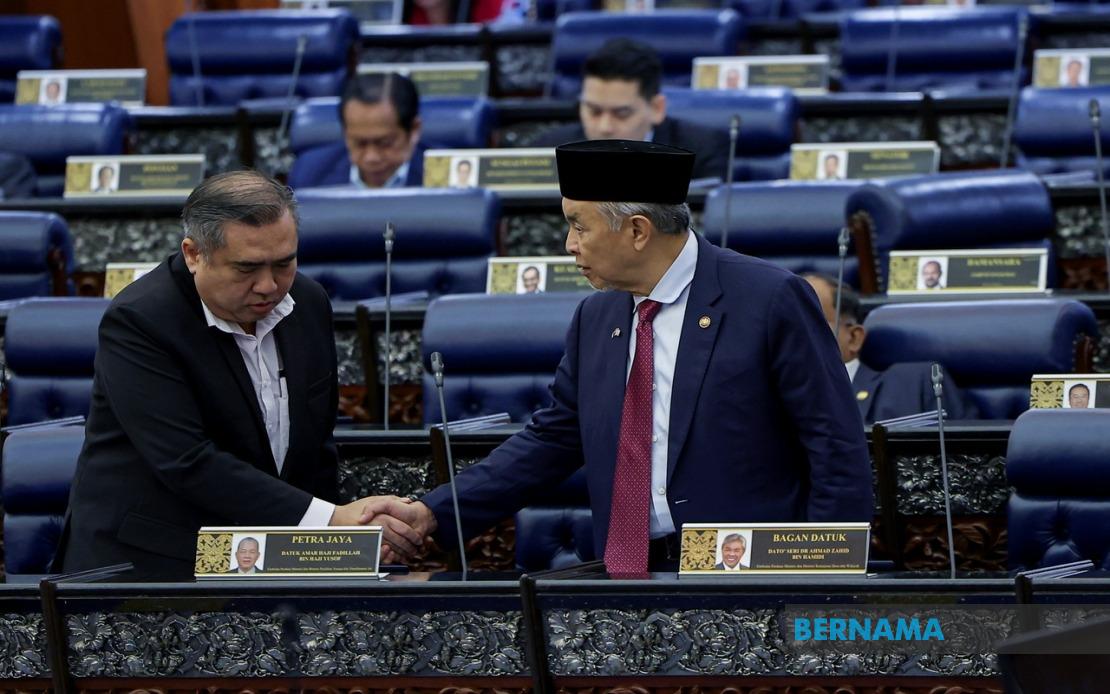
Transport Minister Anthony Loke formally introduced the Road Transport (Amendment) Bill 2026 to the Dewan Rakyat on June 22, marking the opening salvo in legislative efforts to overhaul Malaysia's road safety framework. The comprehensive amendment package signals the government's determination to fortify regulatory mechanisms and tighten enforcement protocols under the existing Road Transport Act, with the second reading scheduled within the current parliamentary session. The Bill represents one of the most substantive updates to road transportation law in recent years, reflecting mounting concerns about traffic safety and the need for more effective deterrents against dangerous driving behaviour.
The penalty structure undergoes a significant recalibration across multiple offence categories. Standard fines for common violations—ranging from unregistered vehicle numbers to unlicensed operation—would climb from a floor of RM300 to RM500. This broadened financial obligation applies to documented infractions including speeding, breaches of vehicle construction and equipment standards, ignoring traffic signals, and participation in illegal street racing. The escalation fundamentally reshapes the cost-benefit calculation for motorists considering traffic law violations, potentially elevating compliance across urban and rural road networks where enforcement traditionally faces resource constraints.
More severe penalties target the most hazardous driving practices. Drivers caught operating vehicles with suspended licences face imprisonment of up to three years alongside fines between RM3,000 and RM10,000—a dramatic increase from the previous maximum of one year incarceration or RM5,000 in fines. This provision responds to documented risks posed by drivers operating without valid credentials, who statistically demonstrate higher accident involvement. The tripled imprisonment ceiling and doubled fine range acknowledge that licence suspension often follows serious violations, and repeat offenders operating suspended licences represent a compounding public safety concern that existing penalties had failed to adequately address.
The Bill introduces an entirely new criminal framework specifically targeting street racing and speed-testing on public roads. First-time offenders face RM2,000 to RM10,000 in fines coupled with imprisonment up to two years, while repeat convictions trigger sentences of no fewer than five years alongside fines reaching RM20,000. This bifurcated approach reflects official recognition that organised racing and dangerous speed trials have evolved into systemic enforcement challenges, particularly affecting younger demographics and demanding proportionally heavier consequences. The severity escalation for repeat offences establishes meaningful differentiation within the criminal code, effectively treating habitual racing participants as serious traffic criminals rather than merely errant motorists.
False statement provisions undergo substantial tightening through amendments proposed in Clause 28 and associated sub-clauses. Making false declarations to road transport authorities—whether regarding vehicle ownership, maintenance records, or licensing status—becomes punishable by fines up to RM200,000 or imprisonment extending to ten years. The dramatic scale of these penalties reflects governmental concerns about document fraud within the vehicle registration system and the cascading risks when false information circulates through enforcement databases. Such comprehensive deterrence targets organised rings that facilitate unroadworthy vehicles remaining in circulation through fraudulent documentation.
Enforcement apparatus receives substantial institutional fortification through legislative amendments. Police officers and road transport officers gain expanded authority to control and redirect traffic flow, enabling more flexible response to congestion and accident situations without requiring prior statutory specification of intervention methods. This discretionary broadening acknowledges operational realities where pre-defined protocols sometimes prove inadequate for dynamic roadway conditions. Simultaneously, the Bill creates new arrestable offences for obstructing or assaulting enforcement personnel, recognising that road officers increasingly encounter physical intimidation when executing regulatory duties. This protection extends legal safeguards for officials conducting compliance work.
Micromobility vehicle regulation emerges as an innovation reflecting urban transportation evolution. The Bill establishes detention and disposal procedures for e-scooters and similar devices, addressing the regulatory vacuum that has permitted proliferation of unregistered devices on Malaysian roads. As cities throughout Southeast Asia confront micromobility governance challenges, this legislative initiative positions Malaysia within emerging regulatory frameworks attempting to integrate alternative transport modes while maintaining safety standards. The detention regime creates enforcement mechanisms previously absent, enabling authorities to remove hazardous devices from circulation.
Compound authority undergoes recalibration in Clause 37, which raises the maximum compound amount for violations from RM300 to RM500. This adjustment expands settlement options for minor infractions, allowing enforcement officers to resolve low-level violations through immediate financial penalties rather than court prosecution. The higher ceiling preserves prosecutorial discretion while encouraging compliance through accessible settlement pathways that avoid courtroom proceedings for technical violations. Such mechanisms typically improve enforcement effectiveness by providing proportionate consequences that remain meaningful without burdening judicial systems.
Ministerial authority expands concerning foreign vehicle entry permits through the proposed transfer of Section 66 authority. Transport Ministry officials gain capacity to establish fee structures governing international motor vehicle permits, streamlining administrative processes previously requiring legislative adjustment for fee modifications. This delegation recognises the operational necessity for regulatory flexibility when managing cross-border vehicle movement, particularly relevant given Malaysia's regional connectivity and growing tourism-related vehicle imports. The mechanism permits responsive fee adjustment without requiring parliamentary intervention for administrative modifications.
The legislative package demonstrates sophisticated response to documented patterns of road trauma throughout Malaysia. Traffic fatalities and injuries generate substantial healthcare costs, productivity losses, and social impacts that comparative analysis links directly to enforcement intensity and penalty severity. Neighbouring jurisdictions implementing analogous stricture increases have reported measurable compliance improvements, particularly among repeat offenders deterred by escalated imprisonment prospects. Malaysia's adoption of similar frameworks positions the nation alongside regional counterparts implementing evidence-based safety enhancements.
Implementation challenges will likely emerge during the second reading and committee phases. Enforcement resource adequacy remains uncertain, particularly regarding capacity to process substantially increased caseload volumes should compliance decline. Training requirements for officers administering expanded authority demand investment in professional development infrastructure. Additionally, public communication campaigns must accompany legislative passage to ensure motorist awareness of revised penalty structures, as behaviour modification depends partially upon perceived likelihood of detection and punishment severity.
The Bill's comprehensive scope reflects maturation in road safety governance, moving beyond incremental penalty adjustments toward systemic reform encompassing enforcement tools, personnel protection, and emerging vehicle categories. Successful implementation requires sustained political commitment extending beyond legislative passage, including adequate budgetary allocation for enforcement expansion and genuine cooperation between multiple agencies. For Malaysian drivers, the implications are substantial: routine violations incur materially higher costs, dangerous practices face genuinely deterrent consequences, and enforcement capacity expands notably.