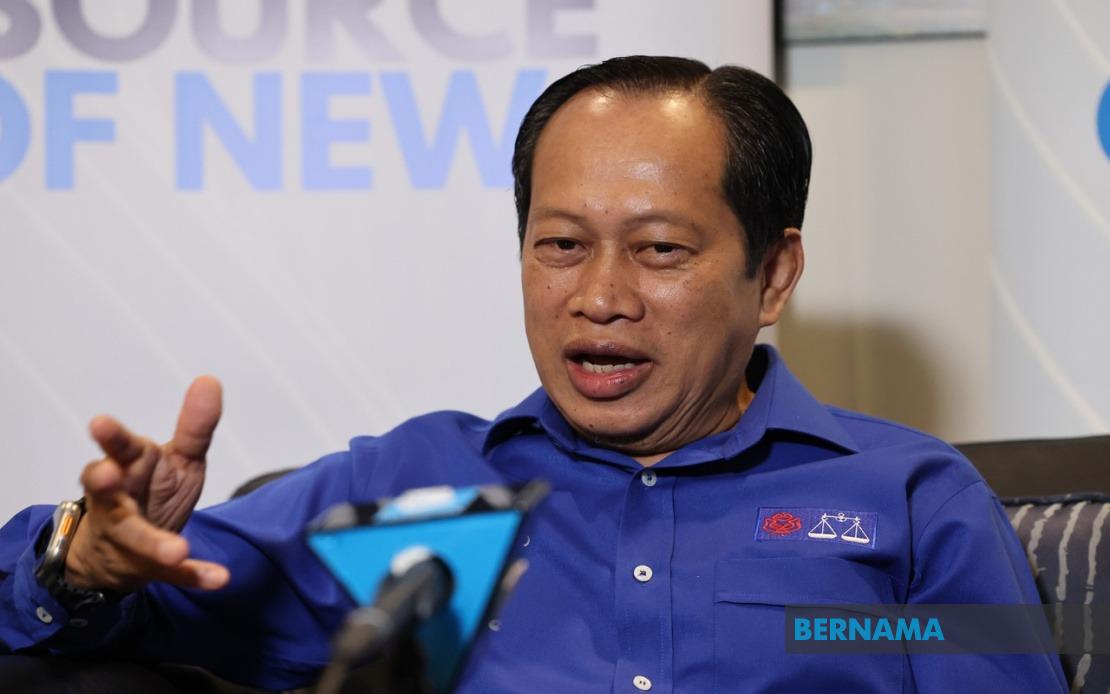
Effective road upkeep across Malaysia hinges on a collaborative approach involving elected officials, local authorities, and government agencies working in tandem, according to Datuk Seri Dr Ahmad Maslan, Deputy Minister of Works. Speaking in Johor Bahru on July 2, the minister underscored the necessity for all stakeholders to shoulder responsibility for identifying and addressing deteriorating road conditions before they escalate into safety hazards affecting commuters and economic activity.
Ahmad has directed the Public Works Department (JKR) to accelerate repair work on roads showing signs of damage or poor maintenance. His intervention reflects growing pressure on the federal government to improve road conditions nationwide, particularly in states where infrastructure complaints have become increasingly vocal on social media platforms. The minister's call for expedited action suggests that current maintenance timelines may not be meeting public expectations, necessitating a shift in operational priorities.
The deputy minister outlined a cascading responsibility structure whereby assemblymen, Members of Parliament, and relevant local government bodies must each play active roles in flagging road problems and facilitating timely repairs. Rather than waiting for complaints to accumulate, Ahmad advocates for proactive identification of maintenance requirements, enabling JKR to sequence repairs efficiently. This distributed accountability model recognises that elected representatives at state and federal levels possess direct access to constituents and are often the first to receive complaints about local infrastructure deterioration.
During his recent tour of Johor's administrative divisions, Ahmad visited all ten district-level JKR offices across the state. These development briefing sessions appear designed to reinvigorate departmental efficiency and ensure that repair requests are processed without unnecessary bureaucratic delays. The frequency and breadth of Ahmad's site visits signal that the Works Ministry is taking road conditions seriously and seeking to establish direct communication channels with field-level staff responsible for maintenance execution.
Ahmad's remarks came in response to a recent incident in which Dr Maszlee Malik, a Pakatan Harapan candidate contesting the Puteri Wangsa state seat, drove along Jalan Tebrau to document road conditions firsthand. Maszlee's journey from Kampung Melayu Majidi to Ulu Tiram on June 29 was undertaken following numerous complaints on social media about deteriorating asphalt, uneven surfaces, and traffic congestion affecting the corridor. His decision to personally inspect the road and subsequently share his findings represents a political demonstration of responsiveness to constituent concerns, effectively putting the government on notice that opposition parties are monitoring infrastructure conditions.
During his inspection, Maszlee documented how his Perodua Myvi experienced jolting motions as it traversed sections with uneven or potholed surfaces, providing tangible evidence of the road's poor condition. Additionally, he observed significant traffic congestion during peak travel periods, suggesting that maintenance issues are compounded by capacity constraints. The former Education Minister's public documentation of these problems illustrates how political opposition candidates are increasingly leveraging social media and field investigations to highlight infrastructure gaps and position themselves as attentive to grassroots concerns.
Ahmad's response to these developments provides insight into the funding and approval architecture governing road maintenance in Malaysia. Federal road repairs, highway upkeep, and bridge maintenance are financed through allocations distributed via the State Economic Planning Unit (UPEN) and processed through state executive councils. This multi-step approval process requires applications to be submitted, evaluated for priority and necessity, and formally approved before funds are released and work can commence. While this structured approach ensures financial accountability, it may also introduce delays that frustrate communities experiencing deteriorating road conditions.
The involvement of state-level economic planning units and executive councils in the approval process reflects Malaysia's federal system, wherein road maintenance encompasses both federal and state responsibilities. Projects must be assessed against competing infrastructure priorities and available budget allocations, potentially causing meritorious repair requests to experience extended wait times. For Malaysian readers familiar with infrastructure development complaints, this bureaucratic structure often emerges as a bottleneck that Ahmad's ministry appears determined to streamline without compromising financial oversight.
The contrast between Ahmad's emphasis on coordinated responsibility and the political reality of election campaigns is noteworthy. While the deputy minister advocates for cross-party cooperation and systematic approaches to road maintenance, opposition candidates such as Maszlee are simultaneously highlighting infrastructure shortcomings as evidence of incumbent ineffectiveness. This tension between collaborative governance and electoral competition reflects broader challenges in Malaysian politics, where infrastructure delivery becomes entangled with political narratives and blame attribution.
For Southeast Asian observers, Malaysia's road maintenance challenges reflect wider regional patterns wherein rapid urbanisation and traffic growth outpace infrastructure investment timelines. Many countries across the region grapple with similar issues of aging road networks, insufficient maintenance budgets, and coordination difficulties between central and subnational governments. Ahmad's call for stakeholder cooperation acknowledges these structural pressures while attempting to optimise outcomes within existing resource constraints.
The Jalan Tebrau situation exemplifies how social media has transformed infrastructure politics in Malaysia. Communities can now document deficiencies, share evidence, and organise collective demands for action without relying solely on formal government channels. Opposition politicians have adeptly leveraged this capacity to position themselves as responsive advocates, placing pressure on incumbent administrations to demonstrate visible improvements. Ahmad's directives to JKR appear partly responsive to this political dynamic, suggesting that infrastructure maintenance increasingly carries electoral implications.
Moving forward, Ahmad's emphasis on expedited repairs and multi-stakeholder coordination will be assessed by outcomes on the ground. Whether JKR can meaningfully accelerate repair timelines, whether elected representatives at all levels meaningfully contribute to problem identification, and whether the state approval process remains a binding constraint will determine whether his initiatives produce tangible improvements. For Malaysian commuters tired of potholed roads and congested corridors, Ahmad's commitment to action will ultimately be judged by whether roads are repaired with greater speed and effectiveness than previously demonstrated.

