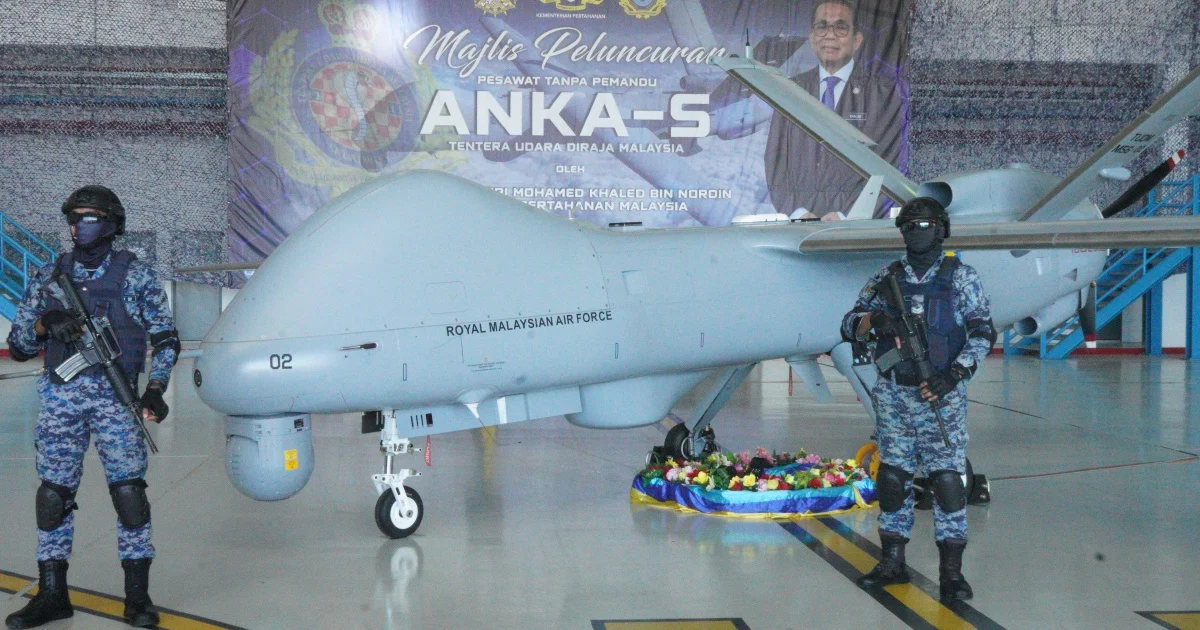
The Royal Malaysian Air Force has announced plans to deploy its Anka-S unmanned aerial system across the South China Sea, marking a significant upgrade to the nation's maritime surveillance infrastructure. Operating from Labuan, the cutting-edge drone platforms will provide continuous monitoring capabilities over waters that remain central to Malaysia's strategic and economic interests, while simultaneously reinforcing the country's ability to track regional maritime activities with greater precision and frequency than traditional manned aircraft.
The Anka-S represents a technological leap forward for Malaysian defence operations. Unlike conventional patrol aircraft that require crews and must return to base periodically for refuelling and maintenance, these unmanned systems can remain aloft for extended periods, delivering persistent surveillance coverage across vast oceanic expanses. This enduring presence translates directly into enhanced situational awareness—the military's capacity to detect, track, and document vessel movements, fishing activities, and potential security threats without the constraints that limit manned operations. For a maritime nation like Malaysia, which depends heavily on sea trade and marine resources, this capability enhancement addresses a longstanding operational gap.
The South China Sea remains one of global commerce's most vital arteries, with trillions of dollars in annual trade transiting through its waters. However, the region has become increasingly contested as multiple claimant states assert overlapping territorial and maritime rights. China, Vietnam, the Philippines, Taiwan, Brunei, and Malaysia all maintain claims to portions of the sea, creating a complex geopolitical environment where incidents—whether accidental or deliberate—carry potential for regional tension. Malaysia's reliance on the Anka-S system reflects recognition that maintaining clear visibility over maritime zones is essential for protecting national interests and preserving freedom of navigation.
Deploying advanced surveillance assets also serves a diplomatic function within the region's security architecture. By maintaining robust monitoring capabilities, Malaysia signals to regional partners and international stakeholders that it takes its maritime responsibilities seriously. This demonstration of surveillance competence can deter potential violations of Malaysian waters while providing the government with reliable intelligence for conducting diplomatic negotiations and enforcing maritime law. The Anka-S deployment effectively allows Malaysia to document activities within its jurisdiction with greater credibility and precision than previously possible.
The drone system's operational advantages extend beyond mere surveillance. Modern unmanned platforms like the Anka-S can carry sophisticated sensor packages including high-resolution cameras, infrared imaging systems, and electronic monitoring equipment. This sensor fusion capability enables operators to distinguish between legitimate commercial activities and suspicious operations, from illegal fishing to smuggling and human trafficking. Given the prevalence of transnational maritime crimes in Southeast Asian waters, this enhanced detection capacity serves broader national security and law enforcement objectives beyond conventional military concerns.
Malaysia's investment in the Anka-S platform also reflects broader strategic thinking about future defence requirements. Traditional air forces increasingly recognize that manned fighter jets and conventional patrol aircraft, while essential for certain roles, are insufficient for comprehensive maritime domain awareness across sprawling jurisdictions. Unmanned systems offer cost-effective force multiplication, allowing limited military budgets to achieve greater coverage. The long endurance of platforms like the Anka-S means fewer aircraft sorties are required to maintain continuous observation, reducing operational costs while improving coverage persistence—a particularly valuable consideration for developing nations managing competing budgetary demands.
The integration of drone technology into Malaysian air operations also positions the military to cooperate more effectively with regional partners operating similar systems. Countries including Turkey, whose Anka platform inspired Malaysia's acquisition, have shared technical expertise and operational best practices. This interoperability potential enhances the utility of Malaysia's investment, as allied militaries can share surveillance data and coordinate operations more seamlessly. Such cooperation strengthens the entire region's ability to address transnational maritime challenges ranging from piracy to environmental protection.
From an international law perspective, the Anka-S deployment underscores Malaysia's commitment to exercising its rights under the United Nations Convention on the Law of the Sea, which permits countries to conduct maritime surveillance within their exclusive economic zones and territorial waters. By demonstrating sustained surveillance capability, Malaysia strengthens its legal position regarding maritime claims and activities within its jurisdiction. The technological sophistication of the monitoring system reinforces the credibility of any enforcement actions or diplomatic positions Malaysia subsequently adopts regarding contested maritime issues.
The deployment also carries implications for Malaysia's defence industrial development. By acquiring and operating sophisticated unmanned systems, the RMAF develops expertise that could eventually support domestic defence manufacturing aspirations. Building institutional knowledge about drone operations, maintenance, and integration with broader force structures creates a foundation for potential future technology transfer agreements or collaborative development programmes with international partners.
Looking forward, the Anka-S represents just one element of Malaysia's evolving approach to maritime security. The system works in conjunction with surface vessels, coastal radar installations, and satellite reconnaissance to create layered situational awareness. As commercial and military drone technology continues advancing globally, Malaysia's early adoption of these capabilities positions the country to maintain technological currency in Southeast Asia's increasingly competitive security environment. The investment reflects pragmatic recognition that mastering modern surveillance technology is essential for any nation claiming substantial maritime territory in the contemporary strategic landscape.