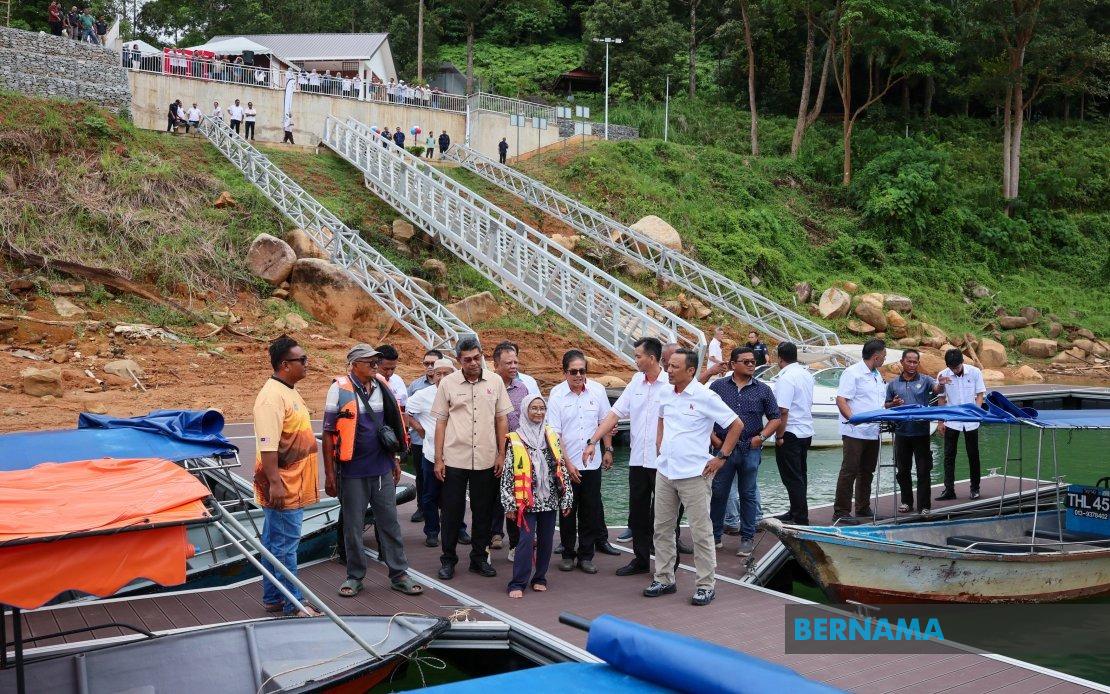
A newly completed RM8.7 million jetty facility at Tasik Kenyir in Terengganu is positioned to transform the lake's standing as a major ecotourism destination across Southeast Asia. The Terengganu Tengah Development Authority (KETENGAH) handed over the project on schedule this July, marking a significant infrastructure milestone for one of Malaysia's most distinctive inland water attractions.
The jetty development represents a carefully planned response to long-standing operational challenges that have plagued the tourism precinct. For years, the docking area around Pengkalan Gawi has been characterised by haphazard boat berthing arrangements, with speedboat and houseboat operators competing for limited, poorly organised space. KETENGAH chairman Datuk Rozi Mamat indicated that the new facility directly addresses these inefficiencies, which had undermined both visitor safety and the broader competitiveness of Tasik Kenyir against regional competitors like Thailand's similar water-based destinations.
Authorised through the Third Rolling Plan of Malaysia's 11th Five-Year Plan (RMK-11), the project commenced in 2023 and delivers infrastructure designed to accommodate more than 80 vessels simultaneously. The scale of this capacity is substantial given that previous unofficial counts suggested fewer than 50 boats could be berthed safely at any given time. This expansion opens possibilities for increased tourism volume and extended operational seasons, directly benefiting boat operators, hospitality providers, and local communities dependent on visitor spending.
Beyond the jetty itself, the development incorporates a comprehensive ecosystem of supporting amenities that signal KETENGAH's commitment to professionalising Tasik Kenyir's tourism infrastructure. A pedestrian walkway spanning approximately 600 metres provides safe pedestrian circulation, while 86 parking bays address persistent congestion issues that deter visitor access. Public toilet facilities, a dedicated guard post, and security infrastructure address hygiene and safety concerns that previous visitors have cited in tourism feedback platforms.
Utility connections throughout the facility reflect international standards for premium water-based tourism. Fully equipped houseboat berthing stations feature reliable electricity and freshwater supplies, essential amenities that differentiate modern accommodations from basic camping experiences. An electrical substation supports stable power distribution across the facility, while a pump house ensures consistent water pressure. These investments demonstrate that the Authority views Tasik Kenyir not as a secondary regional attraction but as a potential international destination requiring world-class service delivery standards.
Operational sustainability received deliberate planning attention through waste management infrastructure. The inclusion of a dedicated waste disposal facility prevents the environmental degradation that has previously marred other Malaysian tourism sites. This forward-thinking approach protects Tasik Kenyir's "ecotourism" designation, which carries expectations of environmental stewardship that resonate strongly with the growing international demographic of conscious travellers seeking sustainable experiences.
The jetty project forms part of a broader strategic investment across Terengganu's central region. KETENGAH received RM48.36 million in development allocations for 2024 to execute 28 distinct programmes and projects across Dungun, Hulu Terengganu, and Kemaman districts. This distributed approach prevents over-concentration of development resources and builds capacity across the entire administrative jurisdiction. Within Tasik Kenyir specifically, five additional concurrent projects demonstrate KETENGAH's commitment to comprehensive destination development rather than ad hoc facility upgrades.
Complementary initiatives currently underway include upgrading work at the Sungai Petang Kelah Sanctuary Complex, which protects a freshwater fish species of conservation significance. Concurrent slope repairs at tourist attractions address safety hazards that could deter family visits. Redevelopment of tourism facilities at Pulau Petang creates additional activity hubs, distributing visitor pressure across the lake rather than concentrating it at single nodes. Construction of a public mini park at Gawi Point provides free recreational space for budget-conscious local and domestic tourists. Simultaneous revitalisation of the Herbal Park maintains Tasik Kenyir's positioning as a multi-activity destination combining water recreation with botanical education.
These interconnected projects reflect contemporary destination management principles increasingly adopted by leading Southeast Asian tourism authorities. Rather than relying on a single flagship attraction, Tasik Kenyir is being deliberately positioned as an integrated experience cluster where water-based recreation, wildlife observation, botanical tourism, and cultural activities reinforce each other. This diversification strategy reduces seasonal volatility and appeals to different visitor demographics simultaneously.
For Malaysian tourism planners, Tasik Kenyir's transformation carries implications for regional competitiveness. Thai destinations like Khao Yai and Chaiang Rai have benefited from sustained infrastructure investment and integrated destination marketing. The RM8.7 million jetty, combined with surrounding enhancements, signals Malaysia's willingness to invest comparably in its ecotourism assets. This infrastructure credibility matters significantly to international tour operators evaluating destination reliability and safety standards when planning itineraries.
Local economic effects should extend beyond direct tourism receipts. The jetty's operational requirements will generate employment in facility management, security, cleaning, and maintenance. Houseboat and speedboat operators gain access to professional berthing services, potentially enabling them to upgrade service quality and justify premium pricing. Nearby hospitality businesses including restaurants, accommodations, and retail outlets benefit from increased visitor throughput and extended operational seasons. These multiplier effects distribute economic gains across Terengganu's central region, supporting sustainable development objectives.
Datuk Rozi's confidence that unorganised berthing issues around Pengkalan Gawi will resolve gradually reflects realistic expectations that behavioural change accompanies infrastructure investment. Previous informal berthing arrangements emerged because formal alternatives did not exist; the new facility removes this constraint. However, enforcement and operator education will determine whether the transition occurs smoothly or encounters resistance from operators accustomed to informal arrangements.
The completion of this jetty on schedule and within budget also demonstrates institutional competence within KETENGAH's project management systems, building confidence for future major infrastructure initiatives. In Malaysian governance, such successful project execution builds political support for continued resource allocation, creating conditions for sustained investment in destination development. As Tasik Kenyir's international profile rises, Malaysia's position within Southeast Asia's competitive tourism landscape correspondingly strengthens.

