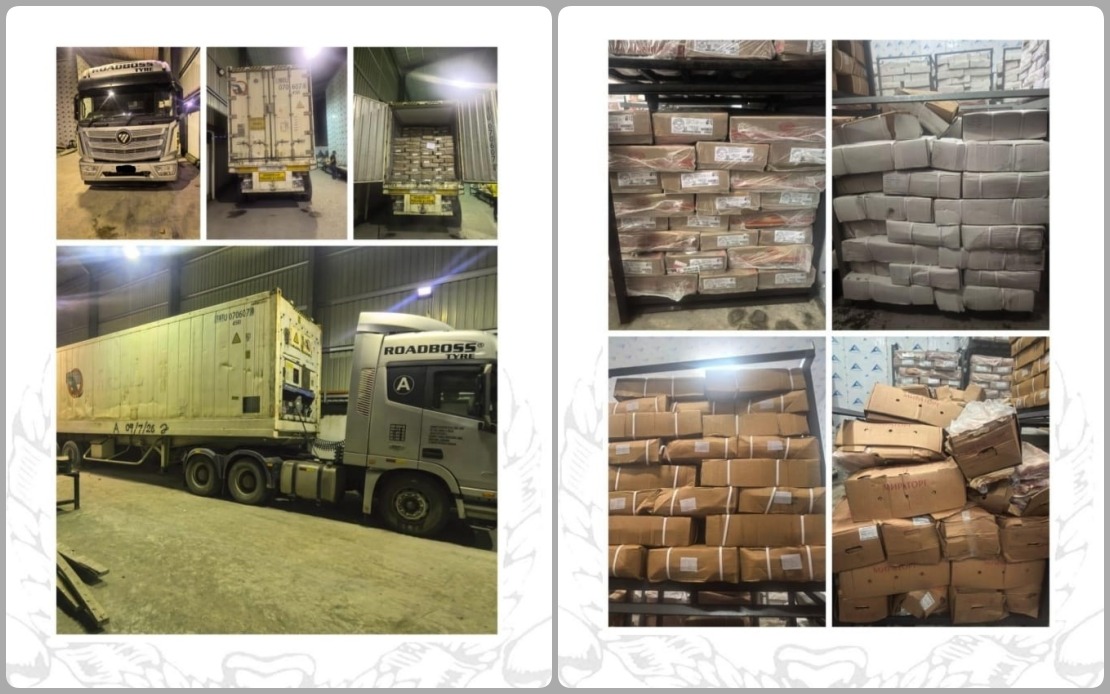
Malaysian police have arrested a local man and confiscated RM6.19 million worth of frozen pork products following a coordinated raid at a warehouse in Miri, Sarawak, in an operation underscoring the country's escalating efforts to combat food smuggling and protect public health standards. The 26-year-old suspect was detained at 8 pm during Operation Taring Chiller, which uncovered an extensive stockpile of pork imports allegedly brought into the country without the necessary documentation or regulatory clearance.
The scale of the seizure illustrates the sophistication of illicit food trade networks operating within Malaysia's supply chains. According to Datuk Seri Mohd Yusri Hassan Basri, director of the Internal Security and Public Order Department (JKDNKA), inspectors discovered approximately 30,000 kilogrammes of processed frozen pork large intestines, 18,000 kilogrammes of pork loin arranged across 15 pallets, 750 kilogrammes of pork comprising a separate pallet, multiple shipments of bone-in pork bellies with rind intact, and substantial quantities of frozen pork shoulder. The diversity and volume of products suggest the operation targeted wholesale distribution rather than small-scale retail smuggling.
This enforcement action reflects heightened attention to undocumented frozen food inventory, a persistent regulatory challenge across Southeast Asia where porous borders and complex supply chains create opportunities for contraband. The operation involved coordination between the Wildlife Crime Bureau and Special Investigation Intelligence (WCB/PSK), Miri district police headquarters, and the Sarawak Veterinary Services Department, demonstrating the multi-agency approach now standard for food security investigations. Such collaboration has become essential as smuggling networks adapt their tactics to evade detection across different jurisdictional boundaries.
Regulatory violations extend beyond import documentation issues. The products' halal certification status remains unverified, raising concerns about consumer protection and religious compliance in Malaysia's Muslim-majority population. Food items of uncertain provenance and processing standards pose dual risks: potential public health hazards and breaches of halal requirements that carry significant weight in the Malaysian market and regulatory framework. The government's emphasis on "frozen food of unknown halal status" signals awareness that such operations undermine both food safety protocols and faith-based consumer protections.
The case has been registered under Sections 9(1) and 9(3) of the Veterinary Public Health Ordinance 1999, the primary legislative instrument governing animal product imports and safety. Additionally, authorities issued a RM25,000 compound notice to address the violations, representing a substantial financial penalty designed to deter future contraventions. These enforcement mechanisms, while significant, reflect the government's determination to impose consequences for regulatory breaches that could otherwise proliferate if left unchecked.
Broader enforcement statistics reveal the magnitude of smuggling challenges facing Malaysia's law enforcement agencies. Between January 1 and July 10 this year, the WCB/PSK conducted 201 raids nationwide, resulting in 375 arrests and seizures valued at RM264.86 million across multiple categories of contraband. Food smuggling represents only one dimension of this activity; operations simultaneously targeted non-duty-paid goods, diverted subsidised commodities, wildlife trafficking, and electronic waste. The cumulative seizure value demonstrates that illicit trade constitutes a significant drain on government revenue and poses multifaceted threats to public welfare and environmental sustainability.
For Malaysian consumers and businesses, the implications are substantial. The presence of RM6.19 million in undocumented pork products within domestic supply chains underscores vulnerabilities in import verification systems and cold-chain monitoring. Retailers and food service establishments purchasing from informal channels face inadvertent exposure to contraband, creating liability and reputational risks. Consumers relying on market assurances regarding food origin and halal certification cannot assume complete safety without robust regulatory enforcement.
The Miri operation also reflects Malaysia's regional position within broader Southeast Asian trade flows. Sarawak's geographic proximity to Brunei and Indonesian territories creates natural smuggling corridors where enforcement intensity must remain consistently high. The concentration of detection efforts in this area suggests customs and law enforcement have identified Sarawak as a critical vulnerability point, warranting sustained operational focus to prevent organised criminal groups from establishing permanent distribution networks.
Government officials have recommitted to intensified intelligence gathering and integrated enforcement operations targeting smuggling syndicates and organised crime structures. This rhetorical emphasis accompanies real operational activity, yet the persistence of large-scale seizures suggests criminal networks continue adapting faster than regulatory capacity expands. The RM264.86 million in contraband detected in six months of 2024 indicates that visible enforcement operations represent only detected violations; unidentified smuggling likely exceeds these figures substantially.
Looking forward, the Miri case highlights the need for enhanced inter-agency coordination and intelligence sharing between Malaysian authorities and neighbouring countries' customs and veterinary services. Food smuggling often involves international networks requiring cross-border investigation capabilities that individual nations alone cannot fully develop. Regional cooperation frameworks that facilitate real-time information exchange could improve interdiction rates and disrupt supply chains at source points rather than domestic destination warehouses.
The arrest and seizure also underscore enforcement disparities across Malaysia's states. Operations concentrate in Sabah and Sarawak, reflecting both smuggling prevalence and available law enforcement resources, yet similar activities likely occur in peninsular Malaysia with lower detection rates. Strengthening enforcement capacity in less-monitored regions could substantially improve overall regulatory effectiveness and reduce illicit food product availability nationwide.
For policymakers, the evidence suggests that penalties and seizures alone provide insufficient deterrence against well-organised smuggling operations generating substantial profit margins. Supply-side interventions targeting cold-chain infrastructure, port security enhancements, and real-time tracking systems may prove more cost-effective long-term than reactive enforcement operations. Consumer awareness campaigns emphasising halal certification verification and food origin documentation could simultaneously reduce demand for undocumented products and encourage market pressure for regulatory compliance.

