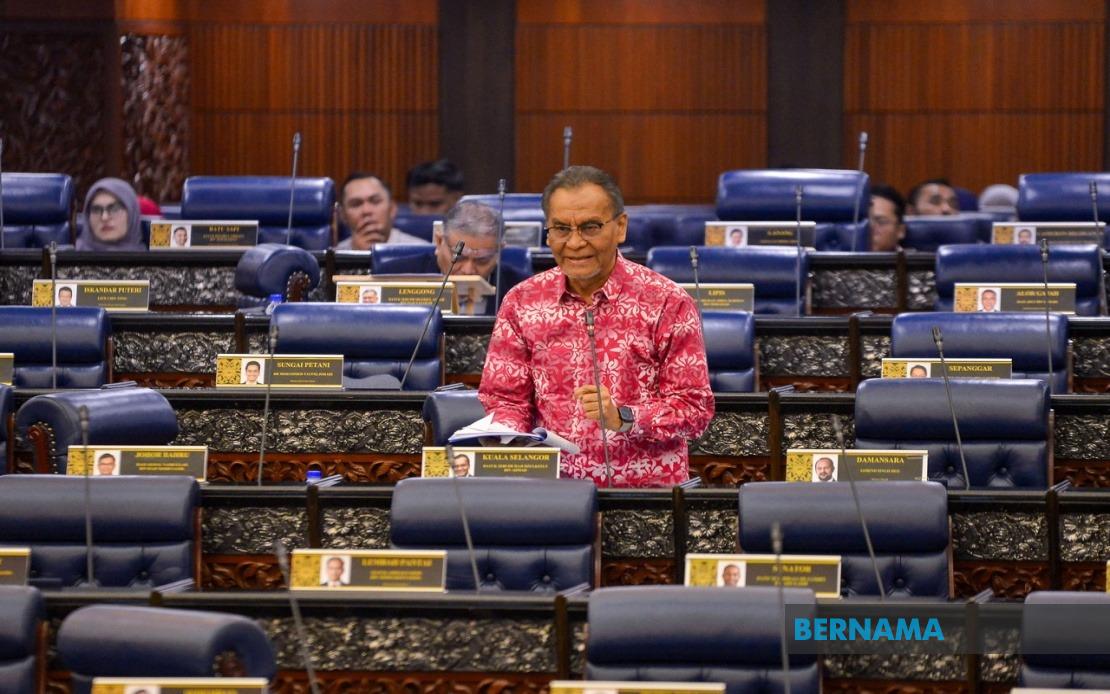
Health Minister Datuk Seri Dr Dzulkefly Ahmad has moved to reassure the public and lawmakers that a RM500 million expenditure restriction imposed on the Ministry of Health represents nothing more than a prudent administrative adjustment and poses no threat to the provision of healthcare services nationwide. Speaking during parliamentary question-and-answer proceedings in the Dewan Rakyat, Dzulkefly explained that the financial measure, which represents approximately 1.07 per cent of the ministry's total annual allocation of nearly RM46.52 billion, stems from the reality that a significant portion of approved funding cannot be deployed because vacant positions remain unfilled despite recruitment efforts.
The expenditure restriction warrant, issued by the Finance Ministry on June 5, has generated concern among lawmakers representing both government and opposition benches. Datuk Shahelmey Yahya from Putatan and Abdul Latiff Abdul Rahman representing Kuala Krai submitted parliamentary questions expressing worry that the budgetary measure might compromise healthcare service quality and slow progress on public health facility development schemes. These concerns reflected broader anxieties about fiscal tightening across government agencies and its potential downstream effects on citizen-facing services.
Dzulkefly's clarification addressed these apprehensions directly by distinguishing between surplus allocation tied to unfilled personnel positions and operational funding. The minister explained that the adjustment affects only excess appropriations designated for positions that the Public Service Department has authorised but for which qualified candidates cannot be recruited. This distinction proves crucial: the ministry had been allocated resources for 18,641 approved positions in 2024, yet staffing shortages meant that even with maximum recruitment efforts, demand could not match available budget allocation. Consequently, the government identified approximately RM500 million in unused personnel-related funds that could be redirected to other priority areas without compromising existing healthcare delivery.
Critically, Dzulkefly underscored that the adjustment leaves untouched all funding designated for operations, capital development initiatives, employee allowances, staff training programmes, and procurement of medical equipment and supplies. This layered distinction becomes important for understanding Malaysia's budgetary mechanisms: the government maintains flexibility through re-prioritising expenditure across categories rather than imposing blanket cuts that would indiscriminately affect all ministry functions. By reallocating resources to emphasise prudent deployment of available funds, the ministry can maintain service continuity while the Finance Ministry achieves its fiscal objectives.
Claims circulating in some quarters that the restriction would degrade hospital services particularly in rural and underserved areas lack factual foundation, according to the minister. Rural health facilities, which face perennial challenges in attracting and retaining specialist staff, depend fundamentally on operational and development budgets rather than unfilled positions. The adjustment's structural nature means that basic services—outpatient care, emergency treatment, preventive health programmes, and essential procedures—will continue uninterrupted at facilities across the peninsula and in Sabah and Sarawak. Development projects scheduled under capital expenditure plans similarly remain protected.
This budgetary adjustment arrives amid broader government efforts to address healthcare system sustainability and rising costs borne by the public. Beyond maintaining existing service levels, Dzulkefly announced that the Ministry of Health would launch a foundational health insurance product during July at selected hospital locations, with nationwide expansion planned for January 2027. The Base Medical and Health Insurance/Takaful scheme, developed through the Joint Committee on Private Healthcare Costs, targets the escalating burden of private treatment expenses and insurance premiums that increasingly constrain household budgets across income groups.
The new insurance product represents the government's acknowledgment that Malaysia's public healthcare system, despite its efficiency and accessibility, cannot absorb all citizen demand, and that the private sector's role continues expanding. By introducing an affordable basic coverage option, policymakers aim to provide lower-income Malaysians with protection against catastrophic health expenditures while limiting the upward spiral of private insurance costs. This initiative forms part of a broader strategic vision to create a more balanced, resilient healthcare ecosystem.
Complementing the insurance initiative, the Ministry of Health is establishing a Diagnosis Related Groups payment framework that will standardise hospital billing and charge structures across public, private, university, and military hospital networks nationwide. This benchmarking system seeks to introduce transparency and consistency to healthcare pricing—a persistent friction point where patients frequently encounter vast variations in charges for identical procedures between institutions. By establishing common reference standards, the DRG system can facilitate more equitable access and allow consumers to make informed choices.
The timing of these initiatives reflects official recognition that Malaysia's healthcare infrastructure faces mounting pressures from population growth, ageing demographics, and chronic disease prevalence. The public system, while maintaining enviable efficiency metrics compared to regional peers, operates near capacity in many urban centres. The private sector absorbs overflow demand but operates without consistent price regulation, creating distortions that ultimately burden households. The government's multi-pronged approach—protecting operational budgets, introducing affordable insurance protection, and standardising pricing mechanisms—suggests an integrated vision rather than ad hoc responses to immediate fiscal constraints.
For Malaysian healthcare consumers and regional observers monitoring the nation's policy direction, these developments signal that policymakers recognise sustainability requires both supply-side efficiency improvements and demand-side protections. The RM500 million adjustment, positioned as a technical realignment of unfilled positions rather than service reduction, sits within this broader context of maintaining public health capacity while introducing market mechanisms that encourage rational resource deployment. Whether these measures achieve their intended outcomes will become apparent as the insurance product launches and pricing standardisation progresses across hospital networks throughout 2026 and beyond.

