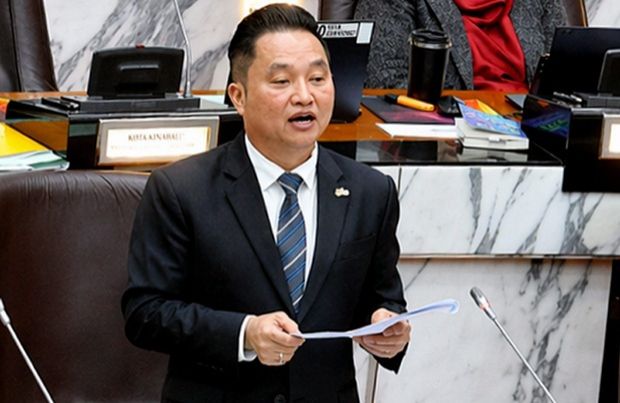
Petaling Jaya is set to gain a new recreation park as state authorities move forward with urban renewal efforts focused on enhancing public spaces and environmental sustainability. The proposed park, to be constructed on vacant land along Jalan PJS1/30 in the Taman Medan district, carries an estimated budget of RM400,000 and represents one element of a comprehensive green infrastructure initiative spanning the city. Selangor's local government and tourism committee chairman Datuk Ng Suee Lim disclosed the development plans during the state assembly session held in Shah Alam on August 10, positioning the project as integral to broader efforts to create a more liveable and environmentally conscious urban environment.
Construction is anticipated to commence in the coming year, though final timing remains contingent on budgetary allocations and implementation priorities set by Petaling Jaya City Council (MBPJ). The transformation of the existing open space addresses multiple urban planning objectives simultaneously. Beyond providing recreational facilities for residents, the project aims to enhance public safety within the locality while fostering a more accessible and community-friendly atmosphere. The initiative also aligns with contemporary urban design principles emphasizing landscape quality improvements and the establishment of green infrastructure networks that support both environmental and social wellbeing across densely populated residential areas.
The Taman Medan park development forms part of a much larger strategic framework known as the Damansara Damai People's Park Landscape Masterplan, which MBPJ has developed in coordination with the Petaling Jaya Strategic Plan 2030. This comprehensive masterplan reflects the council's commitment to establishing five distinct urban parks throughout the city, each designed to serve specific community needs while contributing to broader sustainability objectives. The hierarchy of priorities guiding these developments emphasizes recreational provision, environmental conservation efforts, biodiversity enhancement, meaningful community participation in urban spaces, and the advancement of low-carbon city development principles that reduce environmental footprint while improving quality of life.
Among the five planned parks, Taman Damai Belantara, designated as Urban Park 3, will commence phased development beginning next year. This facility distinguishes itself through a pronounced focus on nature education and outdoor learning experiences. The design incorporates specialized features including an urban farming area where residents can engage in horticultural activities, an amphitheatre providing flexible community gathering space, and an information gallery dedicated to environmental education programming. These components work synergistically to create opportunities for residents to reconnect with natural systems while developing practical knowledge about sustainable food production and ecological principles.
Simultaneously, improvements to Taman Damai Setia, identified as Urban Park 1, have already begun implementation this year with continuation anticipated throughout 2024 and beyond on a phased schedule. This existing facility will receive significant upgrades that expand its functional capacity and amenities. Planned additions include a dedicated family recreation zone catering to diverse age groups, a multipurpose hall capable of hosting community events and programs, a bioswale system designed to manage stormwater naturally while supporting vegetation growth, a compost centre promoting waste reduction and circular economy principles, and designated commercial stall operation sites that support local entrepreneurship while activating the public space.
The Sungai Klang riverbank represents another significant component of Petaling Jaya's green infrastructure transformation agenda. Development plans envision converting portions of the river reserve zones around Sungai Klang and the adjoining Sungai Penchala into an extensive green corridor interspersed with recreational facilities. This linear park concept, grounded in the Petaling Jaya Landscape Masterplan, would establish a continuous ribbonlike network of accessible green space threading through the urban fabric. The initiative extends beyond environmental considerations to encompass social connectivity objectives through planned infrastructure development.
Implementation of the riverbank linear park concept includes construction of comprehensive walkway networks and related facilities designed to forge physical and functional connections between the natural riverside environment and surrounding commercial and residential districts. These pathways would facilitate pedestrian access while encouraging residents to engage with the river corridor for recreation, exercise, and leisure purposes. By physically linking natural areas with populated urban zones, the project aims to democratize access to green space and encourage a cultural shift toward outdoor activity and nature appreciation among diverse demographic groups within Petaling Jaya's communities.
During his address to the state assembly, Datuk Ng Suee Lim responded to queries raised by Dr Afif Bahardin, the Perikatan Nasional assemblyman representing Taman Medan, regarding MBPJ's broader strategy for park expansion and riverbank transformation. The discussion underscored the interconnected nature of these development initiatives and their collective contribution to urban livability objectives. Dr Afif's intervention signaled constituent interest in green space provision within the Taman Medan constituency, reflecting broader public sentiment regarding the importance of accessible recreational and environmental amenities in residential areas.
The Petaling Jaya Strategic Plan 2030 framework within which these initiatives sit represents long-term visioning for the city's development trajectory. Rather than responding reactively to immediate pressures, the comprehensive planning approach enables authorities to sequence investments strategically, prioritize interventions addressing multiple objectives simultaneously, and build systemic resilience through integrated green infrastructure networks. This forward-looking orientation positions Petaling Jaya as a case study in contemporary Malaysian urban planning that balances development imperatives with environmental sustainability and community wellbeing.
Realistically, project implementation timelines remain fluid and dependent on multiple factors beyond immediate municipal control. Budget availability, competing capital allocation priorities, land acquisition complexities, and coordination requirements among various government levels and private stakeholders all influence actual execution schedules. Datuk Ng's acknowledgment that these initiatives represent "long-term plans dependent on MBPJ's budget and priorities" reflects the practical constraints shaping municipal development activities. Nevertheless, the articulation of clear planning vision and commitment to phased implementation provides residents with reasonable confidence that green space expansion remains a genuine policy objective rather than merely aspirational rhetoric.
For Malaysian urban residents more broadly, the Petaling Jaya initiative offers insights into how local authorities are attempting to address escalating pressure for improved public space quality and environmental sustainability in high-density residential areas. The emphasis on multifunctional parks serving educational, recreational, ecological, and social cohesion purposes reflects evolving thinking about urban green infrastructure beyond traditional park provision. The integration of nature education, urban agriculture, and biodiversity conservation into recreational facilities demonstrates how municipal authorities increasingly recognize the multiple roles parks must play in supporting contemporary urban living and addressing environmental challenges. As Petaling Jaya moves forward with implementing these plans, outcomes will provide valuable lessons regarding feasibility, community adoption, and effectiveness of integrated green infrastructure strategies across Southeast Asian cities facing similar density and sustainability pressures.

