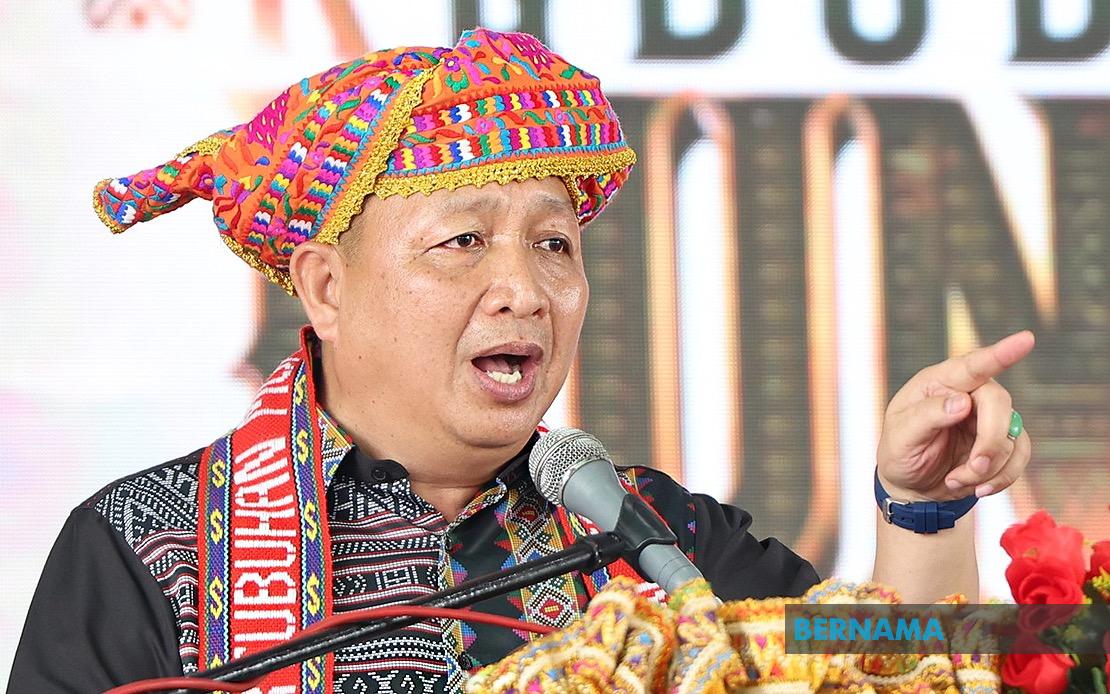
Deputy Prime Minister Datuk Seri Dr Ahmad Zahid Hamidi has unveiled a substantial RM4.06 billion commitment to address water supply challenges facing Sabah's rural populations through the Rural Water Supply (BALB) initiative. The announcement, made at the Rungus Cultural Festival in Kudat on August 8, represents a significant step toward bridging infrastructure gaps that have long isolated interior communities from essential services. Kota Marudu Member of Parliament Datuk Wetrom Bahanda characterised the investment as a demonstration of Putrajaya's resolve to prioritise foundational rural amenities with greater urgency and efficiency than previous programmes.
A notable aspect of the federal government's approach centres on its decision to relinquish direct operational control and instead channel funds through the Sabah state administration. This departure from the conventional centralised model, whereby the Rural and Regional Development Ministry (KKDW) typically manages such schemes from Kuala Lumpur, acknowledges a fundamental reality: state authorities possess superior understanding of localised water infrastructure deficiencies and community priorities. Wetrom stressed that this structural adjustment enables a more granular assessment of actual demand across Sabah's dispersed settlements, facilitating targeted deployment of resources where impact will be greatest.
The significance of this reallocation extends beyond mere administrative convenience. For decades, rural Sabah has grappled with inconsistent water access, creating impediments to economic participation, health outcomes, and quality of life in districts ranked among Malaysia's most economically disadvantaged. The RM4.06 billion infusion, if executed judiciously, possesses the capacity to transform water infrastructure across vast tracts of the state where piped systems remain incomplete or wholly absent. The fund addresses both the technical dimensions of water supply—network expansion, treatment facilities, storage infrastructure—and the governance frameworks necessary to sustain long-term service delivery.
Wetrom's remarks underscored the complementary nature of this water initiative within a broader rural development framework currently advancing across Kota Marudu and Kudat constituencies. Simultaneous investments in regional road networks, including the Sonsogon-Megandai, Mangin, Jalan Rendemon, Jalan Teringai, Jalan Sembayan, and Jalan Raritiden to Pampang Poring corridors, are integral to unlocking economic potential in interior zones. Enhanced connectivity permits agricultural producers to reach markets efficiently, facilitates healthcare access, and encourages investment in communities previously isolated by inadequate transport links. These infrastructure investments function synergistically: reliable water supply catalyses settlement stability and productivity, whilst improved road networks enable delivery of materials and services supporting water system maintenance.
The federal strategy reflects evolving understanding of rural development imperatives in Malaysian Borneo. Previous programmes concentrated on isolated infrastructure projects without sufficient emphasis on local governance capacity or community participation in planning phases. By delegating implementation authority to Sabah's state government, Putrajaya signals acceptance that sustainable rural transformation demands institutional alignment with regional contexts. State authorities can coordinate water projects with concurrent efforts to enhance electrical supply, telecommunications, and social amenities, ensuring holistic rather than fragmented progress.
Wetrom's particular emphasis on upgrading Matunggong subdistrict toward full district status indicates recognition that administrative reorganisation often accompanies infrastructure investment in Malaysian Borneo. Elevation to district status typically brings enhanced budgetary allocations, improved government service presence, and heightened capacity for local development initiatives. This administrative restructuring, paired with substantial water supply investment, could materially alter Matunggong's development trajectory, provided implementation remains disciplined and accountable.
For Malaysian policymakers and Southeast Asian development practitioners, Sabah's RM4.06 billion allocation illuminates persistent challenges confronting rural water provision across the wider region. Despite decades of modernisation, upland and remote lowland communities throughout Borneo continue experiencing acute water supply deficiencies. The commitment underscores that infrastructure investment alone remains insufficient without corresponding attention to operational sustainability, community engagement, and local institutional strengthening. The Sabah initiative's success will depend substantially on whether state authorities establish transparent mechanisms for project monitoring, community consultation, and responsive maintenance systems capable of sustaining installations across difficult terrain.
The timing of this announcement carries particular resonance given longstanding perceptions in Sabah that federal development resources disproportionately favour peninsular Malaysia. Enhanced allocations for water infrastructure, coupled with simultaneous road development investments, constitute tangible redirection of federal spending patterns that may favourably influence regional political sentiment. Rural communities throughout Kota Marudu and Kudat have experienced generational water access instability; visible progress on supply expansion could substantiate federal commitments to equitable development.
Implementation pathways remain critical considerations as Sabah's state government assumes management responsibility. Effective execution requires capacity-building within relevant state agencies, establishment of community feedback mechanisms, transparent procurement protocols, and realistic timelines acknowledging Sabah's geographic complexities. Water infrastructure in interior Sabah confronts distinctive engineering challenges—difficult terrain, dispersed settlement patterns, limited local contracting capacity—requiring specialised technical expertise and adaptive project management approaches.
The RM4.06 billion investment represents opportunity and responsibility simultaneously. Rural Sabahans who have relied on rainwater harvesting, surface sources, and unreliable piped systems for generations deserve reliable, safe water access. Conversely, substantial federal resources demand rigorous stewardship and demonstrable community benefit delivery. Success will be measured not simply by fund allocation announcements, but by functioning water points reliably serving interior households, agricultural enterprises, and small-scale commercial operations throughout Sabah's rural districts. The subsequent months and years will reveal whether this federal commitment translates into transformative infrastructure improvement or becomes yet another programme yielding fragmented benefits and incomplete coverage.

