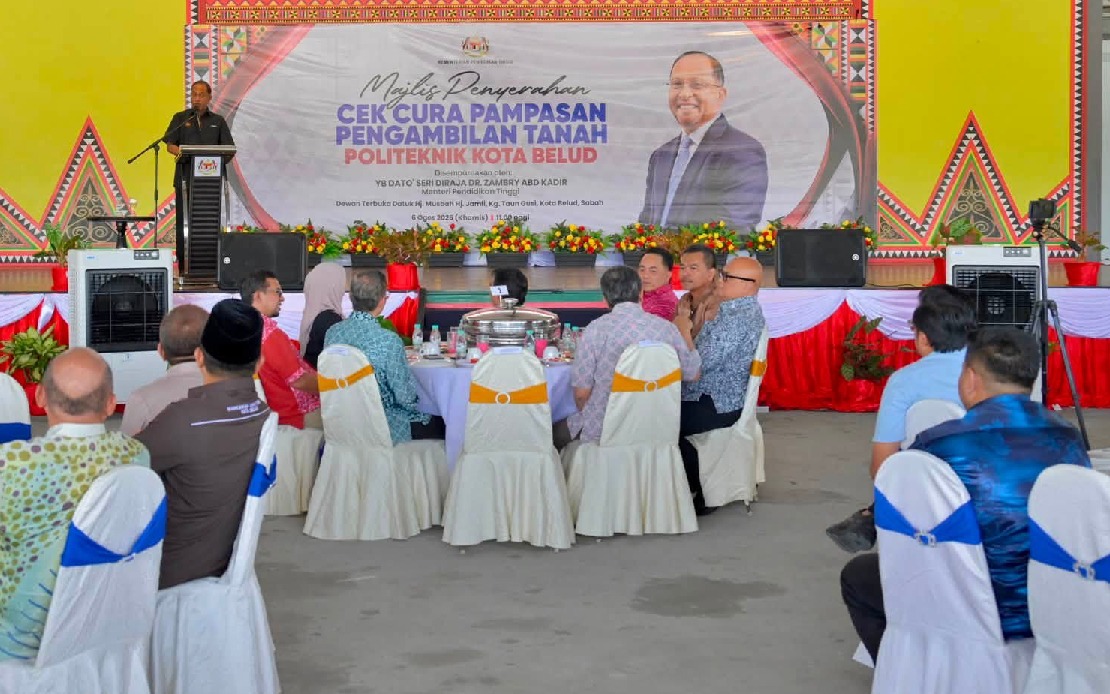
Construction of the RM250 million Politeknik Kota Belud has officially moved into implementation phase, with Higher Education Minister Datuk Seri Zambry Abd Kadir confirming the project will reach completion by 2030. The announcement came during a ceremony in Kota Belud, where mock cheques representing compensation payments were presented to landowners whose property was acquired for the development. This handover marks the formal transition from planning to active construction work on the facility, which represents a significant investment in Sabah's technical education infrastructure.
Zambry outlined an ambitious timeline that places the project's design and detailed planning phase immediately ahead, with full implementation expected to commence under the Third Rolling Plan within the 13th Malaysia Plan framework next year. The structured approach reflects lessons learned from previous major education infrastructure projects, whereby adequate planning precedes actual construction to ensure quality and timely delivery. For Malaysian stakeholders monitoring government spending on education, the phased schedule provides clarity on when investments will translate into operational facilities serving students and industry partners across East Malaysia.
The polytechnic initiative has deep roots in political advocacy, originating from a 2017 proposal by then Kota Belud Member of Parliament Datuk Seri Abdul Rahman Dahlan. Over three years of preparation preceded the formal land acquisition process, indicating the complexity involved in assembling suitable sites and securing stakeholder agreement for such facilities. This extended gestation period underscores challenges inherent in bringing major infrastructure projects to fruition in Malaysia, particularly in more remote regions where land assembly and feasibility studies require careful coordination between federal, state, and local authorities.
Curriculum design for the institution reflects contemporary workforce demands and Sabah's economic direction. Rather than offering generic technical programmes, the polytechnic will concentrate on emerging fields including green energy, artificial intelligence, computer science, and technology-driven agriculture. This specialisation strategy distinguishes the facility from existing polytechnics and positions it to address genuine skills gaps in sectors critical to Sabah's economic diversification beyond traditional resource extraction. By aligning education with identifiable industry needs, the facility aims to improve graduate employment prospects and reduce skills mismatches that frequently plague technical education systems across Southeast Asia.
Initial student intake projections suggest conservative growth, with around 500 enrolees expected during the polytechnic's first year of operation. Capacity is designed to expand progressively to between 1,000 and 1,500 students, allowing the institution to scale operations once administrative systems, teaching staff, and support services mature. This staged expansion approach helps manage operational risk and ensures teaching quality is not compromised by rapid growth, a concern that has occasionally undermined newly established technical institutions in the region. The staggered enrolment trajectory also provides time to develop industry partnerships and work-experience placements alongside curriculum delivery.
For Sabah's development perspective, the polytechnic represents strategic infrastructure positioning the state to compete in technology-intensive sectors. Historically, tertiary technical education has been concentrated in Peninsular Malaysia, creating barriers for Sabahan youth seeking quality polytechnic training without relocating. By bringing high-standard technical education to Kota Belud, the facility addresses geographic equity in skills development and potentially reverses brain drain patterns that have seen talented local graduates seeking opportunities on the peninsula. Enhanced local capacity for technical training may also attract technology-sector investments that require skilled workforces.
The RM250 million investment reflects federal commitment to expanding technical education infrastructure as part of broader human capital development strategies. Within Malaysia's education system, polytechnics occupy an important position between secondary schooling and university-level qualifications, providing career-ready graduates for mid-level technical and supervisory roles. The Kota Belud facility will contribute to a national polytechnic network serving increasingly specialised industry requirements, particularly in emerging sectors where talent shortages have been documented. This investment demonstrates recognition that workforce readiness requires diversified education pathways, not solely university-centric development.
Implementation success will depend on several factors beyond the announced 2030 completion date. Recruitment and retention of qualified lecturers in specialised fields like artificial intelligence may prove challenging in Sabah's competitive labour market, potentially requiring attractive compensation packages or relocation incentives. Infrastructure development in Kota Belud, including student accommodation and transport connectivity, will require coordination with state authorities. Additionally, establishing industry advisory committees and securing company partnerships for work-integrated learning will be essential to realising the facility's mission of producing job-ready graduates aligned with employer needs.
The timing of the RM250 million polytechnic's development also reflects broader educational reform momentum in Malaysia. Technical and vocational education has received increased policy emphasis in recent years, with recognition that not all students are suited to traditional academic pathways. The polytechnic sector has been repositioned as a pathway to rewarding careers rather than a second-choice destination, improving prestige and attractiveness. Kota Belud's new facility will reinforce this messaging in East Malaysia while contributing to reduced unemployment among young people and skills-shortage problems in technology-dependent industries.
Regional observers from neighbouring countries watching Malaysian technical education expansion may note the strategic value of geographically dispersed high-quality polytechnics. In Southeast Asia, where urban-rural education disparities remain significant, Sabah's investment model demonstrates commitment to inclusive development. Success of the Kota Belud polytechnic could influence policy discussions in other ASEAN nations regarding optimal placement of technical education infrastructure and specialisation strategies for polytechnic facilities serving regional economies.

