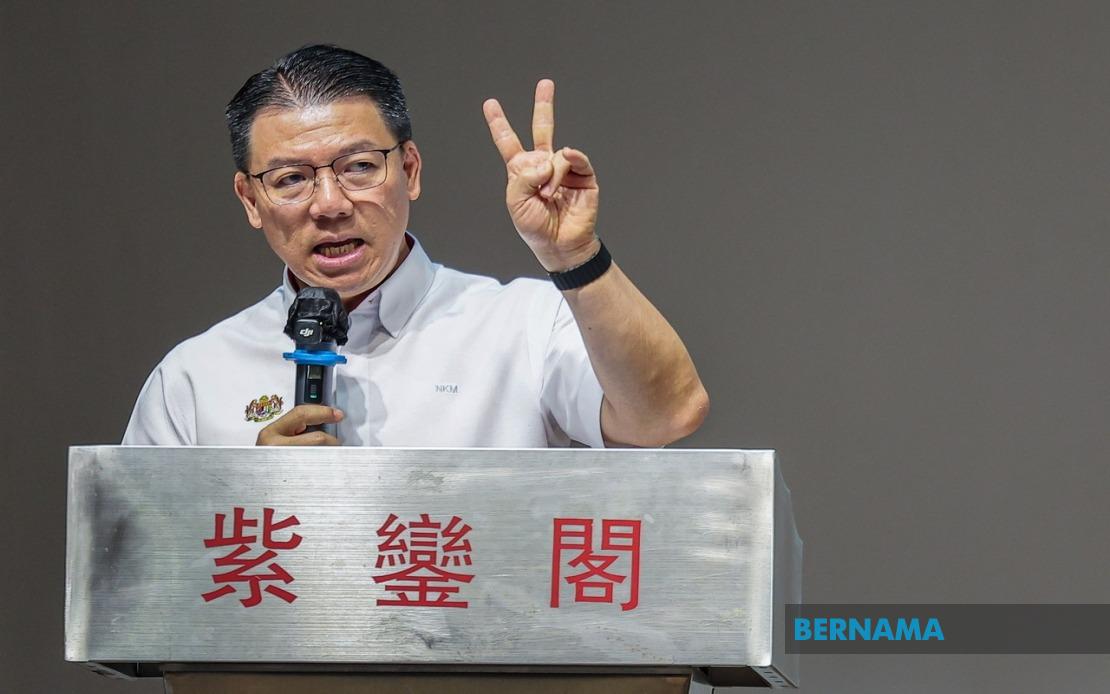
Malaysia's Housing and Local Government Ministry has disbursed RM200 million over a four-year period beginning in 2023 to support the upkeep of non-Muslim houses of worship across the country, Housing Minister Nga Kor Ming announced at a ceremony in Kluang, Johor. The Non-Muslim Houses of Worship (RIBI) Maintenance Initiative represents a substantial commitment by the MADANI administration to ensure equitable government support extends to religious infrastructure serving the nation's diverse communities, regardless of denomination or faith tradition. By directing significant resources toward the maintenance and repair of churches, temples, gurdwaras, and other religious congregational facilities, the programme demonstrates a policy framework that deliberately crosses traditional lines of sectarian division.
The initiative has already generated considerable uptake from the faith communities it serves. The e-RIBI System portal has received 1,478 applications with combined financial needs exceeding RM279 million, a figure that substantially exceeds the four-year allocation and signals the genuine maintenance pressures facing religious institutions nationwide. This disparity between requested funds and available resources underscores the chronic underfunding that many minority religious institutions face when managing aging infrastructure, essential renovations, and safety upgrades without direct government assistance. The high application volume also reflects confidence within these communities that the scheme offers a credible avenue for securing public support.
Johor has emerged as a significant beneficiary of this national programme, receiving RM18.75 million in total allocations since the initiative's inception through May 2026, with benefits distributed across 154 religious institutions throughout the state. The state's allocation specifically for the current year totals RM3.14 million, targeting 27 religious sites with funding intended for renovation, structural maintenance, new construction projects, and emergency repairs. This annual commitment ensures that critical work can proceed on facilities that require immediate attention, from roof replacements and electrical system upgrades to accessibility modifications and facilities expansion to accommodate growing congregations.
Nga articulated the broader political philosophy underpinning the initiative, positioning it within the government's inclusive development framework that transcends the binary categories of race and religion. His statement that the MADANI administration views national development through a lens focused on equitable community benefit rather than demographic or sectarian identity represents a deliberate counter-narrative to polarising political rhetoric that dominates segments of Malaysian public discourse. By framing religious infrastructure support as integral to national stability and economic prosperity—suggesting that investor confidence and job creation depend on social cohesion—Nga connects religious tolerance directly to Malaysia's macroeconomic interests and competitiveness.
The minister's metaphorical language about bridge-building versus wall-construction reflects an understanding that religious and racial polarisation carries tangible economic costs. When communities lose confidence in government neutrality or feel systematically disadvantaged in public resource allocation, the resulting social fragmentation undermines the trust essential for economic activity, domestic investment, and the attractive regulatory environment multinational corporations demand. By demonstrating through concrete funding decisions that minority religious communities receive equitable treatment in government budgeting, the MADANI administration signals to international observers and local stakeholders alike that Malaysia remains committed to the secular, pluralistic constitutional framework that underpins the 1957 Merdeka social contract.
Transparency mechanisms embedded within the programme reflect attempts to insulate the initiative from allegations of patronage or misallocation that frequently complicate government spending in Malaysia. KPKT's commitment to professional monitoring, efficiency audits, and transparent fund disbursement responds to historical instances where religious or community funding schemes have attracted criticism regarding beneficiary selection and proper fund utilisation. By establishing procedural safeguards and oversight mechanisms, the housing ministry aims to build institutional confidence that allocated monies reach genuinely deserving organisations serving actual religious communities rather than functioning as covert subsidies for particular political factions.
The RIBI initiative sits within broader KPKT transformation efforts, including the ministry's 4.0 Sentuhan Kasih Programme 2026 tour initiative traversing Malaysian states. This integration positions religious infrastructure maintenance within a comprehensive local government modernisation agenda that encompasses housing development, municipal services, and community welfare. The touring presentation format allows government representatives to engage directly with community stakeholders, hear maintenance priorities firsthand, and reinforce political messaging about inclusive governance within the decentralised context where state-level implementation ultimately determines programme effectiveness.
For Malaysia's increasingly diverse religious landscape, the programme addresses genuine infrastructure challenges. Established Hindu temples, churches, and Sikh gurdwaras constructed decades ago frequently operate with outdated mechanical systems, deferred maintenance, and accessibility barriers that impede worship and community gathering. Many operate on constrained budgets derived from congregational donations, particularly as younger generations migrate toward urban centres or adopt less frequent worship participation. Government support can address the structural and systems-level maintenance that individual congregational fundraising cannot practically accommodate, ensuring these institutions remain functional and safe spaces for religious practice.
The initiative also reflects demographic and political calculations regarding Malaysia's evolving electoral competition. As Chinese, Indian, and indigenous Christian communities increasingly scrutinise government treatment of their religious institutions and cultural heritage, visible resource commitment becomes electorally significant. Opposition parties cannot easily counter a government actively funding minority religious infrastructure without appearing to oppose religious freedom or support unequal treatment. This dynamic creates a policy area where inclusive governance serves both principled commitments to pluralism and rational electoral strategy, though distinguishing these motivations remains analytically elusive.
Looking forward, the gap between application demand and programme funding suggests that four-year allocations may require expansion if the government intends to address accumulated maintenance deficits across Malaysia's diverse religious infrastructure. States with large non-Malay populations—Selangor, Penang, Sabah, Sarawak—likely harbour substantial unmet maintenance needs. Subsequent budget cycles and electoral cycles may determine whether the government maintains or expands this funding commitment, offering a revealing indicator of genuine policy commitment versus periodic political messaging. For Malaysian religious minorities, the RIBI initiative represents the tangible outcome of demands for equitable resource distribution, yet its sustainability depends on political will extending beyond individual ministerial announcements into institutionalised budgetary practices.

