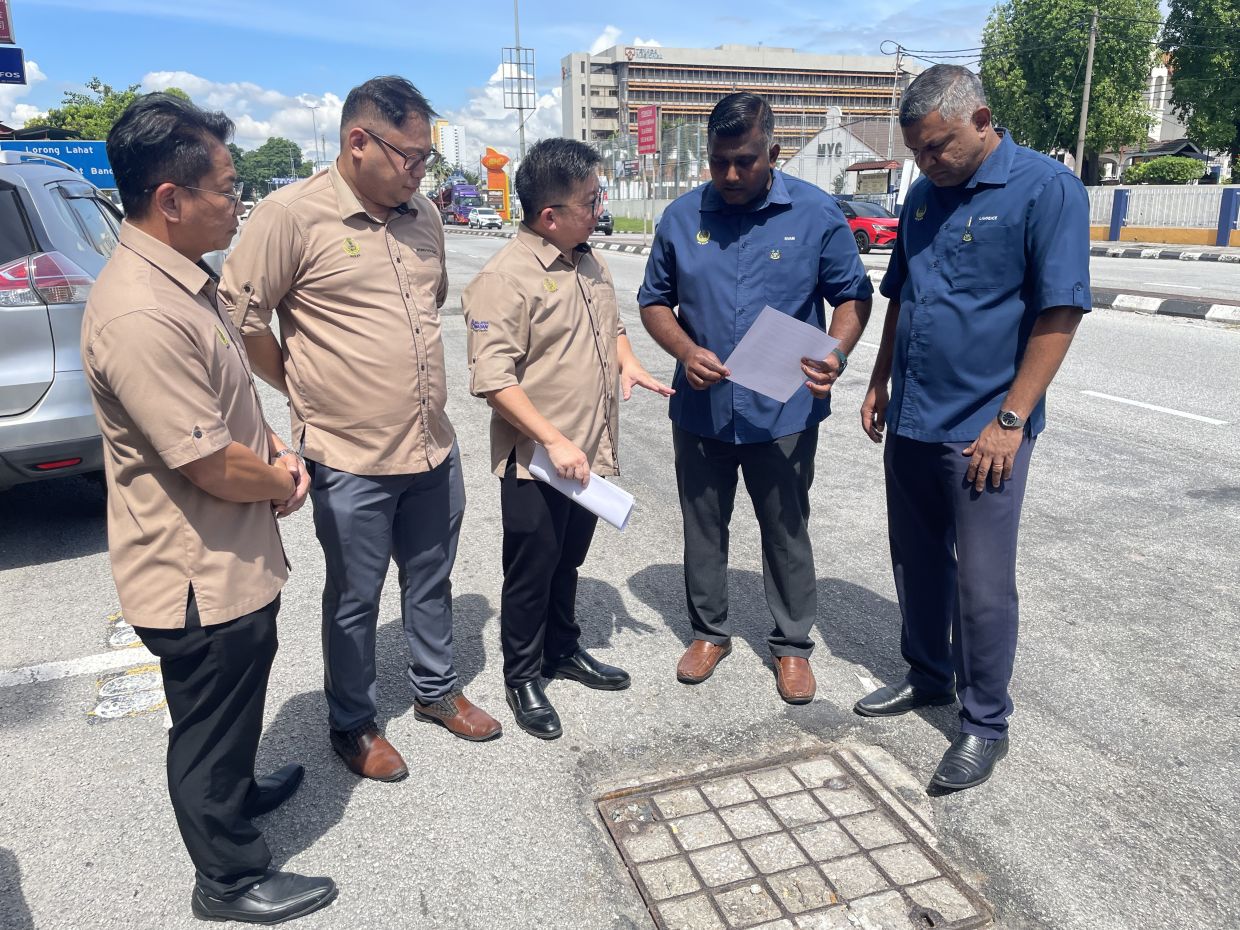
Motorists travelling through central Ipoh can expect relief soon as authorities prepare to launch a major road rehabilitation initiative along Jalan Lahat, a heavily trafficked corridor that has suffered years of deterioration. The RM2.6 million resurfacing project, set to commence in July, will target the most severely damaged 3.8-kilometre stretch of the approximately 10 to 11-kilometre thoroughfare. The initiative represents a response to mounting complaints from residents and commuters who have navigated worsening road conditions that have increasingly compromised both vehicle safety and driving comfort.
The project scope encompasses resurfacing work in both directions along Jalan Lahat, beginning from the Falim traffic lights and extending to the Jalan Leong Boon Swee junction near Little India. Menglembu assemblyman Chaw Kam Foon, who announced the development, emphasised that this allocation addresses the most critical section where damage has become most pronounced. The corridor traverses the state constituencies of Buntong, Tebing Tinggi and Menglembu, making it a vital transport artery for residents across multiple electoral divisions. The funding mechanisms for this undertaking utilise the Malaysian Road Records Information System (Marris), ensuring technical oversight and standardised project delivery.
The deterioration of Jalan Lahat had intensified to alarming levels in recent months, with accumulated potholes and uneven surfaces creating genuine safety hazards for vehicles of all sizes. During June alone, approximately 20 vehicles experienced tyre punctures after striking potholes on the affected stretch, according to local authorities. A particularly large pothole on a flyover section garnered significant attention when social media users highlighted the defect, prompting immediate temporary repairs. However, such patchwork solutions proved insufficient given the underlying structural damage to the road surface and the volume of traffic that regularly traverses the corridor.
Counsellor K. Sivam noted that requests for comprehensive resurfacing work on Jalan Lahat had accumulated since 2024, with stakeholders advocating for full reconstruction rather than temporary repairs. The approval this year represents a culmination of persistent advocacy and documentation of the road's deteriorating condition. The tender process for the project is currently progressing, with construction anticipated to begin in July and likely completion within approximately three weeks. The relatively compressed timeline suggests significant investment in workforce mobilisation and equipment deployment to ensure prompt restoration of this essential transport link.
Jalan Lahat serves as an essential conduit for multiple user categories and purposes within the urban landscape. Residential communities, educational institutions and commercial establishments depend upon its functionality, while large vehicles and lorries utilise it as a regular transport corridor. Previous attempts at restoration through targeted patching had proven ineffective, primarily due to the combined stresses of weather exposure and sustained heavy traffic volumes. Successive layers of temporary repairs had created an increasingly compromised surface that demanded a more comprehensive intervention.
Civil infrastructure experts and local officials have identified utility excavation works as a significant contributing factor to the road's accelerated deterioration. Sewerage pipeline installations and other underground utility projects had necessitated repeated excavations, yet restoration efforts following these works had not met required standards. Such utility works often involve temporary reinstatement, and without adequate monitoring and enforcement mechanisms, road surfaces frequently remain substandard. This historical pattern of inadequate post-excavation restoration had compounded the damage from regular traffic wear.
The forthcoming resurfacing initiative will incorporate several restoration elements beyond simple surface replacement. Works will include levelling of manholes and other utility access points, elimination of road undulations that create vehicle stress and discomfort, and repainting of lane markings to restore clarity and safety. These comprehensive measures distinguish this project from previous piecemeal interventions and suggest a systematic approach to addressing both visible deterioration and underlying structural issues.
Authorised oversight of future utility excavation work has been assigned to the Corridor Utiliti Darul Ridzuan (KUDR), granting this body authority to ensure that restoration work following subsurface projects adheres to specified standards. This organisational framework introduces accountability mechanisms previously absent, with regulatory power to impose financial penalties, issue compounding notices, or mandate repair repetition when contractors fail to meet reinstallation specifications. Such enforcement capacity aims to prevent recurrence of the inadequate restoration practices that had previously degraded Jalan Lahat.
For Malaysian motorists and regional observers, this project exemplifies broader infrastructure management challenges that extend beyond Ipoh. Road deterioration resulting from utility work, combined with deferred maintenance and temporary repairs, represents a recurring problem in urban areas nationwide. The RM2.6 million allocation and structured approach to Jalan Lahat's rehabilitation may serve as a template for addressing similar degradation elsewhere. Enhanced coordination between road authorities and utility companies, coupled with meaningful enforcement mechanisms, can improve long-term asset preservation and service quality across transport networks.