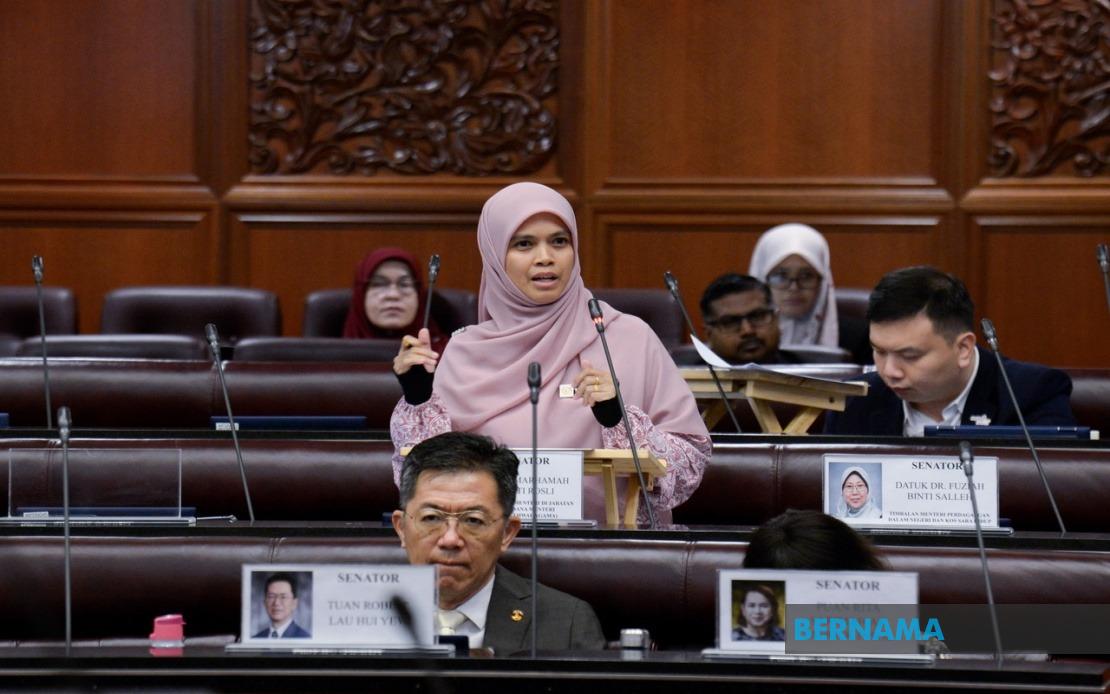
The Malaysian government has channelled RM160.82 million towards 92 mosque construction projects across the nation since 2023, reflecting a substantial infrastructure commitment under the MADANI framework. Speaking in the Dewan Negara, Deputy Minister in the Prime Minister's Department (Religious Affairs) Senator Marhamah Rosli outlined the progress achieved to date: 54 projects have reached completion, 16 remain actively under construction, while the remaining 22 are navigating pre-implementation phases or procurement processes. The distribution of these initiatives across Malaysia's diverse landscape underscores an attempt to address religious infrastructure gaps identified in various states.
The approval mechanism for new mosque development integrates multiple layers of consultation and assessment. State religious authorities take the lead in recommending suitable locations and projects, but decisions do not occur in isolation. Planners examine several interconnected factors when evaluating proposals: the growth trajectory and concentration of Muslim populations in specific areas, the adequacy of existing mosque facilities relative to demand, geographical proximity between communities and available prayer spaces, land suitability and availability, and crucially, state governments' willingness to contribute financially. This collaborative framework emerged from the 139th Meeting of Menteri Besar and Chief Ministers convened on 28 June 2022, establishing the principle that mosque development costs should be shared between federal and state administrations rather than resting entirely on central government resources.
Understanding this funding arrangement is particularly significant for Malaysia's federal structure. The cost-sharing mechanism acknowledges that religious infrastructure needs vary substantially across states and that state governments possess intimate knowledge of local demographic patterns and existing facility gaps. By embedding state participation in the financial commitment, the framework encourages state-level authorities to prioritise mosque projects aligned with genuine community needs rather than pursuing developments disconnected from practical demand. This partnership model has become standard practice within the MADANI administration's approach to religious affairs planning.
Marhamah's response to supplementary questions revealed that mosque infrastructure initiatives extend beyond purely devotional functions. Religious institutions increasingly serve as anchors for community welfare programmes and social support networks. The Department of Islamic Development Malaysia, operating in coordination with state religious departments, local councils, and non-governmental organisations, has expanded mosque-centred initiatives to address vulnerabilities within urban and low-income populations. These programmes recognise that mosques occupy privileged positions within Muslim communities and can serve as effective delivery platforms for assistance to marginalised groups.
The welfare services operationalised through mosque networks address multiple dimensions of poverty and social vulnerability. Targeted interventions include distributing aid specifically to asnaf groups—categories of Muslims eligible to receive zakat funds—alongside broader food assistance programmes such as distribution of meal packages to families in acute need. Community kitchens have emerged as regular fixtures in many mosques, providing prepared meals to the homeless and urban poor whilst creating spaces for social interaction and community cohesion. These canteens serve dual purposes: meeting immediate nutritional needs whilst fostering human dignity and social inclusion.
Beyond sustenance, the welfare architecture encompasses education and financial assistance for families struggling with school fees or essential learning materials. Emergency financial support mechanisms provide rapid assistance during crises, whilst counselling services address psychological and social dimensions of poverty often overlooked by purely material interventions. The programme also encompasses funeral management assistance—a service with considerable symbolic and practical significance in Muslim communities—and temporary shelter provision for those experiencing homelessness during vulnerable seasons or emergency circumstances.
The expansion of mosque-based welfare reflects a deliberate policy choice to leverage existing institutional infrastructure rather than building parallel systems. Mosques already maintain regular community contact through daily prayer congregations and religious activities, giving them early warning systems for emerging vulnerabilities. Local religious leaders possess credibility and knowledge of their constituencies, enabling targeted, culturally sensitive assistance delivery. This embedded approach potentially reaches populations who might otherwise fall through gaps in formal welfare bureaucracies.
For Malaysian observers, this mosque development programme intersects with broader questions about religious institution financing and social infrastructure equity. The RM160.82 million investment occurs within a context where religious affairs occupy contested terrain in Malaysian politics. The programme's emphasis on joint federal-state funding and coordination through established religious authorities reflects institutional channels that have gained acceptance across Malaysia's diverse political landscape.
The 92-project pipeline suggests ongoing portfolio momentum, with infrastructure remaining under active development rather than stalling. The 54 completed projects provide immediate capacity additions, while the 16 under-construction initiatives demonstrate sustained implementation rather than announcement-phase commitments with uncertain outcomes. The 22 pre-implementation projects indicate future absorption into the execution pipeline, though conversion rates from procurement stages to on-ground construction warrant monitoring.
Spatial distribution of these mosque projects merits analysis for Malaysian readers assessing regional development patterns. Allocation methodologies appear responsive to demographic change, particularly migration-driven population concentrations in urban areas and certain states experiencing rapid growth. This demographic-responsive approach potentially addresses infrastructure deficits more precisely than formula-based allocations divorced from actual population movements and community composition.
The integration of mosque development with social welfare delivery represents pragmatic institutional design. Rather than treating religious infrastructure as primarily devotional, the MADANI administration has positioned mosques as multi-functional community anchors capable of addressing both spiritual needs and material vulnerabilities among Muslim populations. This conceptualisation aligns with Islamic teachings emphasising communal responsibility whilst adapting implementation to contemporary urban poverty realities in Malaysia.

