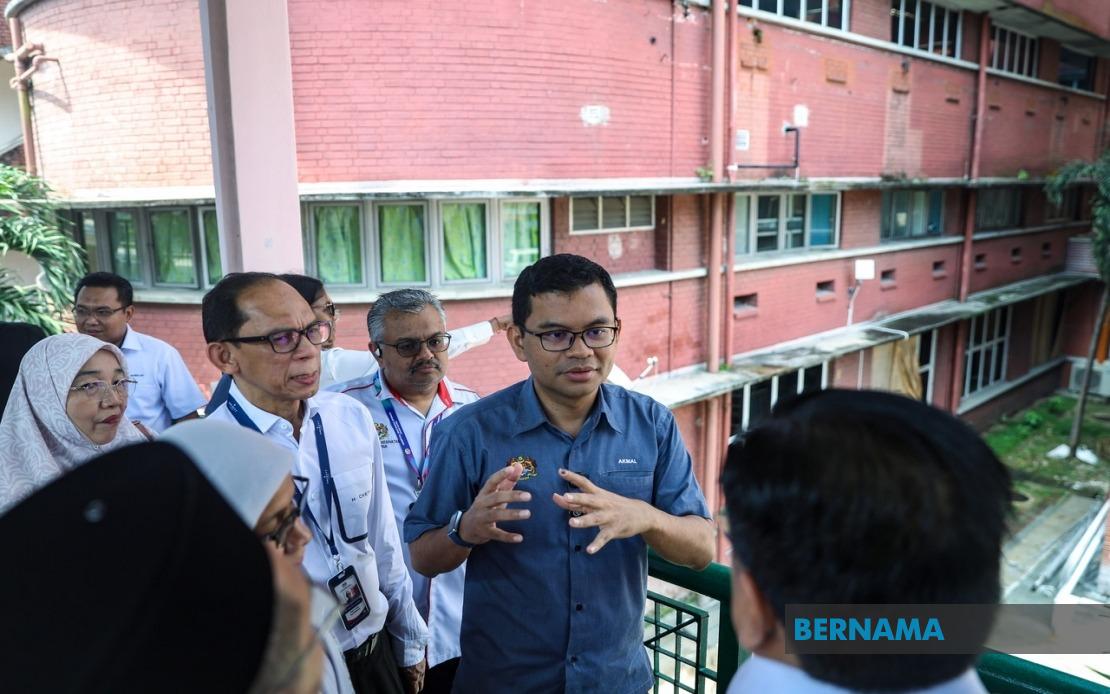
Sultanah Aminah Hospital in Johor Bahru is at the centre of an ambitious healthcare expansion programme worth RM1.139 billion, reflecting the federal government's commitment to strengthening medical infrastructure in the state. Economy Minister Akmal Nasrullah Mohd Nasir announced the multi-phased development initiative during an inspection visit, emphasizing that the projects represent a substantial boost to the hospital's operational capacity and service quality.
The modernisation effort encompasses seven distinct initiatives, with the most significant being the construction of the Ambulatory Care Centre (ACC) alongside a multi-storey parking facility and the HSA Specialist Clinic Complex in two phases, collectively valued at RM877.54 million. This represents over three-quarters of the total investment, underscoring the scale of the clinic expansion. The specialist facility is designed to decentralize demand from the main hospital while providing patients with more accessible outpatient services, a critical consideration as Johor's population continues to grow and healthcare needs intensify.
A parallel initiative involves a comprehensive overhaul of the hospital's electrical infrastructure, a RM159 million project that addresses fundamental systems supporting modern medical operations. As of the inspection date, this component had reached 76.49 per cent physical completion, indicating substantial progress on a project that is essential for ensuring uninterrupted power supply to critical areas including operating theatres and intensive care units. Such infrastructure upgrades are often overlooked in public discourse but remain vital for hospital safety and reliability.
The surgical capacity expansion forms another pillar of the transformation. The hospital will add three new operating rooms, bringing the total from twelve to fifteen. This expansion responds to evident demand pressures in Johor's healthcare system and aligns with best practices in major teaching hospitals. The additional surgical capacity should help reduce waiting times for elective procedures and enhance emergency response capabilities, particularly important for a state that serves as a regional hub for medical services.
Implementing such extensive projects while maintaining full hospital operations presents considerable logistical challenges. Akmal Nasrullah acknowledged this tension during the press conference, noting that coordination between the ministry, hospital management, and contractors is essential to minimize disruption to patient care. Hospitals cannot simply close departments for renovation; instead, construction must proceed in phases that preserve critical services, requiring meticulous planning and stakeholder cooperation.
The appointment of contractors for the most substantial component—the ACC, parking, and specialist clinic complex—is targeted for February next year, suggesting the project remains in its preparatory phase. This timeline indicates that visible construction activity may intensify in the coming months, with the potential for traffic and access impacts around the hospital precinct. Local residents and regular patients should prepare for possible inconveniences during the implementation period.
Beyond Sultanah Aminah Hospital, Akmal Nasrullah's visit underscored the broader development trajectory of Johor state. Since 2000, a total of 613 development programmes and projects worth RM56.12 billion have been implemented or remain under way. This portfolio comprises 154 new initiatives and 459 extension or enhancement projects, reflecting sustained capital investment across multiple sectors. The breakdown demonstrates the government's strategy of combining new projects with systematic upgrades to existing infrastructure.
Spending momentum through July this year shows moderate progress, with RM2.5 billion expended against an annual allocation of RM4.95 billion, representing 50.51 per cent expenditure rate. While this is reasonable for the year-to-date period, it suggests that accelerated spending is necessary in the latter half to meet annual targets. For development projects nationally, such mid-year assessments help identify bottlenecks that may hinder timely completion.
The Sultanah Aminah Hospital project must be contextualized within Malaysia's evolving healthcare landscape. As a major teaching hospital affiliated with academic institutions, Sultanah Aminah serves not only Johor residents but also patients from neighbouring states and across Southeast Asia seeking specialist care. The expansion signals Malaysia's positioning as a regional medical hub and reflects confidence in healthcare sector growth.
These investments also carry implications for healthcare workforce planning. Expanded facilities require proportionate increases in medical staff, nursing personnel, and support workers. The hospital and education ministry will need to ensure training pipelines produce sufficient qualified professionals to staff the new operating rooms, clinics, and day care facilities. Competition for healthcare talent across Southeast Asia means Malaysian institutions must offer competitive terms to attract and retain skilled practitioners.
From a fiscal perspective, the RM1.139 billion commitment represents significant government expenditure in a single institution. While such investments are defensible given healthcare's essential role, they underscore the substantial financial commitments required to maintain and advance public health infrastructure. These capital outlays must be weighed against recurrent operational costs that extend well beyond initial construction.
The development timeline also reflects broader infrastructure investment philosophy that emphasizes completing major projects within reasonable timeframes. However, healthcare facility construction frequently encounters delays due to site constraints, supply chain issues, or design modifications. Stakeholders should monitor progress reports and prepare for potential schedule adjustments.
Ultimately, the Sultanah Aminah Hospital transformation represents a tangible investment in public health capacity in one of Malaysia's most economically dynamic states. Success will be measured not merely by project completion but by the facility's ability to deliver enhanced care and reduced patient waiting times. The coming years will reveal whether the expanded infrastructure translates into meaningful improvements in health outcomes and patient satisfaction across Johor.

