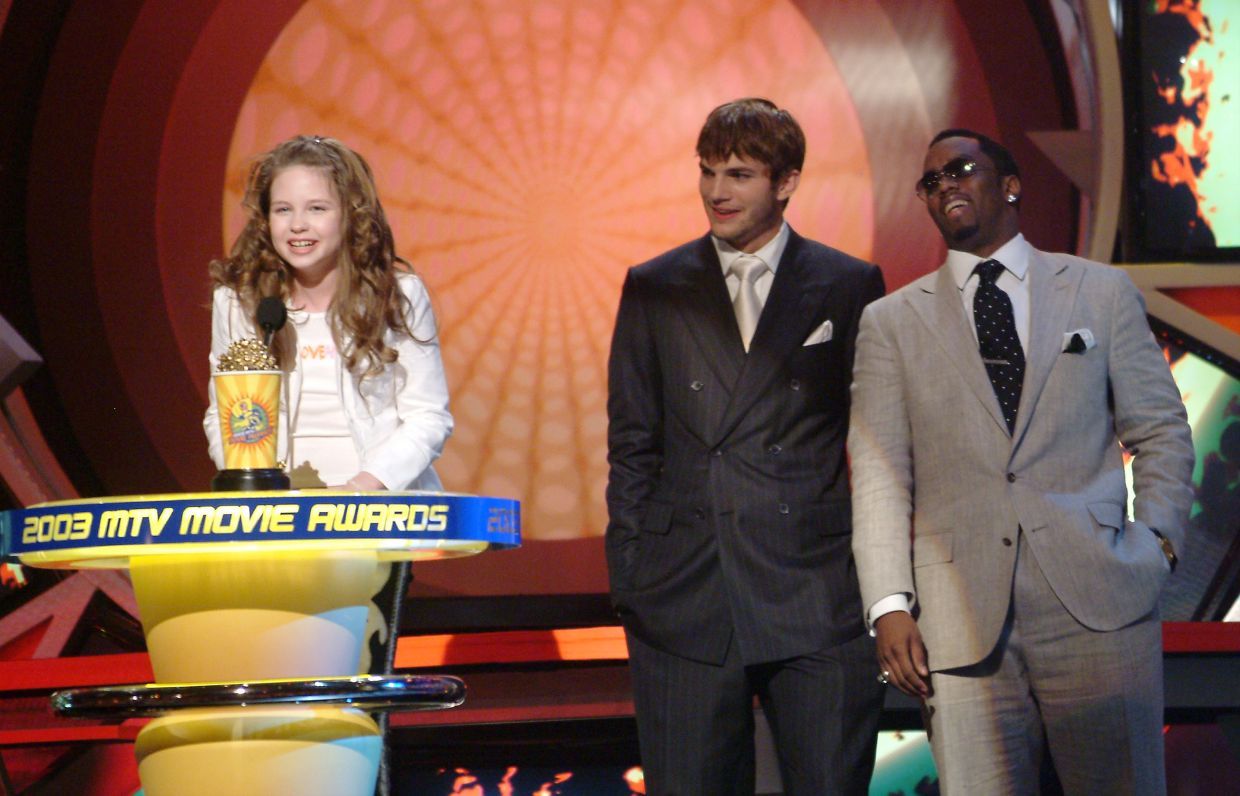
A decades-old video clip capturing an exchange between music mogul Sean 'Diddy' Combs and child actress Daveigh Chase at the 2003 MTV Awards has gained renewed attention online, becoming part of a larger discourse surrounding the disgraced producer's legal troubles and troubled history. The footage, which shows Combs approaching the then-12-year-old performer and inviting her to an industry after-party, has circulated widely following Chase's unexpected death and Combs' recent conviction on serious charges related to sex trafficking and exploitation.
Daveigh Chase, best known for her chilling portrayal of supernatural antagonist Samara Morgan in the horror franchise 'The Ring', passed away on June 16 at a Los Angeles hospital at the age of 35. According to her father, John Schwallier, Chase died from complications stemming from bacterial meningitis coupled with a severe blood infection, conditions that were compounded by acute malnutrition. In the years preceding her death, the actress had battled addiction and found herself without stable housing, living on the streets near the medical facility where she ultimately succumbed to her illness. Her tragic circumstances underscore the well-documented struggles many child actors face in navigating the entertainment industry and life beyond their early career success.
The MTV Awards moment in question occurred when Combs and fellow actor Ashton Kutcher presented Chase with the Best Villain award for her performance in 'The Ring'. In the video footage, after handing over the trophy, Combs is observed moving toward the young actress with a drink in hand, casually asking whether she would be attending the evening's after-party celebrations. Chase's affirmative response prompted an enthusiastic reaction from Combs, while Kutcher appeared to brush off the interaction with laughter. The clip's tone and context differ markedly from how such an invitation might be viewed through a contemporary lens, particularly given subsequent revelations about the culture surrounding Combs' legendary parties.
Combs' reputation for hosting extravagant gatherings has become central to the legal case against him. Federal investigators and prosecutors characterized his events as elaborate, drug-fuelled marathons lasting multiple days, frequently involving sex workers and substances intended to lower inhibitions. These 'freak-off' parties, as they were termed in court documents, formed the evidentiary backbone of the charges brought against the 55-year-old music executive. The contrast between the seemingly innocent 2003 invitation caught on camera and the disturbing nature of what investigators allege occurred at his subsequent events illustrates how public perception of Combs' behaviour has evolved dramatically.
Combs' legal reckoning accelerated significantly in 2024 when federal authorities arrested him in September at the Park Hyatt Hotel in Midtown Manhattan. The arrest culminated a months-long investigation triggered by allegations from his former partner Cassie Ventura and subsequent civil complaints from numerous other accusers. The charges were formally brought through the Eastern District of New York, one of the most serious federal jurisdictions in the country for prosecuting organized crime and trafficking offences.
In July 2025, a federal jury found Combs guilty on two counts of transportation to engage in prostitution following an exhaustive trial that examined years of alleged misconduct and systematic exploitation. The conviction represented a significant legal victory for prosecutors who constructed their case around testimony from multiple accusers, financial records documenting payments to sex workers, and communications revealing Combs' direct involvement in organizing and coordinating the illegal activities. The jury's verdict effectively ended Combs' claim to innocence regarding the core allegations against him.
Following his conviction, Combs received a substantial prison sentence of 50 months, translating to just over four years of incarceration. He is currently housed at FCI Fort Dix, a federal correctional institution in New Jersey, where he will serve his sentence far from the luxury hotels and entertainment venues that once defined his lifestyle. The relatively lengthy prison term reflects the severity with which the federal judiciary viewed his crimes and the apparent pattern of behaviour spanning an extended period.
Beyond the criminal conviction, Combs faces an additional legal onslaught in civil courts. More than 100 civil lawsuits have been filed against the music producer by individuals alleging various forms of misconduct, exploitation, and abuse. These civil actions operate independently from the criminal case and carry their own potential financial consequences, as plaintiffs seek damages for harm suffered. The sheer volume of civil suits underscores the breadth of alleged victims and the systemic nature of the alleged misconduct spanning multiple years.
For Malaysian audiences and broader Southeast Asian observers, the Combs case serves as a sobering reminder of how power imbalances in entertainment industries globally can create environments where predatory behaviour flourishes unchecked for extended periods. The resurfaced 2003 clip, viewed through the lens of Combs' subsequent conviction, raises uncomfortable questions about which warning signs were visible at the time but dismissed or normalized. The case also illustrates the long arc of justice in complex trafficking and exploitation investigations, where evidence accumulation and witness testimony must overcome significant obstacles before criminal convictions become possible.
Daveigh Chase's death, occurring amid this resurgence of scrutiny into Combs' behaviour, adds an additional tragic dimension to the narrative. Though no allegations directly connect Combs to Chase's personal struggles or death, the timing of the video's circulation highlights the often devastating personal trajectories of child actors who achieve early success but lack adequate protections as they navigate an industry built on exploitation and disposability. Chase's story, combined with Combs' conviction, underscores the urgent need for stronger institutional safeguards protecting vulnerable individuals in entertainment sectors worldwide.