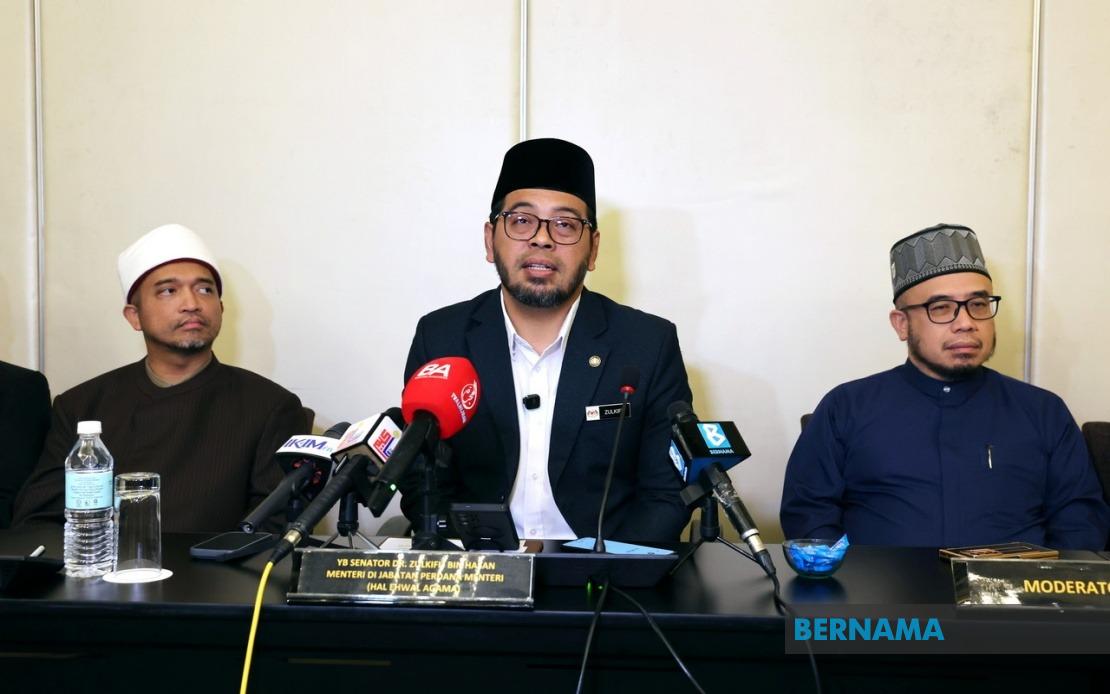
Malaysia's Minister in the Prime Minister's Department (Religious Affairs) Dr Zulkifli Hasan has declared that the Islamic term 'kafir harbi' is unsuitable for application within the country, emphasizing that all citizens operate under a common constitutional framework and share responsibilities as members of a unified society. The minister made these remarks following a roundtable discussion convened in Putrajaya to examine the contentious terminology and its relevance to the Malaysian context.
The term 'kafir harbi', which carries specific meaning in classical Islamic jurisprudence referring to non-Muslims in a state of enmity with Muslim-majority territories, has occasionally been invoked in contemporary Malaysian discourse. However, Zulkifli's intervention signals official discomfort with its application to fellow Malaysian citizens, regardless of religious affiliation. This position reflects an institutional attempt to prevent divisive interpretations of Islamic concepts from undermining national cohesion in a constitutionally plural state.
During the discussion forum, participants reached broad consensus that the terminology fundamentally misaligns with Malaysia's constitutional architecture and social contract. The Federal Constitution, adopted at independence in 1957, establishes a framework in which citizens of all faiths possess equal rights and obligations, and the state itself commits to protecting religious freedom while maintaining secular governance in matters of civil law. Citizens sharing a single nation, a common flag, and unified governance structures cannot logically be categorized according to pre-modern jurisprudential categories designed for relationships between distinct political entities.
Zulkifli emphasized that Malaysia's strength derives from the interdependence of its diverse population. Citizens work collaboratively to defend territorial integrity, contribute to economic development, and maintain social stability. These shared endeavors transcend religious boundaries and create practical relationships that render classical antagonistic categories anachronistic. The minister stressed that invoking such terminology threatens to fracture the delicate understanding upon which Malaysian pluralism rests, introducing an unnecessary wedge between communities that have largely coexisted within recognized constitutional limits.
The Department of Islamic Development Malaysia (JAKIM) will assume a coordinating role in amplifying this message throughout the religious sector and beyond. Rather than treating this as exclusively a religious matter, the government intends to implement a whole-of-government approach involving multiple ministries and agencies. This strategy acknowledges that linguistic and conceptual clarity on sensitive religious matters requires consistent messaging across institutional boundaries and cannot succeed if confined to theological or Islamic affairs channels alone.
The collaborative framework announced reflects an understanding that national integration cannot be achieved through religious edicts in isolation. Educational institutions, media platforms, civil service training programs, and community engagement initiatives all contribute to shaping how citizens understand their relationship to one another and to the state. By coordinating across these sectors, the government aims to ensure that citizens encounter consistent narratives about the inappropriateness of divisive religious terminology in the public sphere.
Zulkifli's call for Malaysians to strengthen unity, deepen bonds of mutual brotherhood, and cultivate respect across cultural and religious lines encapsulates the government's stated vision for national harmony. This framing positions religious diversity not as a problem requiring management but as a characteristic feature of Malaysian society that demands mutual understanding and deliberate efforts at relationship-building. The minister's language suggests that interfaith solidarity and constitutional patriotism are complementary rather than competing loyalties.
The intervention comes amid broader global discussions about how traditional Islamic legal categories apply in modern nation-states where Muslims and non-Muslims constitute integrated political communities. Malaysia's approach, articulated through this official pronouncement, positions the country among nations attempting to recalibrate classical religious concepts to accommodate contemporary constitutional and social realities. This represents a conscious choice to prioritize the inclusive citizenship framework over literalist applications of historical terminology.
For Malaysian civil society and international observers, the government's formal rejection of 'kafir harbi' terminology carries significance beyond symbolic gestures. It establishes an official position that such language violates the terms of the social contract and undermines the constitutional settlement that successive Malaysian governments have pledged to uphold. Individuals or organizations invoking the term to describe fellow citizens now face potential institutional pushback from both religious and civil authorities.
The practical implications extend to how religious scholars, social media influencers, and public figures communicate on matters touching religious identity and national belonging. By establishing a clear official position, the government creates space for religious scholars to argue against the term's application while maintaining fidelity to Islamic scholarship broadly. This allows for religious authority to be exercised in ways that reinforce rather than contradict national integration objectives.
Looking forward, JAKIM's collaboration with other government bodies will likely focus on translating this ministerial statement into concrete educational and awareness-raising activities. These might include training programs for religious teachers, guidance documents for Friday sermons, and public communication campaigns emphasizing the constitutional basis for inclusive citizenship. The emphasis on comprehensive rather than sector-specific approaches suggests that the government recognizes this issue touches fundamental questions about how Malaysians understand their identity and obligations to one another.

