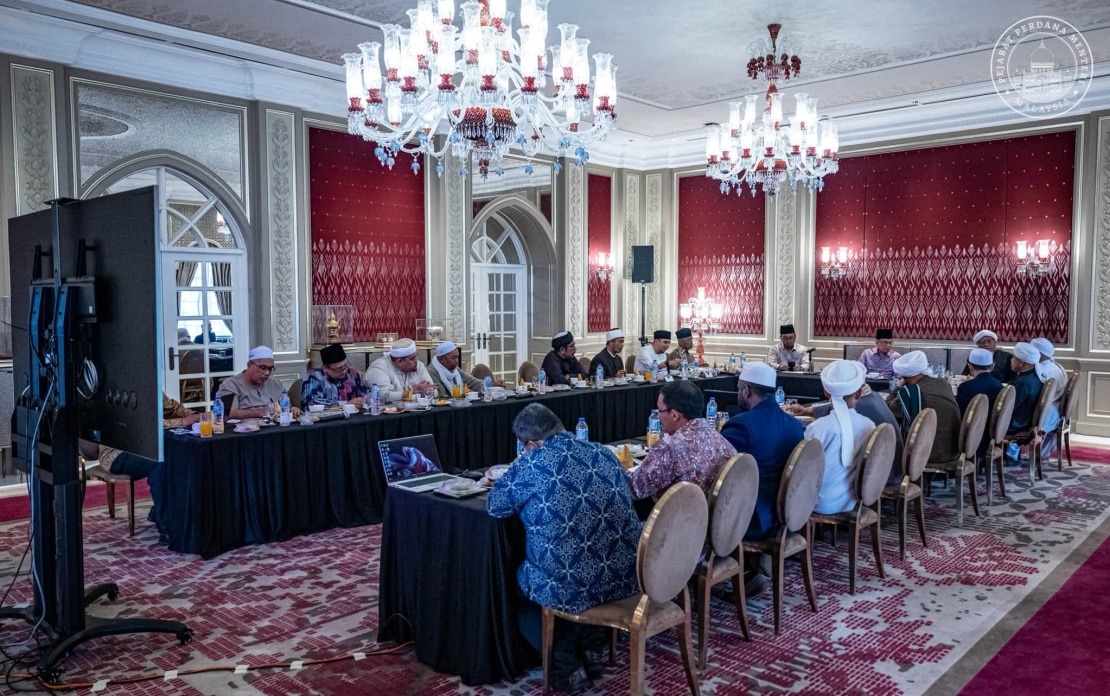
Prime Minister Datuk Seri Anwar Ibrahim has reiterated the government's commitment to engaging with Islamic scholars as a cornerstone of national policymaking, characterising these interactions as more than ceremonial encounters but rather as structured opportunities for institutional reflection and refinement. Speaking following a series of muzakarah discussions held in conjunction with Maulidur Rasul celebrations, Anwar stressed that consultation with religious experts ensures government initiatives remain grounded in scholarly knowledge while remaining responsive to evolving societal expectations within the Muslim community.
The engagement model outlined by the Prime Minister reflects an intentional strategy to anchor governance in religious expertise. Rather than treating Islamic scholarship as advisory in nature only, Anwar's framing suggests a deliberate institutional integration wherein scholarly input becomes embedded within the policymaking process itself. This approach carries particular significance for Malaysia, a multi-faith nation where clear communication between government and religious institutions helps maintain social cohesion while demonstrating to the Muslim majority that their faith traditions inform state decisions.
Among those whom Anwar met during the afternoon's discussions was Sheikh Dr Muhyiddin Awwamah, representing Darul Hadis al-Awwamiyyah, an institution with deep roots in Islamic scholarly tradition. The invitation of such figures reflects the government's intention to draw upon institutional expertise rather than seeking guidance from isolated voices. This deliberate inclusion of established Islamic institutions suggests a preference for consultations grounded in centuries of scholarly continuity rather than contemporary interpretations disconnected from classical Islamic learning.
The Prime Minister specifically acknowledged the intellectual lineage represented by Sheikh Dr Muhyiddin's family connections, noting his appreciation for scholarly works authored by the scholar's father, Al-'Allamah Sheikh Muhammad bin Awwamah, a figure whose expertise in hadith studies has earned international recognition. This personal recognition of intellectual heritage carries symbolic weight, signalling that the government values not merely contemporary commentary but also the accumulated wisdom embedded within established scholarly traditions. For Malaysian Muslim communities, such acknowledgment demonstrates official recognition of global Islamic intellectual networks and Malaysia's position within them.
In his public remarks, Anwar characterised these consultative sessions as mechanisms through which government action becomes refined and calibrated to contemporary circumstances. The deliberate invocation of three sequential processes—ensuring guidance through knowledge, achieving correctness through advice, and enabling refinement through community needs assessment—suggests a structured methodology rather than ad hoc engagement. This framework implies that policies affecting the Muslim community undergo multiple filters of validation, each serving distinct purposes within a coherent decision-making architecture.
The timing of these discussions during Maulidur Rasul observances carries additional significance. By anchoring such consultations within religious calendars and commemorations, the government associates expert dialogue with moments of heightened spiritual reflection within the Muslim community. This temporal alignment suggests intentionality in demonstrating that government engagement with religious scholarship flows naturally from religious practice itself rather than representing an external imposition upon Islamic institutions. For Malaysian Muslims observing such events, the visible engagement between political leadership and scholarly expertise reinforces narratives of alignment between government action and religious values.
Anwar's public articulation of appreciation for Islamic scholarly traditions addresses broader concerns about the relationship between modernising governance and religious authenticity. By emphasising that engagement with classical Islamic learning enhances rather than impedes contemporary policymaking, the Prime Minister positions religious scholarship as a resource for effective governance rather than as an obstacle to administrative modernisation. This framing carries particular relevance in Southeast Asia, where tensions between traditional religious authority and modern state institutions have occasionally created friction in neighbouring jurisdictions.
The emphasis on maintaining continuity within Islamic scholarly traditions while adapting to contemporary demands reflects broader challenges facing Islamic governance throughout the region. Malaysia's multireligious context necessitates particular care in demonstrating that government decision-making regarding Muslim affairs incorporates legitimate scholarly voices while remaining responsive to demographic change, economic transformation, and shifting social expectations. The consultative model described by Anwar attempts to navigate these competing pressures through institutionalised channels of engagement.
Further implications emerge when considering this approach within Malaysia's domestic political context. By visibly engaging with established Islamic institutions and their scholarly representatives, the government potentially addresses constituencies concerned about the secularisation of state institutions or the marginalisation of religious perspectives within policymaking. Such engagement also provides platforms through which religious scholars can influence government thinking before policies crystallise, potentially reducing tensions that might otherwise emerge between governmental initiatives and religious community reactions. For opposition movements, the prominence of such consultations creates expectations that religious voices will indeed shape substantive policy outcomes.
The broader principle articulated by Anwar—that governmental effectiveness depends upon receptiveness to specialised knowledge—extends beyond Islamic affairs specifically. His framing implies that technocratic expertise in religious matters functions analogously to expertise in other domains, meriting institutionalised channels of consultation and integration. This conceptualisation may carry implications for how Malaysia structures engagement with other forms of expertise, from scientific advisory bodies to economic think tanks, establishing precedent for knowledge-based governance frameworks.
Looking forward, the sustainability of such consultative models depends upon demonstrable policy influence and perceived responsiveness to scholarly input. Should these dialogues remain symbolic without generating observable changes in government approaches toward matters affecting Muslim communities, their legitimacy may erode over time. Conversely, if scholarly engagement produces visible policy adjustments aligned with expert recommendations, such mechanisms strengthen both institutional effectiveness and community confidence in government decision-making processes. For Malaysia's governance architecture, the success of these consultative channels will likely become a benchmark against which broader government-civil society engagement models are assessed.
The Prime Minister's public emphasis on these interactions signals governmental confidence in religious scholarship's contemporary relevance and policy utility. Within the Malaysian context, where religious affairs intersect with national identity, community cohesion, and constitutional frameworks, such visible engagement carries profound symbolic and practical significance. The model outlined by Anwar suggests that effective governance of Islamic affairs in modern Malaysia requires neither marginalising religious expertise nor surrendering policy autonomy to religious institutions, but rather establishing structured channels through which scholarly knowledge informs governmental decision-making while maintaining institutional separation between religious and administrative authority.

