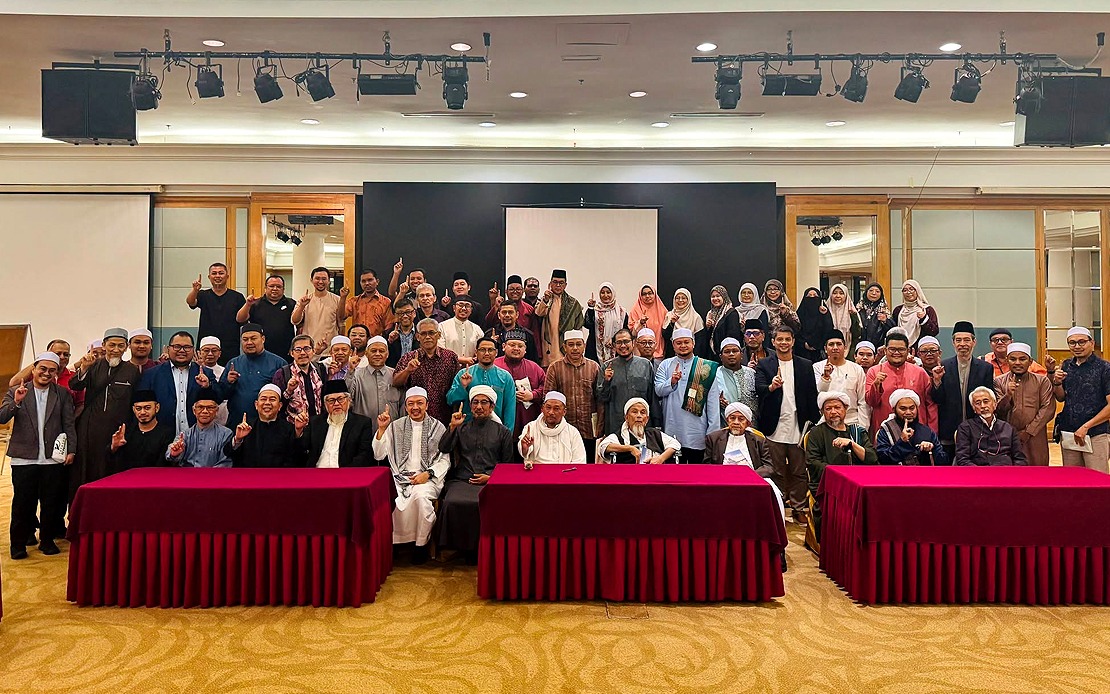
A comprehensive nationwide awareness initiative involving Islamic scholars and religious figures will be deployed to clarify the Royal Commission of Inquiry's findings on Lembaga Tabung Haji, addressing widespread public concerns about how the institution managed deposits entrusted by nearly 10 million Muslim Malaysians. Datuk Seri Dr Mujahid Yusof Rawa, the former Minister in the Prime Minister's Department (Religious Affairs), outlined the strategy following a major interfaith and professional conference that convened over 100 religious leaders and scholars from across Malaysia to deliberate on the RCI's conclusions and the collective responsibility to safeguard depositors' funds.
The campaign represents a strategic effort to rebuild confidence in Tabung Haji by leveraging existing community structures and trusted spiritual institutions as primary distribution channels for accurate information. The initiative will utilise mosques, surau prayer halls, schools, government departments, colleges, universities and community learning centres as platforms for disseminating the RCI findings in accessible formats. This multi-layered approach recognises that religious scholars and community leaders possess unique credibility and reach within Malaysian Muslim communities, making them natural conduits for explaining complex institutional and financial matters in contextual, culturally resonant terms.
The foundational conference, named Hifz al-Mal, literally meaning "protection of wealth," was organised by the Malaysian Ulama Secretariat in collaboration with Malaysian Ulama Council Spiritual Leader Abdul Rahim Abdul Rahman. The choice of this Islamic jurisprudential principle as the conference's anchor reflects a deliberate framing of the Tabung Haji accountability issue not merely as a financial or governance scandal, but as a breach of sacred trust within the Islamic community. By grounding the discussion in established Islamic principles governing the preservation and proper management of communal resources, organisers sought to elevate the discourse beyond partisan politics or technical finance into the realm of religious obligation and community ethics.
What distinguished this gathering was its deliberately constructed heterogeneity, bringing together not just religious scholars but also chartered accountants, economic analysts, legal experts, religious educators and traditional Islamic seminary instructors. This fusion of perspectives created a unique analytical framework that could simultaneously examine the RCI findings through religious, financial, economic, accounting, legal and governance lenses. Such comprehensive cross-disciplinary engagement enables religious leaders to explain the findings with fuller contextual understanding, allowing them to address not just the "what" of institutional mismanagement but the "why" and implications for Islamic principles of financial stewardship.
Mujahid emphasised that the campaign's primary objective remained crystal clear: ensuring facts reach the public, maintaining the sanctity of institutional trust, and preventing future abuse of community assets. Tabung Haji functions fundamentally as a religious trust held collectively on behalf of Malaysia's Muslim population, making its protection a shared communal responsibility transcending individual interests or factional concerns. The former minister framed the awareness drive as essential groundwork for restoring institutional credibility after what the RCI investigation revealed to be significant management failures that compromised the hajj savings of millions of ordinary Malaysians.
The nationwide rollout represents a departure from conventional government communication strategies, which typically rely on official statements, media releases, and top-down public relations campaigns. Instead, this approach recognises that rebuilding trust in a religious institution requires engagement through the very structures that embody that religious community's values and identity. By channelling information through imams, ustaz religious teachers, and respected community scholars, the campaign positions the RCI findings not as external accusations but as internal self-examination and collective commitment to reform.
For Malaysian depositors, particularly the millions of ordinary citizens who contribute portions of their earnings to Tabung Haji for pilgrimage funding, this campaign addresses a fundamental anxiety about institutional accountability. The RCI's investigation had uncovered troubling gaps in how the institution managed public savings, raising questions about governance, oversight, and transparency. A coordinated effort by religious and professional leaders to explain what went wrong, how it happened, and what safeguards now exist can significantly impact public perception of whether lessons have genuinely been learned and systemic vulnerabilities addressed.
The timing of this initiative also carries political significance within Malaysia's broader institutional reform agenda. In recent years, numerous government bodies and state-linked entities have faced public scrutiny over governance failures and resource mismanagement. Tabung Haji's situation exemplifies a challenge facing Malaysian institutions more broadly: restoring public confidence after institutional failures. The model being developed here—leveraging trusted community figures and professional expertise to provide transparent, comprehensive explanations—could offer a template for how other institutions approach similar accountability and reconstruction efforts.
Regional observers might note that Malaysia's approach, which deliberately integrates Islamic jurisprudential frameworks with modern financial and legal accountability mechanisms, reflects Southeast Asia's ongoing negotiation between religious governance traditions and contemporary institutional best practices. The conference's success in convening such diverse expertise suggests that institutions in the region can effectively bridge these frameworks without treating them as mutually exclusive, potentially offering lessons for other Muslim-majority nations grappling with similar institutional trust deficits.
The campaign's success will ultimately depend on whether religious and community leaders can translate complex RCI findings into compelling narratives that resonate with ordinary depositors' concerns and questions. Doing so requires not just factual accuracy but genuine dialogue that acknowledges the legitimate grievances many contributors feel about institutional management of their savings. As the nationwide rollout unfolds across hundreds of mosques, schools, and community centres, Malaysia's religious leadership class will face the important task of demonstrating that accountability within Islamic institutions remains both possible and necessary for maintaining the trust upon which they fundamentally depend.

