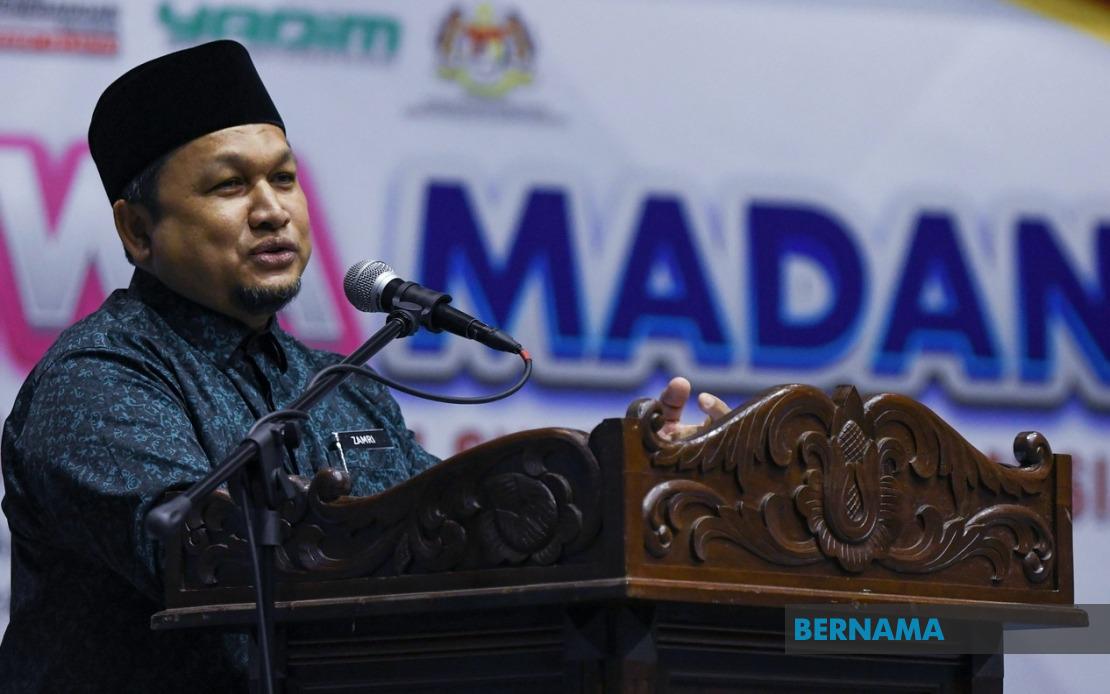
The Malaysian government's push to establish formal accreditation requirements for religious speakers operating on digital platforms and social media has gained backing from a key religious institution, reflecting broader concerns about the quality and authenticity of Islamic content circulating online. Yayasan Dakwah Islamiah Malaysia (YADIM), a pivotal government-backed dakwah agency operating under the Prime Minister's Department, has thrown its weight behind the initiative, signalling institutional confidence in the regulatory approach announced by Minister in the Prime Minister's Department (Religious Affairs) Dr Zulkifli Hasan.
The rationale underpinning this accreditation framework centres on a fundamental challenge confronting Islamic institutions across Southeast Asia: the democratisation of religious authority through digital platforms. According to YADIM chief executive officer Zamri Zainal Abidin, the absence of formal credentialling mechanisms creates a vacuum that allows individuals to claim religious expertise without substantive grounding in Islamic scholarship. This proliferation of unvetted religious commentary represents a tangible threat to the integrity of Islamic teachings, particularly as social media platforms become the primary source of religious guidance for younger demographics across Malaysia and the wider region.
The landscape of online Islamic discourse has transformed dramatically over the past decade. Unlike traditional institutional frameworks where religious authority derived from formal training, institutional affiliation, and community recognition, the digital sphere permits instantaneous broadcasting to mass audiences without gatekeeping mechanisms. Zamri's assessment directly addresses this structural vulnerability, noting that without proper accreditation, the public—especially young people dependent on social media for religious instruction—faces mounting exposure to doctrinally inaccurate or deliberately misleading religious content. This vulnerability extends beyond individual confusion; it threatens institutional credibility of established religious bodies when unqualified voices command larger audiences through algorithmic amplification.
MALAYSIA's proposal distinguishes itself by framing accreditation not as restriction but as quality assurance. Zamri emphasised that the framework would not obstruct sincere individuals genuinely committed to sharing authentic religious knowledge, but rather would establish baseline standards of competency and doctrinal accuracy. This distinction proves significant for Malaysian and regional audiences accustomed to debates over religious freedom. The government's positioning suggests an attempt to navigate between competing imperatives: enabling broad participation in dakwah while safeguarding institutional authority and theological coherence. For a multiethnic, multireligious nation like Malaysia where religious credibility carries political and social weight, this balance matters considerably.
YADIM itself has already operationalised such standards within its own ecosystem. The foundation's trained preachers, including participants in its Daie Muda programme, obtain formal accreditation from the Federal Territories Mufti Department, creating a documented track record of institutional practice. This existing infrastructure positions YADIM as a logical implementing partner should the government proceed with formal rollout. The foundation's proactive stance reflects institutional self-interest—strengthening official accreditation frameworks validates YADIM's existing credentials while elevating its strategic position within Malaysia's religious governance architecture.
The timing of this initiative intersects with broader Southeast Asian challenges regarding online religious extremism, misinformation, and the erosion of institutional religious authority. Malaysia has experienced documented instances of radicalisation facilitated through social media, instances where charismatic but theologically untrained individuals attracted followers through digital platforms. An accreditation system targeting online preachers would represent a preventative measure, attempting to foreclose pathways through which heterodox or militant interpretations gain audience traction. Countries throughout the region—Indonesia, Singapore, Brunei—face analogous concerns, suggesting that Malaysia's approach may establish precedent-setting mechanisms.
However, implementation complexities loom substantively. Determining appropriate accreditation standards—which authorities adjudicate theological competence, what pedagogical approaches qualify, how to handle evolving Islamic jurisprudence—involves contentious judgement calls. Different Islamic schools within Malaysia and the broader Muslim world maintain divergent methodologies and doctrinal positions. An accreditation framework necessarily privileges certain interpretative traditions while marginalising others, creating potential grievances among excluded constituencies. The proposal implicitly assumes consensus on authentic Islamic teaching—a premise that regional Islamic jurisprudence does not universally share.
Enforcement mechanisms present equally daunting challenges. Social media platforms operate globally according to algorithms largely indifferent to national regulatory frameworks. Requiring accreditation before posting represents a prior restraint on expression that digital platforms might resist. Retrospective enforcement—removing unaccredited preachers after posting—raises questions about who determines violations and through what appeal processes. The proposal requires clarification regarding jurisdictional scope, penalties for non-compliance, and mechanisms for adapting standards as Islamic scholarship and digital communication evolve.
From Malaysia's perspective, successful implementation could strengthen institutional Islamic authority during an era when competing religious voices proliferate instantaneously. Religious institutions gain capacity to shape national religious discourse when they control access to platforms and audiences. Conversely, the framework risks alienating independent scholars, minority Islamic schools, or critics of institutional Islam who perceive accreditation as weaponised institutional gatekeeping. Public legitimacy of any accreditation system depends substantially on perceptions of procedural fairness and theological inclusivity.
The broader context involves Malaysia's position within Southeast Asian Islamic networks and global Islamic discourse. As a Muslim-majority nation with secular constitutional frameworks, Malaysia attempts balancing institutional Islamic authority with liberal democratic principles. Accreditation frameworks signal that Malaysia privileges structured, institutionally-integrated Islam over decentralised, individual-driven religiosity. This positioning aligns with historical Malaysian Islamic governance but potentially tensions with emerging digital-native Islamic communities that prioritise direct scriptural interpretation over institutional mediation.
YADIM's endorsement provides institutional legitimacy while raising questions about institutional incentives. As the government's designated dakwah agency, YADIM benefits directly from regulatory frameworks that privilege institutional actors. Independent preachers, grassroots Islamic educators, and alternative Islamic communities operating outside formal institutional structures lack equivalent advocacy channels. Their perspectives on proposed accreditation standards remain largely absent from policy discourse, creating democratic legitimacy deficits.
Moving forward, Malaysia faces crucial decisions regarding accreditation standards, implementing authorities, appeal mechanisms, and integration with existing religious regulatory structures. The proposal requires parliamentary scrutiny and public consultation extending beyond institutional voices. Success depends on designing frameworks perceived as legitimate by diverse Islamic constituencies while maintaining flexibility as digital platforms and Islamic scholarship continue evolving. The initiative reflects genuine institutional concerns regarding religious misinformation, yet implementation requires sustained attention to democratic process and theological pluralism.

