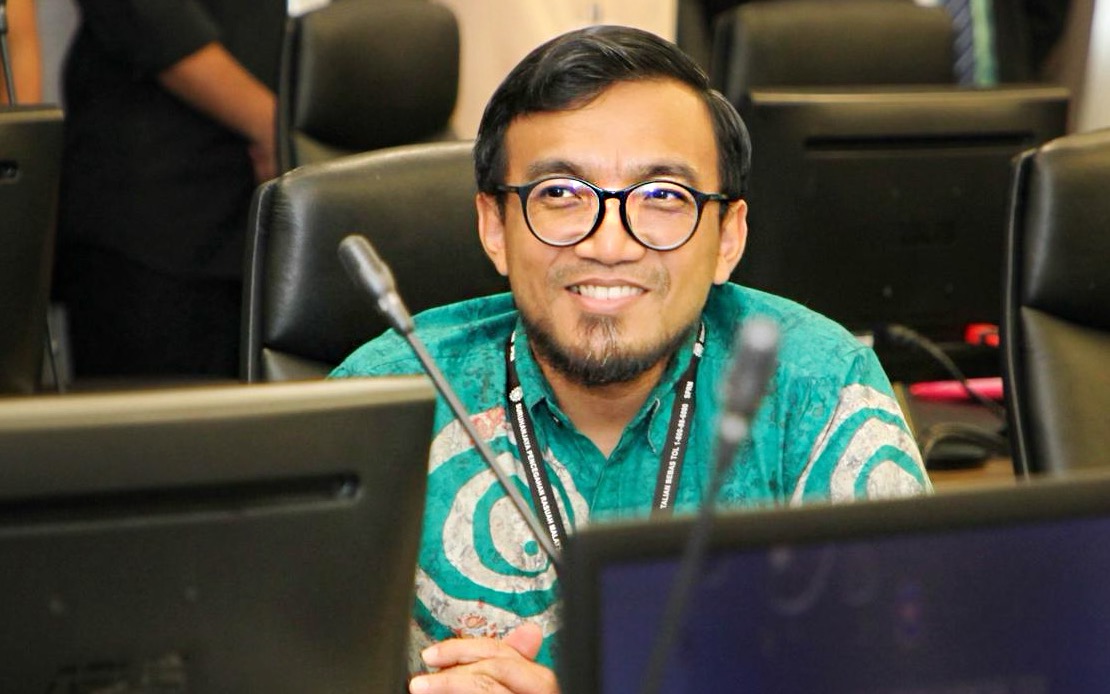
The path to successful reform at Lembaga Tabung Haji extends far beyond meeting implementation deadlines. According to Dr Muhammad Irwan Ariffin, a lecturer in economics at the Kulliyyah of Economics and Management Sciences at International Islamic University Malaysia, the institution's recovery hinges on establishing robust performance metrics that can track whether the Royal Commission of Inquiry's recommendations are genuinely effective in addressing underlying problems.
This distinction between compliance and impact proves crucial for an institution managing the savings of millions of Malaysian Muslims. The RCI TH recommendations represent a comprehensive overhaul of governance and operational standards, yet Dr Irwan emphasizes that merely ticking off action items within prescribed timeframes would represent a hollow victory if the underlying issues persist. Without measurable indicators tied to tangible outcomes, implementation efforts risk becoming mere bureaucratic exercises that fail to address the legitimate concerns of depositors who entrusted their hajj savings to the institution.
Dr Irwan stresses that consistent and regular progress reporting serves a purpose beyond administrative accountability. In Malaysia's financial ecosystem, public perception and expectations wield considerable influence over economic behavior and decisions. The relationship between actual financial conditions and how the public perceives those conditions remains intertwined and mutually reinforcing. When citizens doubt an institution's transparency or suspect hidden problems, their actions—such as hastily withdrawing funds—can become self-fulfilling prophecies that destabilize the very system they fear. This psychological dimension of financial management deserves careful attention as Tabung Haji navigates its recovery.
Insufficient information dissemination or unexplained delays in executing recommendations create breeding grounds for anxiety and speculation. In the absence of clear, timely communication, depositors naturally fill information vacuums with worst-case assumptions. The resulting erosion of confidence can trigger precisely the unwarranted mass withdrawals that no institution can easily weather. Regular, substantive reporting thus becomes not merely good practice but essential insurance against confidence collapse.
On the governance front, Dr Irwan advocates for periodic reviews of the existing institutional framework to identify opportunities for continuous internal improvement. The selection criteria for board members demand particular scrutiny, as the RCI recommendations correctly emphasized that appointments must prioritize demonstrated expertise and personal integrity rather than other considerations. This principle extends to establishing clear functional boundaries between the main management body and specialized committees, each with defined responsibilities and accountability mechanisms.
The committees themselves require additional safeguards against the dual pressures of conflict of interest and political interference. Strict adherence to accounting standards, coupled with structural independence, creates conditions where professional judgment can flourish without external distortion. Malaysia's experience with various institutional failures underscores how governance architecture directly determines whether organizations serve their stakeholders or become vehicles for misuse.
From an Islamic economic perspective, Dr Irwan observes that the proposed reforms align with fundamental principles embedded in Islamic finance theory and practice. The emphasis on transparency, equitable treatment, and protection of depositor wealth reflects the Islamic concepts of amanah (trust), adl (justice), and hifz al-mal (safeguarding of property). Additionally, governance improvements embody the principle of sadd al-dhari'ah—preventing harm before it materializes rather than merely responding to crises after they occur. These are not merely technical adjustments but expressions of deeper values that should guide the institution's recovery.
Standardized governance enables Tabung Haji to accurately calculate actual profit, determine appropriate reserve levels, and establish sustainable hibah distributions based on genuine financial capability rather than wishful thinking. Investment evaluation currently emphasizes whether products and contracts comply with halal-haram requirements, a necessary but insufficient standard. Dr Irwan advocates for more holistic assessment that includes how governance decisions themselves protect and honor depositors' trust—recognizing that even technically permissible investments can betray Islamic principles if secured through flawed decision-making processes.
Attracting younger Malaysians to the hajj savings scheme presents a distinct challenge requiring targeted strategies. This demographic exhibits greater financial literacy than previous generations and demonstrates keen interest in understanding how institutions manage their capital. They expect granular transparency regarding investment portfolios, associated risks, governance structures, and decision-making processes. Satisfying these expectations demands comprehensive financial reporting and robust financial literacy programs that empower younger Malaysians to make informed decisions about hajj planning at earlier life stages.
Dr Irwan recommends that long-term investment strategy emphasize balanced portfolio diversification, thoughtfully calibrating between stable, liquid assets that provide security and growth-oriented investments that generate returns necessary for sustainable hibah distributions. This approach acknowledges that pure conservatism ultimately undermines the institution's capacity to serve depositors effectively, while excessive risk-taking betrays their trust. The middle path requires sophisticated analysis and disciplined execution.
The convergence of these recommendations—transparent reporting, principled governance, Islamic-aligned values, generational engagement, and sound investment strategy—suggests that Tabung Haji's rehabilitation depends less on rigid adherence to implementation schedules and more on genuine institutional transformation. Success means restoring an organization where depositors feel their savings are genuinely protected and strategically deployed in accordance with Islamic principles. This demands ongoing measurement, honest assessment, and willingness to adjust course based on performance data rather than predetermined timelines.

