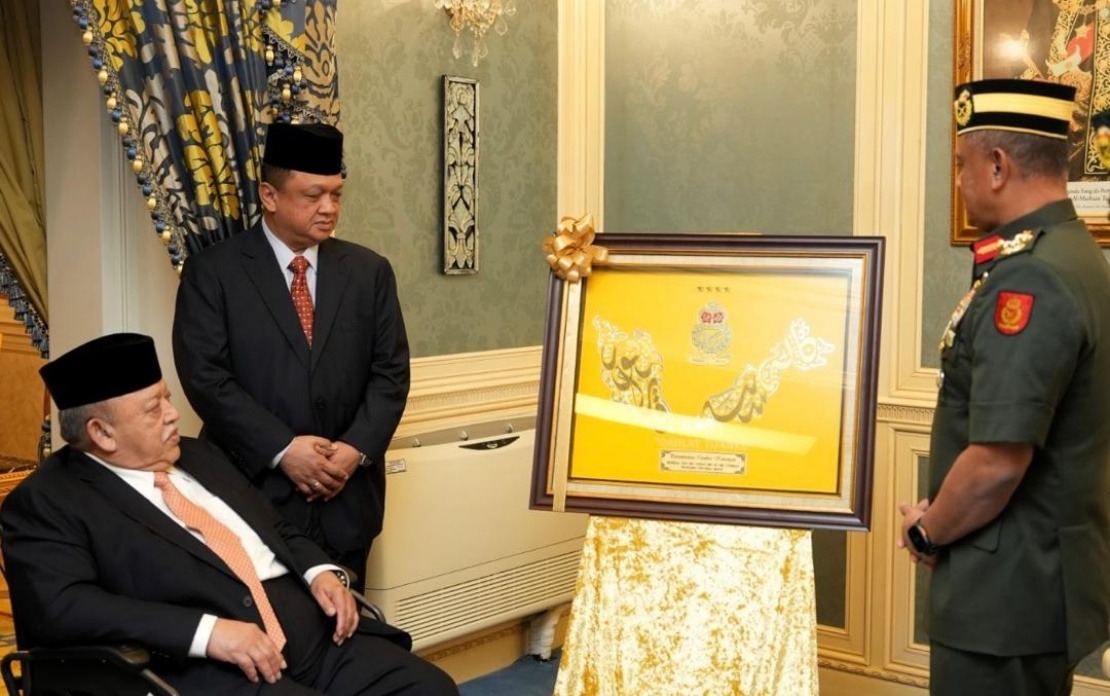
The Raja of Perlis, Tuanku Syed Sirajuddin Jamalullail, received General Tan Sri Azhan Md Othman, the Chief of the Armed Forces, during an official ceremony at Balai Menghadap Biru in Istana Arau on July 29. The meeting represents a significant occasion in the diplomatic calendar of the northern state, showcasing the ongoing relationship between Perlis's hereditary monarchy and Malaysia's military establishment.
Joining His Royal Highness for the engagement was the Raja Muda of Perlis, Brigadier General Tuanku Syed Faizuddin Putra Jamalullail, whose presence underscored the military's deep connection to the state's leadership structure. The Raja Muda currently serves as Commander of the 504th Territorial Army Regiment, headquartered at Kem Bukit Keteri near Padang Besar, demonstrating the integration of royal authority with active military command responsibilities within Perlis's territorial defence framework.
According to a statement issued by Istana Arau, the formal audience served a dual purpose in Malaysia's governance architecture. Beyond the ceremonial aspects typical of such encounters between state rulers and national military leadership, the meeting functioned as a platform to reinforce the institutional bonds linking the Perlis Royal Institution with the armed forces. This reinforcement carries practical implications, as both institutions share responsibility for maintaining order and protecting citizens across the state's jurisdiction.
The Raja of Perlis holds constitutional and ceremonial positions within the military hierarchy that extend his influence beyond purely civilian matters. As Colonel-in-Chief of both the Royal Ranger Regiment (RRD) and the Royal Military Police Corps (KPTD), Tuanku Syed Sirajuddin Jamalullail maintains formal patronage over these specialist units. These appointments reflect Malaysia's constitutional framework, where sultans and rajas exercise military patronage roles that blend ceremonial significance with substantive institutional connections.
The palace statement emphasized that the audience functioned as an opportunity to deepen strategic cooperation between the military's top command and Perlis's state administration. The agenda encompassed multiple dimensions affecting citizen welfare, ranging from security operations and community well-being to broader national development initiatives. This multifaceted approach reflects the contemporary understanding that effective governance requires coordinated action across defence, social, and economic spheres.
These formal interactions between royal institutions and the military command carry particular significance in Malaysia's constitutional monarchy system. Unlike nations with purely ceremonial heads of state, Malaysia's sultans and rajas maintain active roles in their states' governance structures. Such audiences provide occasions for reaffirming shared values and operational commitments without requiring legislative action or public policy announcements.
The emphasis on strengthening ties between the defence institution and the royal institution signals continuity in Malaysia's approach to national security governance. Rather than viewing the military and monarchy as separate spheres, the formal framing of this meeting underscores their interdependence in safeguarding the nation's sovereignty. This institutional harmony proves especially important in border states like Perlis, which faces unique security considerations given its proximity to the Thai border and its role in regional stability.
Perlis's strategic location in northern Malaysia makes its administrative and security arrangements matters of national consequence. The state serves as a gateway for regional commerce and a critical point in Malaysia's border security architecture. Meetings between the state's leadership and national military commanders therefore carry implications extending beyond local governance to affect Malaysia's broader security posture and regional relationships.
The articulated commitment to preserving national peace, stability, and prosperity through institutional cooperation reflects Malaysia's emphasis on coherence between its defence and governance structures. Rather than operating in isolation, the military and royal institutions function as complementary forces advancing shared national objectives. This collaborative framework has characterized Malaysian statecraft since independence and remains central to the nation's approach to managing security challenges and developmental aspirations.
For observers monitoring Malaysia's governance dynamics, such formal audiences provide insights into the health of institutional relationships and the priorities occupying senior leadership attention. The timing and composition of this meeting, along with the specific reference to multiple security and development concerns, indicates that national military and state leadership remain actively engaged in coordinating responses to issues affecting their respective jurisdictions. These routine ceremonial interactions thus serve as barometers of institutional functionality and continuity within Malaysia's constitutional system.

