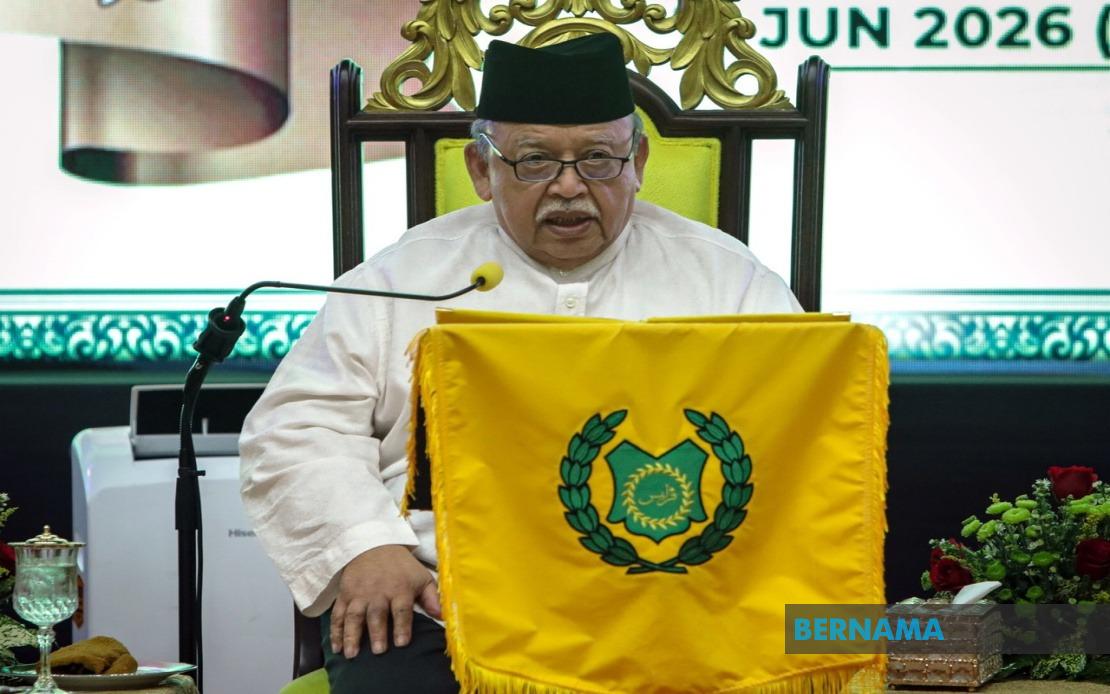
The Raja of Perlis, Tuanku Syed Sirajuddin Jamalullail, has delivered a clarion call for Malaysians to anchor their personal and professional conduct in principles of integrity while steadfastly resisting corruption in all its manifestations. Speaking during the state-level observance of Maal Hijrah 1448H/2026M in Kangar on June 18, the Ruler articulated a vision of national advancement that extends far beyond material infrastructure, emphasizing instead the moral and intellectual foundations essential for building a prosperous, cohesive society.
The emphasis placed by Tuanku Syed Sirajuddin on treating work as an act of worship reflects a deeper philosophical framework where professional responsibility becomes intertwined with spiritual obligation. This framing carries particular resonance in the Malaysian context, where the integration of religious values into public service has long been championed as a counterweight to corruption and ethical lapses. By positioning integrity not merely as a pragmatic necessity but as a sacred duty, the Ruler articulated a message that bridges administrative governance and moral stewardship, two domains that frequently demand reconciliation in contemporary governance.
Central to the Ruler's address was a redefinition of what constitutes genuine progress within a nation-state. The concept of MADANI progress, as articulated by Tuanku Syed Sirajuddin, transcends conventional metrics of economic growth and physical development. Instead, it encompasses the cultivation of knowledge within the population, the refinement of character across all societal strata, the preservation and strengthening of cultural heritage, intellectual maturity and the integrity that underpins institutional and personal conduct. This holistic framework suggests that a nation's true wealth resides not in its gross domestic product alone but in the collective wisdom, civility and moral fibre of its citizens.
The Ruler emphasized that sustainable national advancement requires simultaneous cultivation across multiple dimensions. Knowledgeable citizens, he argued, must also possess and demonstrate integrity, uphold standards of civility and work toward genuine unity. The interconnectedness of these values suggests that deficiencies in any single area undermine progress across others—a perspective that challenges siloed approaches to nation-building that focus exclusively on economic or technological advancement whilst neglecting character development or social cohesion. For Malaysia, a nation navigating complex ethnic and religious pluralism, this integrated vision carries particular importance.
Tuanku Syed Sirajuddin articulated a specific charge regarding the preservation and authentic interpretation of Islamic teachings. The imperative to ground understanding in the Quran and Sunnah, coupled with the emphasis on cultivating mature and civilised political culture, speaks to aspirations for religious scholarship that remains grounded in historical Islamic principles whilst resisting sectarian extremism or political instrumentalisation of faith. This positioning responds to ongoing debates within Muslim-majority Southeast Asia regarding how Islamic values can inform contemporary governance and social development without compromising pluralism or democratic norms.
The developmental agenda outlined by the Raja extends across religious, political, economic and social spheres, suggesting that progress in any single domain remains incomplete without parallel advancement elsewhere. This comprehensive vision recognises that economic development divorced from political maturity or social cohesion produces instability, whilst religious advancement untethered from economic opportunity generates frustration. For Malaysian policymakers, this framework offers a sophisticated challenge to narrow sectoral approaches, demanding instead integrated strategies that treat governance, economic policy and social development as mutually reinforcing rather than competing priorities.
The Ruler's invocation of contemporary challenges—technological disruption, artificial intelligence proliferation, demographic transformation and global economic volatility—signals recognition that Perlis and Malaysia cannot retreat into nostalgic comfort regarding traditions and established practices. Instead, Tuanku Syed Sirajuddin positioned his audience not as passive recipients of technological change but as active architects capable of shaping how emerging technologies are deployed, for whom, and toward what ends. This framing empowers citizens whilst simultaneously acknowledging the genuine uncertainty and complexity that technological acceleration introduces.
The call for Malaysians to transition from observation to initiation carries implications for civic engagement and social responsibility. The Ruler implicitly rejected passivity and victim-mentality, instead challenging citizens to identify problems, propose solutions and assume leadership roles in driving constructive change. This orientation toward individual agency within collective frameworks aligns with evolving understandings of citizenship that emphasise not merely rights and entitlements but active participation and responsibility for community welfare and national direction.
The presentation of the Perlis Tokoh Maal Hijrah award to Datuk Izham Mahmud, a board member of Yayasan Tuanku Syed Putra, provided practical instantiation of these principles. By recognizing exemplary contributions to societal development, Tuanku Syed Sirajuddin illustrated his conviction that individuals and institutions embodying integrity and developmental commitment merit acknowledgement and celebration. Such recognition serves not merely to honour recipients but to communicate broader societal values, signalling which behaviours and commitments warrant emulation.
For Malaysia's broader governance landscape, the Raja's address offers important articulation of values that cross-cut partisan political divisions. The emphasis on integrity, accountability, knowledge cultivation and unity resonates across ideological spectra and appeals to citizens' aspirations for functional institutions and trustworthy leaders. As Malaysia continues navigating political transitions and evolving governance challenges, messages reinforcing the primacy of character and integrity in public life provide stabilising reference points around which diverse constituencies might coalesce.
The occasion of Maal Hijrah celebration itself—marking the Islamic calendar's commencement—provided appropriate context for meditations on renewal, course-correction and recommitment to foundational principles. By tethering the Ruler's message to this religious observance, the address linked aspirations for national progress to spiritual frameworks familiar and meaningful to Malaysia's Muslim majority, whilst the universal principles articulated transcend sectarian boundaries and hold relevance for all Malaysians regardless of faith background.