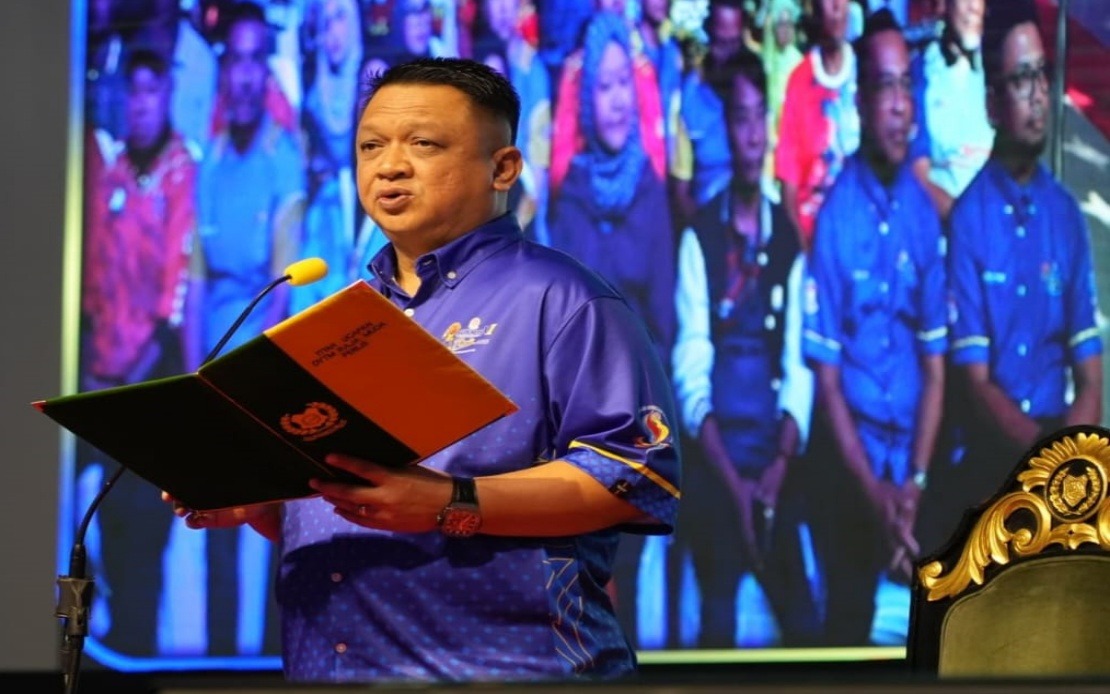
At the opening ceremony of the 11th Sukan MARA Se-Malaysia (SUKMAS) in Kangar today, Tuanku Syed Faizuddin Putra Jamalullail, the Raja Muda of Perlis, articulated a comprehensive blueprint for positioning Majlis Amanah Rakyat (MARA) as an institution capable of navigating the complexities of a rapidly evolving global landscape. Addressing MARA personnel gathered for the biennial sporting event, His Royal Highness presented three interconnected strategic thrusts designed to fundamentally reshape how the agency operates and contributes to Malaysia's economic and social development.
The foremost pillar centres on embracing technological innovation, with particular emphasis on artificial intelligence and its transformative potential. Tuanku Syed Faizuddin Putra stressed that MARA must transcend a passive posture of merely adapting to technological change and instead assume a proactive leadership role in defining how emerging technologies reshape institutional practice. This positioning reflects growing recognition across Malaysian government agencies that competitiveness in the digital era requires not just adoption but genuine mastery of AI tools to drive operational efficiency, unlock creative problem-solving, and enhance service delivery to MARA's diverse stakeholder base.
The second strategic thrust addresses entrepreneurial excellence and global competitiveness. The Raja Muda emphasized that MARA should concentrate on cultivating a new generation of entrepreneurs characterised by innovation, adaptability, and the courage to venture beyond domestic markets. This directive carries particular significance for Malaysia's economic aspirations, as it signals institutional commitment to developing businesses with genuine export potential and international market presence. By positioning MARA as an incubator for globally competitive enterprises rather than primarily domestically oriented ventures, the institution repositions itself as a strategic driver of Malaysia's push towards higher-value economic participation in regional and global supply chains.
Leadership transformation constitutes the third pillar of this strategic vision. His Royal Highness articulated an expectation that future MARA leaders embody decisiveness, strategic acuity, and a capacity to catalyse transformational change rather than merely responding to external pressures. This emphasis on proactive leadership reflects a sophisticated understanding that institutional effectiveness depends fundamentally on cultivating cadres capable of anticipating challenges, making rapid decisions in uncertain environments, and driving systemic change. Such leadership qualities have become increasingly critical as MARA navigates competition from private sector actors and international development organisations in the microfinance and entrepreneurship support spaces.
The SUKMAS tournament itself, held at Dewan 2020, serves purposes extending well beyond conventional sporting competition. By convening over 3,000 athletes and officials representing MARA teams from all 14 states, the biennial gathering functions as a crucial institutional bonding mechanism that reinforces organisational cohesion across geographical and functional boundaries. The Raja Muda's characterisation of sports as a unifying language speaks to the reality that large bureaucratic organisations require structured occasions to cultivate shared identity and collective purpose. The event's geographic location in Perlis also underscores the importance of maintaining national institutional rituals that extend beyond federal territory and signal governmental commitment to regional participation.
The sporting programme encompasses 15 competitive events, ranging from conventional disciplines such as football, volleyball, and tennis to distinctly Malaysian pursuits including netball and sepak takraw. This eclectic mix reflects MARA's effort to balance international competitive standards with indigenous cultural practices, a balance that mirrors broader Malaysian institutional values. The inclusion of both established sports and culturally specific activities demonstrates that MARA views institutional development and personnel wellness through a lens that respects Malaysia's multicultural and multisport traditions.
Mara Director-General Datuk Seri Zulfikri Osman emphasised in remarks to media representatives that SUKMAS represents an important opportunity for MARA to deepen community engagement, particularly in the host state of Perlis. This framing reflects recognition that large government institutions derive legitimacy and credibility through visible, substantive engagement with regional communities beyond routine administrative functions. The presence of Raja Puan Muda of Perlis Tuanku Dr Hajah Lailatul Shahreen Akashah Khalil alongside His Royal Highness further underscored the ceremonial significance attached to this institutional gathering and the royal institution's ongoing engagement with Malaysia's developmental organisations.
The timing of these strategic pronouncements merits consideration within Malaysia's broader institutional reform agenda. As MARA confronts evolving expectations regarding its role in supporting small and medium enterprises, micro-entrepreneurship, and skills development, the Raja Muda's emphasis on technology, global competitiveness, and strategic leadership suggests recognition that institutional relevance demands continuous reinvention. This is particularly significant given competition from private fintech platforms, international development agencies, and other government bodies addressing similar constituencies.
The five-day SUKMAS programme, extending through September 3rd, represents a substantial institutional commitment to personnel engagement and wellness initiatives. For an organisation managing complex development portfolios across diverse Malaysian communities, such periodic gathering opportunities provide essential mechanisms for renewing organisational culture, facilitating inter-state networking among personnel, and demonstrating institutional commitment to holistic personnel development encompassing physical wellness alongside professional advancement.
The strategic vision articulated by the Raja Muda ultimately positions MARA within a broader context of Malaysian institutional modernisation. Rather than defending traditional roles or narrowly defending institutional turf, the proposed thrusts suggest an agency consciously repositioning itself as a forward-looking instrument capable of contributing meaningfully to Malaysia's transformation towards knowledge-based enterprise and globally competitive indigenous business. The emphasis on artificial intelligence, entrepreneurial internationalisation, and catalytic leadership reflects sophisticated awareness that MARA's future relevance depends on institutional evolution that anticipates rather than merely responds to Malaysia's developmental imperatives.

