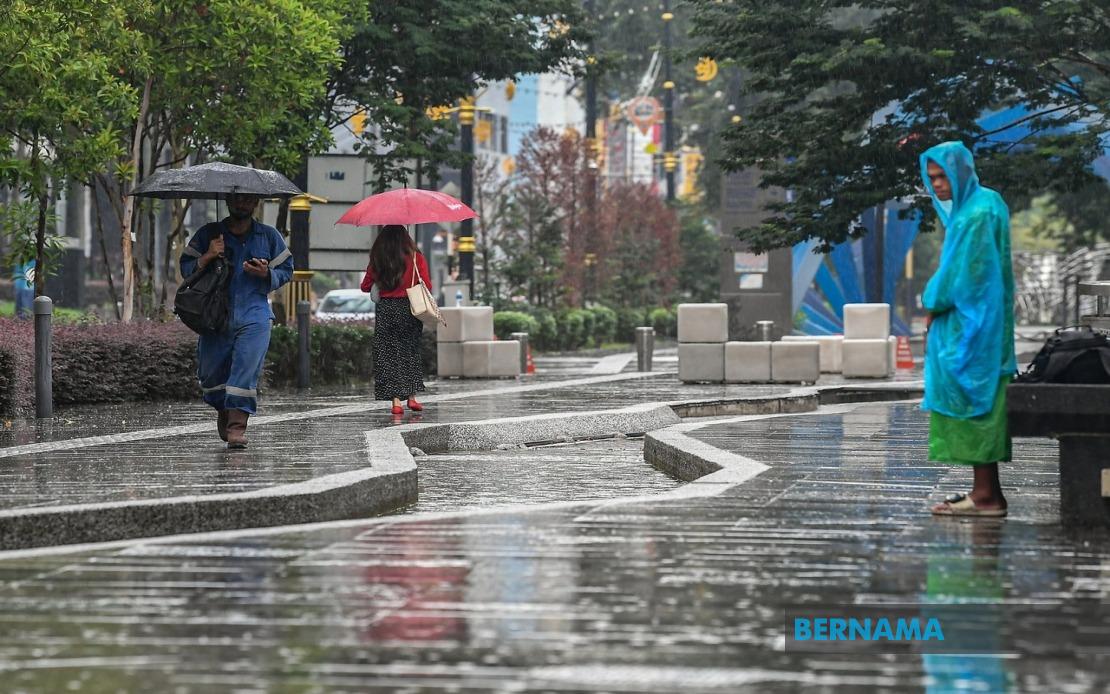
Johor's nomination day for the state election faces potential weather disruptions, with the Malaysian Meteorological Department forecasting rain across seven of the state's ten districts on June 27. The wet conditions are likely to create logistical challenges for prospective candidates and their supporters as they navigate nomination centres during the morning proceedings, though the impact is anticipated to be manageable rather than severely hindering the electoral process.
Azlai Ta'at, director of MetMalaysia's Johor office, outlined a fragmented weather pattern across the state, with precipitation expected in Johor Bahru, Muar, Batu Pahat, Kota Tinggi, Pontian, Tangkak and Kulai. The remaining three districts—Segamat, Kluang and Mersing—are anticipated to experience clear skies in the morning, offering candidates in these areas unobstructed access to the 56 nomination centres scheduled to operate between 9 am and 10 am. The compressed two-hour window for nominations means that weather-related delays, while inconvenient, are unlikely to disrupt the formal process significantly.
Temperature conditions will remain typical for Johor's equatorial climate, with lows ranging between 24 and 25 degrees Celsius and highs between 31 and 34 degrees Celsius. Segamat is expected to record the highest temperature at approximately 34 degrees Celsius, making the afternoon particularly uncomfortable for campaign personnel. MetMalaysia has advised the public, including candidate supporters and election officials, to remain vigilant regarding weather changes and to prepare accordingly for the transition between morning nominations and afternoon activities.
The afternoon campaign period, which commences immediately following the official announcement of eligible candidates by returning officers, faces a different meteorological threat. Thunderstorms are predicted to develop across multiple districts including Johor Bahru, Segamat, Kluang, Kota Tinggi, Pontian, Mersing and Kulai. Batu Pahat and Tangkak will experience rain without electrical activity, while Muar is forecast to remain hot and dry. These afternoon storms could impact early campaign activities and require organisers to adjust outdoor rallies and canvassing schedules.
The electoral landscape in Johor reflects Malaysia's complex multi-coalition political environment. Pakatan Harapan fields candidates across all 56 seats, with representation split among PKR's 20 candidates, Amanah's 19, and DAP's 17. This coalition maintains its traditional stronghold strategy while attempting to consolidate opposition support. Barisan Nasional also contests the full complement of seats, deploying 36 UMNO candidates supported by 16 MCA representatives and four MIC candidates, representing the traditional governing coalition's effort to recapture ground lost in previous electoral cycles.
Perikatan Nasional's strategy emphasises its Islamist credentials through PAS's 11 seat contests while diversifying with Bersatu's 16 candidates, the Malaysian Indian People's Party's five representatives, and Pejuang's single candidate. This fragmented approach suggests the coalition is positioning itself as a broader alternative to both established coalitions. The Malaysian United Democratic Alliance contributes four candidates, Parti Sosialis Malaysia one, while Parti Bersama Malaysia makes its electoral debut with an ambitious 15-seat campaign, indicating efforts to disrupt traditional two-coalition dominance.
The electoral process demonstrates Malaysia's democratic infrastructure and logistical capacity. The Election Commission has coordinated a comprehensive framework with 56 nomination centres operating simultaneously on a single morning. This concentration requires substantial administrative coordination among returning officers, poll staff, and security personnel across the state's diverse geography. The compressed nomination window ensures candidates and supporters must move quickly through registration procedures, reducing opportunities for procedural delays despite weather disruptions.
Early voting is scheduled for July 7, allowing military personnel, police officers, and their spouses to cast ballots before general polling. This separate voting mechanism recognises the deployment constraints affecting security forces and ensures their participation in democratic processes. The main polling day on July 11 will determine the composition of the Johor state assembly and the formation of the next state government, making these pre-election days crucial for solidifying campaign momentum and voter engagement.
Johor's electoral participation involves nearly 2.73 million registered voters, comprising 2,703,175 ordinary voters supplemented by 12,041 military personnel and spouses and 12,710 police personnel and spouses. This substantial electorate represents one of Malaysia's most significant state elections in terms of voter numbers, reflecting Johor's status as the nation's second-largest state by population and a politically significant east coast jurisdiction. The scale of participation underscores Johor's importance in Malaysia's broader electoral and political calculations.
The weather forecast, while potentially inconvenient, should not materially disrupt the nomination process given the tight morning schedule. Voters and campaign organisers accustomed to tropical weather patterns will likely absorb these conditions with minimal friction. However, the predicted afternoon thunderstorms may significantly impact campaign launch activities and initial canvassing efforts, potentially pushing candidates to accelerate online campaigning and digital engagement strategies. The convergence of weather patterns with nomination day creates minor operational challenges but no fundamental barriers to the democratic process.
The 16th Johor state election represents a significant test of Malaysia's political realignment following national-level coalition shifts. The presence of three major political groupings—Pakatan Harapan, Barisan Nasional, and Perikatan Nasional—alongside smaller parties competing for voter attention creates a genuinely competitive electoral environment. How voters navigate these options across seven rain-affected districts on nomination day, and subsequently during the two-week campaign period, will provide insights into electoral preferences in one of Malaysia's most politically dynamic states and potentially influence perceptions about the broader political trajectory.

