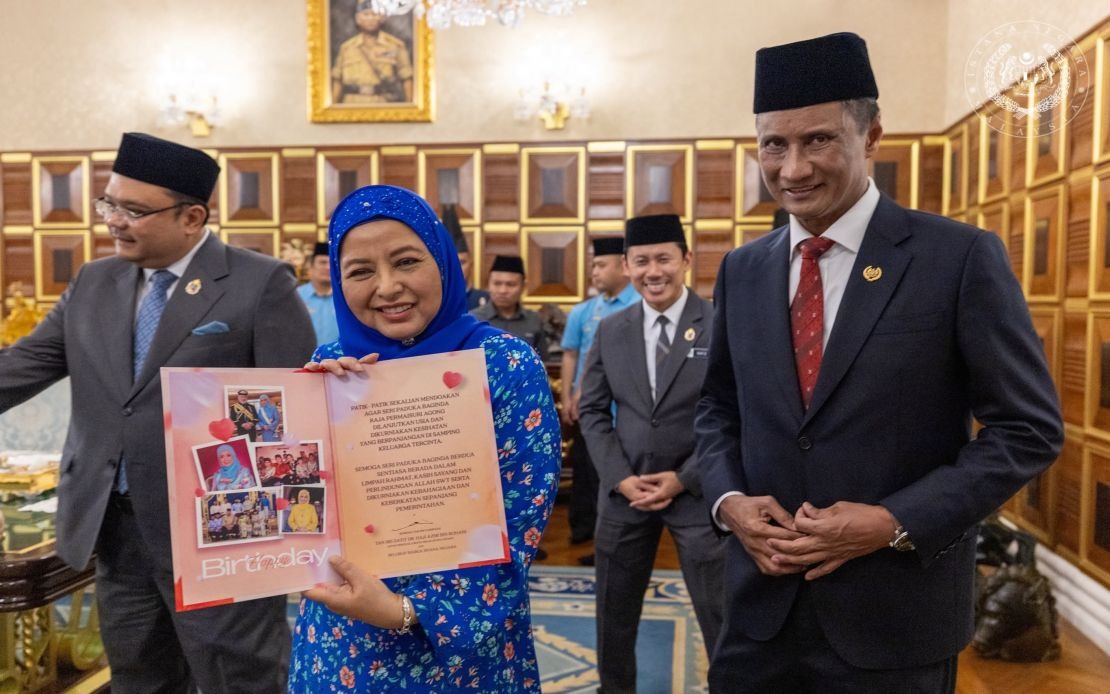
Her Majesty Queen Raja Zarith Sofiah of Malaysia observed her birthday today with a formal courtesy visit from the senior management of Istana Negara, the royal household administration. The occasion brought together key officials responsible for the day-to-day operations of the palace and coordination of royal functions, reflecting the ceremonial traditions that mark significant dates in the Malaysian royal calendar.
Tan Sri Dr Azmi Rohani, who serves as Comptroller of the Royal Household, led the delegation accompanied by Datuk Azuan Effendy Zairakithnaini, the Datuk Paduka Maharaja Lela or Grand Chamberlain. These positions sit at the apex of palace administrative structures, with the Comptroller overseeing all household operations and the Grand Chamberlain managing protocol and ceremonial arrangements. The presence of both officials underscores the formal nature of the visit and the importance placed on acknowledging the Queen's birthday within official palace circles.
The meeting took place at Istana Bukit Serene in Johor, one of the royal residences in the southern region. This venue choice is significant given Sultan Ibrahim Sultan Iskandar's primary role as the reigning Agong, whose official Facebook account documented the event for public awareness. The decision to host the courtesy call at this particular palace location rather than at Istana Negara in Kuala Lumpur suggests the Queen was in Johor at the time, and demonstrates how the royal household coordinates ceremonial observances across multiple royal residences.
Accompanying the two senior officials was Puan Sri Dr Noor Azizah Abdul Latif, wife of Tan Sri Dr Azmi Rohani. Her inclusion in the delegation reflects modern royal household practices that increasingly incorporate family members into formal palace functions, moving beyond the purely institutional representation that characterized earlier decades. This approach humanizes official protocols while maintaining appropriate ceremonial standards.
The presentation of gifts during the meeting followed established palace traditions for marking royal birthdays. The Queen received a specially prepared cake and yellow glutinous rice, items selected to reflect Malaysian cultural preferences and the significance of the occasion. Yellow holds particular symbolic importance in Malay-Muslim culture, traditionally associated with royalty and auspiciousness. The yellow glutinous rice represents a thoughtful nod to local culinary tradition while maintaining the formal nature of the gift-giving ceremony.
These gifts originated not from the officials personally but from the collective management and entire staff of Istana Negara, a symbolic gesture that extends the birthday wishes beyond the visiting delegation to encompass the hundreds of employees who work throughout the palace complex. This collective approach to gift-giving and well-wishing reinforces palace unity and demonstrates how royal occasions become moments for institutional cohesion among palace workers across multiple departments and hierarchical levels.
During his remarks to the Queen, Tan Sri Dr Azmi conveyed formal prayers and sincere wishes on behalf of the Istana Negara management and staff. These expressions went beyond perfunctory greetings, specifically emphasizing hopes for Her Majesty's continued good health, overall well-being, and sustained happiness. The careful selection of these particular wishes—health, well-being, and happiness rather than more generic sentiments—suggests a thoughtful approach to royal acknowledgement that prioritizes the Queen's personal welfare alongside her official role.
The public documentation of this event through Sultan Ibrahim Sultan Iskandar's official Facebook page reflects the Malaysian royal household's increasing engagement with digital communication channels. Rather than relying solely on traditional media announcements or palace communiques, the use of social media allows direct dissemination of information to Malaysian citizens, creating a more immediate and accessible connection between the institution and the public. This represents an evolution in how royal occasions are communicated in contemporary Malaysia.
Queen Raja Zarith Sofiah's role as Queen of Malaysia carries both ceremonial and representational significance, particularly in her functions relating to social and charitable endeavors. Birthday occasions provide opportunities for the royal household to publicly acknowledge her position and contributions, while simultaneously reinforcing the institutional structures that support the monarchy. These courtesy calls, while seemingly routine, serve important functions in maintaining palace protocols and demonstrating continuity in the relationship between the sovereign and the administrative apparatus that serves the institution.
The observance of royal birthdays through formal ceremonies and official recognition remains an important tradition in the Malaysian constitutional monarchy. Such occasions provide moments for public expression of loyalty and respect toward the royal institution, while internally they serve to strengthen bonds within the palace hierarchy and demonstrate the efficiency of palace administration. The careful orchestration of these events, from the selection of participants to the choice of gifts and venue, reflects the institutional sophistication required to manage a modern monarchy in a multicultural, contemporary context.

