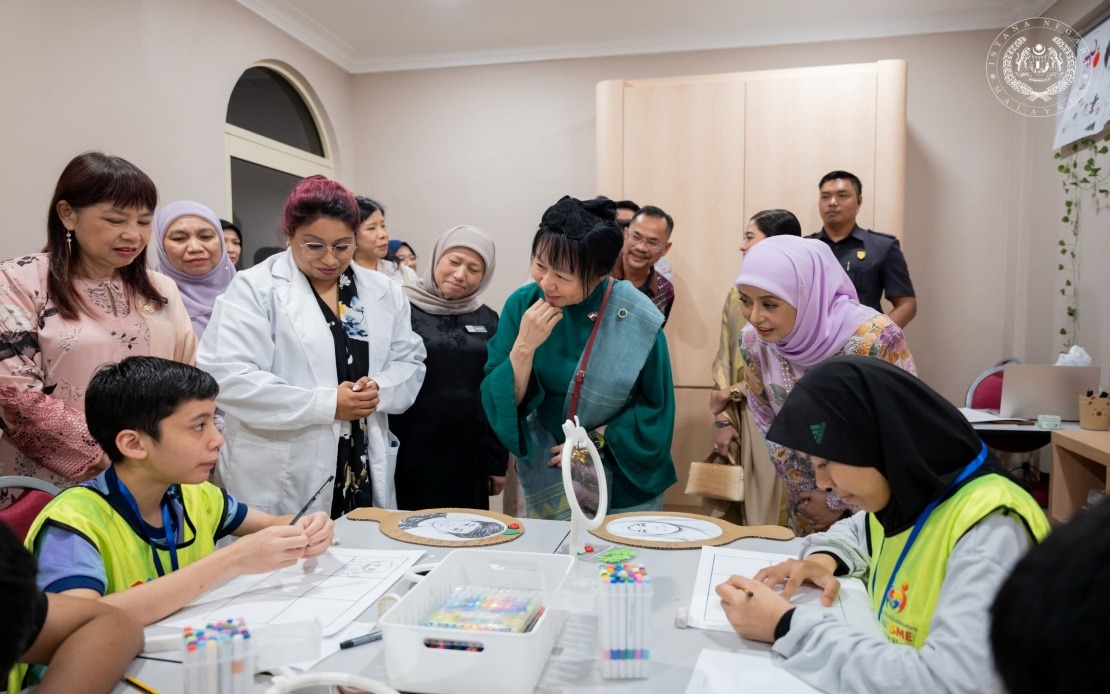
Her Majesty Raja Zarith Sofiah, Queen of Malaysia, hosted Singapore First Lady Jane Ittogi Shanmugaratnam at the Bangi Autism Service Centre in the Klang Valley on July 14, marking a significant moment of diplomatic engagement and shared commitment to autism support services. The visit formed part of the broader state visit by Singapore President Tharman Shanmugaratnam to Malaysia, reflecting the deep ties between the two neighbouring nations and their mutual interest in advancing social welfare initiatives.
The visit underscored the personal investment that high-level officials across the region place on issues affecting individuals with autism and their families. Jane Ittogi was greeted by Her Majesty upon arrival, alongside Tunku Tun Aminah Sultan Ibrahim, signalling the ceremonial importance accorded to the engagement. The presence of Malaysia's First Lady, Datuk Seri Dr Wan Azizah Wan Ismail, alongside Women, Family and Community Development Minister Datuk Seri Nancy Shukri and other senior government officials, illustrated the cross-ministerial attention devoted to autism services and their development.
During their tour of the facility, both dignitaries were guided through several key operational areas of the centre, examining the Activities of Daily Living Room, Occupational Therapy Room, and gymnasium facilities. These spaces represent the foundation of the centre's comprehensive model, which focuses on equipping individuals with autism with practical life skills and therapeutic support tailored to their developmental needs. The holistic approach demonstrated during the tour reflects broader regional and global best practice in autism intervention, moving beyond purely medical frameworks toward community-integrated care.
The Bangi facility operates through a strategic partnership between the public sector and non-governmental organisations, specifically the National Autism Society of Malaysia and the Damansara Damai Community-Based Rehabilitation Centre. This collaborative model is increasingly recognised as essential for scaling autism services across diverse communities, combining government resources, expertise, and reach with the grassroots knowledge and flexibility that NGOs bring. For Malaysia and other Southeast Asian nations, such partnerships represent a cost-effective and sustainable pathway to expanding access to quality services beyond major urban centres.
Minister Nancy Shukri provided important context during her remarks, noting that the Social Welfare Department had registered 93,199 individuals with autism as of June of the previous year. This figure carries significant implications for service planning and policy development across Malaysia. The minister emphasised that this number was anticipated to rise further as public awareness campaigns gain traction and diagnostic services become more accessible throughout the country. Early identification and intervention are critical determinants of long-term outcomes for individuals with autism, making improved screening infrastructure a public health priority.
The rising prevalence of autism diagnoses observed in Malaysia mirrors trends across developed and developing nations globally. Increased awareness among healthcare providers, educators, and families has led to higher detection rates, though challenges remain in reaching rural and underserved populations. Singapore, as a highly developed city-state with advanced healthcare infrastructure, has implemented systematic screening programmes that have informed its approach to service provision. The exchange of best practices facilitated through high-level diplomatic visits like this one can accelerate Malaysia's capacity to adopt effective models adapted to the local context.
For Malaysia and the broader Southeast Asian region, autism services remain an evolving area of policy and practice. Many countries in the region still grapple with limited specialist training, inconsistent access to diagnostic services, and gaps in long-term support for adults with autism. The visibility provided through state visits and the engagement of senior officials can catalyse institutional change, securing budgetary support and driving legislative attention toward services that benefit some of society's most vulnerable members.
The visit concluded around 11:30 am, but its implications extend beyond the ceremonial occasion. Bilateral engagement on social services establishes frameworks for ongoing dialogue and potential collaboration on training, resource sharing, and policy harmonisation. Singapore's experience in managing a dense, diverse urban population with high rates of diagnosis and comprehensive service coverage offers valuable lessons for Malaysia's more geographically dispersed population and varying levels of infrastructure development.
Malaysia's commitment to strengthening autism services, as demonstrated through this high-profile visit, signals broader priorities within the social welfare portfolio. The involvement of multiple government agencies—from the Ministry of Women, Family and Community Development to the Social Welfare Department—suggests an integrated approach to service delivery. Yet significant work remains in translating policy commitments into on-the-ground improvements, particularly in equipping teachers, healthcare workers, and community leaders with knowledge and resources to support individuals with autism throughout their life journey.

