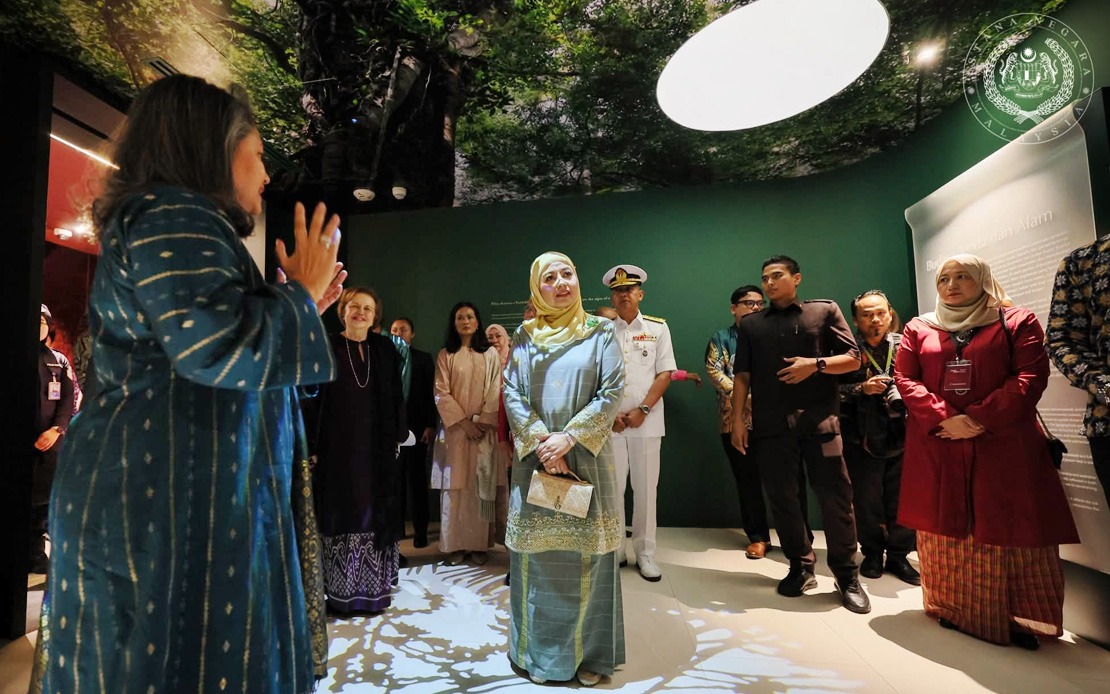
Her Majesty Raja Zarith Sofiah, Queen of Malaysia, formally opened the Merdeka Textile Museum on August 21 at the Menara Merdeka Maybank compound in Kuala Lumpur, marking a significant milestone in Malaysia's efforts to safeguard and celebrate its rich textile heritage. The institution, established by PNB Merdeka Ventures Sdn Bhd—a wholly-owned subsidiary of Permodalan Nasional Berhad—represents an ambitious venture to document and contextualise the sartorial traditions that have defined Malay identity across centuries. Through immersive storytelling and hands-on cultural experiences, the museum aims to make textile heritage accessible and meaningful to contemporary audiences while honouring the craft and artistry embedded in traditional garments.
The Queen emphasised the universal imperative that all nations must recognise and nurture their cultural legacies. During her address, Raja Zarith Sofiah stressed that heritage preservation is not merely nostalgic indulgence but a solemn responsibility to successive generations. She articulated a vision of the museum as a beacon of knowledge and discovery, one that would inspire Malaysian women—both present and future—to engage meaningfully with their cultural roots. The Queen's remarks, shared via Sultan Ibrahim Sultan Iskandar's official Facebook page, underscored a broader philosophical position: that cultural traditions encode the fundamental values and identities that bind society together, and that allowing such knowledge to fade represents an irreversible cultural loss.
At the institutional heart of the Merdeka Textile Museum lies the personal collection assembled by the late Sharifah Azah Syed Mohammed Alsagoff, known as Azah Aziz. As the spouse of the late Prof Diraja Ungku Abdul Aziz Abdul Hamid and mother of former Bank Negara Malaysia governor Tan Sri Dr Ungku Zeti Akhtar Aziz, Azah Aziz occupied a position uniquely positioned to accumulate and appreciate textile artistry. Her legacy collection, generously donated by her family, comprises 240 individual garments and 69 pieces of traditional jewellery. Among the items catalogued are elaborate songket sarongs, intricate Limar Baju Kurung pieces, and fine Tekat Emas work—each representing distinct technical mastery and regional cultural expression within the broader Malay textile tradition.
The curatorial scope extends beyond mere exhibition of artifacts. The museum's eight galleries have been meticulously designed to narrate the historical development, aesthetic evolution, and social significance of Malay textile practices. Rather than presenting items in isolation, the institution contextualises garments within their original ceremonial, familial, and social frameworks, allowing visitors to understand why particular designs mattered and how they communicated status, regional identity, and cultural affiliation. This narrative-driven approach reflects contemporary museum practice that prioritises visitor engagement and intellectual depth over passive object display.
Supporting the exhibition galleries is an equally sophisticated infrastructure dedicated to research and preservation. The museum incorporates a dedicated study centre housing a conservation laboratory equipped for the delicate restoration and maintenance of historic textiles—a critical function given the fragility of aged fabrics and dyes. Complementing these technical facilities is a comprehensive fabric library where visitors and scholars can examine samples, conduct comparative analysis, and understand the material properties that distinguish different weaving and embroidery traditions. A textile knowledge centre provides access to documentary resources, archival materials, and scholarly literature relevant to Malaysian and Southeast Asian textile studies, positioning the institution as both a public attraction and a serious research facility.
For Malaysia, the Merdeka Textile Museum arrives at a significant juncture. As rapid modernisation accelerates and younger generations increasingly adopt global fashion standards, traditional textile knowledge—including the techniques, aesthetic principles, and cultural meanings embedded in garments—faces genuine extinction risk. Unlike textiles preserved in private collections or family inheritance, public institutional preservation ensures that knowledge remains accessible to scholars, craftspeople, educators, and culturally curious citizens. The museum effectively democratises what might otherwise remain the privileged knowledge of elite or specialist communities, creating pathways for ordinary Malaysians to reclaim familiarity with their own heritage.
The institutional involvement of Permodalan Nasional Berhad signals the government's recognition that cultural infrastructure merits significant financial commitment and professional management. PNB's stewardship suggests this initiative will benefit from sustained funding, professional curatorial oversight, and strategic planning that typically eludes underfunded heritage projects. The participation of prominent government figures—including Hannah Yeoh, Minister in the Prime Minister's Department (Federal Territories); Tan Sri Shamsul Azri Abu Bakar, Chief Secretary to the Government; and Raja Tan Sri Arshad Raja Tun Uda, PNB group chairman—further underscores the initiative's importance within national cultural policy.
Within Southeast Asia's broader cultural landscape, the Merdeka Textile Museum contributes to a regional conversation about heritage preservation amid globalisation. Neighbouring countries including Indonesia, Thailand, and Vietnam have similarly invested in textile museums and heritage institutions, recognising that such facilities generate both cultural value and tourism revenue. Malaysia's addition to this institutional ecosystem potentially positions the nation as a serious custodian of Malay textile traditions that transcend modern national boundaries. The comprehensive nature of this institution—combining exhibition, conservation, and research functions—aligns it with international standards for cultural institutions, likely to enhance Malaysia's cultural diplomacy and soft power.
The museum's emphasis on engaging young people represents a crucial strategic priority. Heritage preservation succeeds only when younger generations internalise the value of their cultural inheritance and actively choose to engage with it. By designing interactive experiences and creating spaces where schoolchildren and young adults encounter textile traditions in compelling, contemporaneous ways, the Merdeka Textile Museum addresses a perennial challenge facing heritage institutions: bridging the perceived gap between historical artifacts and modern life. The Queen's specific invocation of young people suggests royal endorsement for this intergenerational mission.
Looking forward, the Merdeka Textile Museum will likely expand its curatorial ambitions beyond the Azah Aziz collection. Opportunities exist to acquire additional significant collections, mount temporary exhibitions exploring specific weaving regions or historical periods, and develop educational programming that connects textile studies to broader subjects including history, mathematics, chemistry, and economics. The museum's position within Menara Merdeka—itself laden with independence symbolism—reinforces associations between cultural continuity and national identity, suggesting that textile heritage preservation constitutes an act of patriotic remembrance.
The inauguration ultimately reflects a mature institutional commitment to cultural stewardship. Rather than treating textiles as aesthetic curiosities or commodified luxury goods, the Merdeka Textile Museum positions them as profound repositories of knowledge, identity, and creativity. For Malaysian visitors, the institution offers opportunities to encounter their own heritage with fresh eyes and deeper understanding. For regional and international visitors, it provides authoritative access to a significant cultural tradition that shaped Southeast Asian societies for centuries. The Queen's presence at the opening affirmed that textile heritage preservation ranks among the nation's cultural priorities, a symbolic endorsement that should strengthen the museum's institutional standing and public engagement for years to come.

