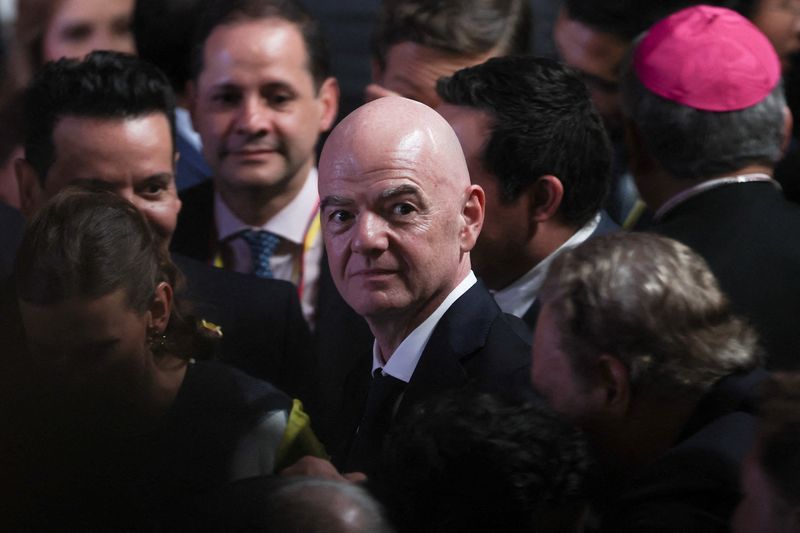
A significant fissure has emerged within Asian football governance as Qatar has openly contested the Asian Football Confederation's participation in a coordinated rebuke of FIFA President Gianni Infantino, exposing deeper questions about representation and decision-making processes at the continental level.
Qatar Football Association President Hamad bin Khalifa Al-Thani dispatched a formal letter to AFC President Sheikh Salman bin Ibrahim Al Khalifa questioning the procedural legitimacy of the confederation's joint statement alongside UEFA and CONCACAF. The Arab nation's football chief contended that the AFC had not extended consultation to Qatar before releasing the three-confederation letter on Monday, which collectively demanded Infantino's resignation and condemned his failed attempt to introduce private investment into FIFA competitions.
The substance of Al-Thani's objection centres on governance protocol rather than mere disagreement with the AFC's position. In his correspondence, Al-Thani insisted that "a collective view must first be ascertained; it cannot be presumed, and it cannot be brought into existence by declaration," emphasising that no formal or informal consultation occurred with Qatar prior to publication. He further noted that the QFA received neither advance warning, draft text for review, nor opportunity to provide input before the AFC released the statement purporting to represent its 47 member associations.
This intervention signals a critical rupture within the AFC at a pivotal juncture in football's governance crisis. Infantino, who intends to seek reelection next year, has faced unprecedented coordinated opposition from the sport's three major continental confederations following his aborted scheme to privatise portions of World Cup commercial rights and generate approximately $4.2 billion through investor participation. The proposal prompted vigorous backlash across the football world before Infantino reversed course.
However, the challenge from Qatar reveals that not all AFC members stand united against Infantino. On Thursday, just days before the AFC's critical letter, six heads of Arab national football associations—including Qatar and Morocco, co-host of the 2030 World Cup—publicly expressed support for the FIFA president. The six signatories issued a statement praising Infantino's efforts to expand football globally and strengthen the sport's community-building role, offering a direct counterweight to the confederation's institutional critique.
The signatories hold considerable institutional power within FIFA's governance architecture. Four of the six Arab federation leaders—Al-Thani, Egypt's Hany Abo Rida, Morocco's Fouzi Lekjaa, and Mauritania's Ahmed Yahya—serve as FIFA Council members, positions that grant them direct voting power in FIFA's decision-making structures. This concentration of influence among the Arab contingent adds strategic weight to their defence of Infantino and complicates the AFC's apparent consensus.
The AFC itself has maintained silence regarding Qatar's challenge, declining to comment when approached by media outlets. This reticence suggests either reluctance to amplify internal discord or uncertainty about how to respond to Al-Thani's pointed questions regarding consultation procedures and the confederation's mandate to speak on behalf of all members. The non-response leaves unresolved the procedural questions Al-Thani raised about whether the AFC followed proper protocols in issuing its statement.
For Malaysian readers and Southeast Asian observers, this dispute carries immediate relevance. The AFC encompasses ten Southeast Asian nations, many of which have not publicly aligned with either the confederation's institutional position or the Arab nations' defence of Infantino. The disagreement suggests that smaller AFC members may find their voices marginalised in high-level football governance decisions, with powerful contingents like the Arab bloc or the AFC bureaucracy potentially determining policy without full consultation.
The broader context involves FIFA's ongoing institutional crisis and questions about the organisation's commercial direction under Infantino's leadership. His privatisation proposal, while ultimately abandoned, had alarmed confederations and national associations concerned about FIFA's prioritisation of investor returns over the sport's development globally, particularly in emerging markets. The three confederations' joint letter explicitly framed their concerns around protecting football's integrity and ensuring equitable distribution of resources across all regions.
Yet Qatar's intervention demonstrates that opposition to Infantino is not universal, particularly among wealthier national associations that have benefited from FIFA's investment in Gulf-region football development. Qatar itself hosted the 2022 World Cup and maintains significant financial resources within Asian football. Its willingness to challenge the AFC's authority suggests that the Qatari federation views Infantino's leadership as aligned with its interests, or at minimum, as preferable to the uncertainty any replacement might introduce.
The procedural dispute also raises fundamental questions about how continental confederations exercise their nominal authority. Al-Thani's demand for transparency regarding "what consultation had taken place and on what basis" the AFC considered itself authorised to speak collectively reflects legitimate governance concerns. In democratic sports systems, member associations theoretically retain the right to participate in confederation decisions affecting their interests, yet the mechanism for ensuring meaningful participation remains opaque.
Moving forward, this clash will likely influence how the AFC navigates its relationship with FIFA during Infantino's reelection campaign. If internal AFC divisions prove sufficiently severe, the confederation's collective voice in FIFA matters could weaken considerably. Conversely, if the AFC leadership manages to construct broader consensus around specific governance reforms or accountability measures, it could regain institutional authority regardless of individual member objections.

