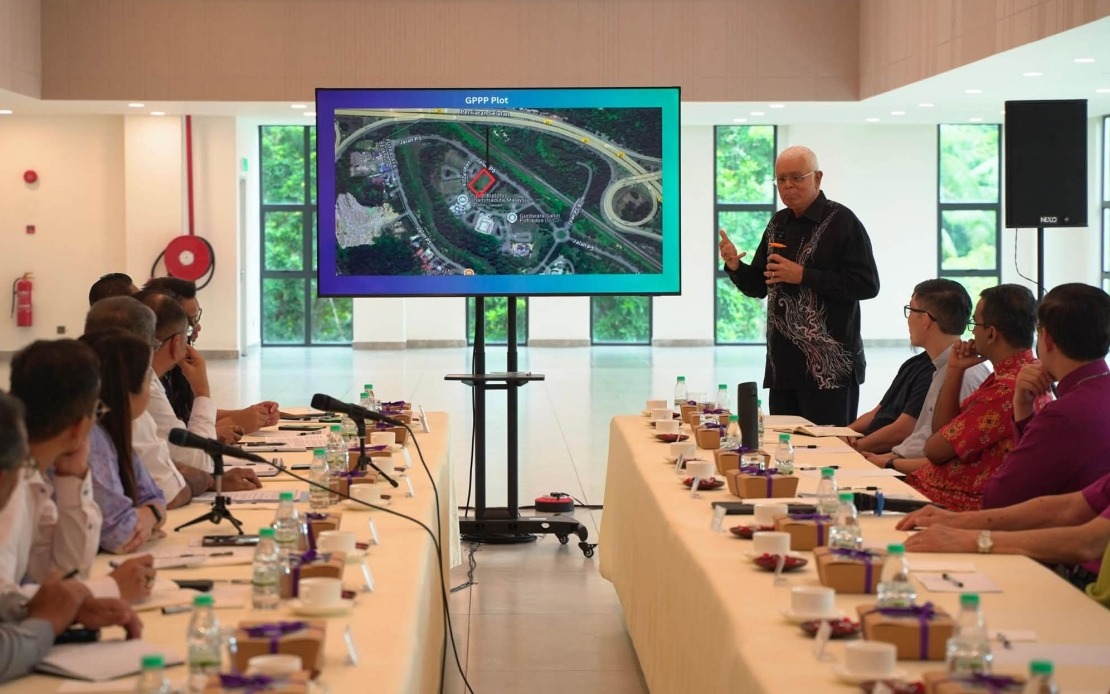
Malaysia's federal government has been systematically planning dedicated spaces for non-Muslim religious communities in Putrajaya's Precinct 20 since 2013, according to National Unity Minister Datuk Aaron Ago Dagang. The initiative represents a deliberate urban design strategy that prioritises religious pluralism and communal coexistence within the nation's administrative capital, reflecting broader policy commitments to interfaith harmony at the federal level.
During a recent visit to the newly established Prince of Peace Church, Aaron and Minister in the Prime Minister's Department (Federal Territories) Hannah Yeoh underscored the government's commitment to providing appropriate physical infrastructure for Malaysia's diverse religious communities. The minister characterised this approach as more than administrative planning, positioning it instead as a manifestation of inclusive governance that respects the constitutional rights of citizens to practise their faiths peacefully. This framing carries particular significance given ongoing debates about religious freedom and minority protections in Malaysia's context.
The designation of Precinct 20 as a deliberate interfaith zone aligns with Policy 17 of the Putrajaya Structure Plan 2050, which explicitly aims to develop an inclusive and compassionate community. The policy emphasises mutual respect and harmonious coexistence among residents, suggesting that religious diversity is not merely tolerated but actively accommodated within Malaysia's long-term urban vision for its administrative capital. This integration into formal planning documents indicates that interfaith considerations have become institutionalised within federal government planning frameworks.
The existing and planned religious facilities within Precinct 20 demonstrate the scope of this interfaith initiative. The Dhammaduta Malaysia Buddhist Centre has operated since 2023, while construction continues on the Gurdwara Sahib Putrajaya, Dewi Sri Lalithaambigai Alayam Hindu temple, and San Qing Taoist Temple. Additionally, a dedicated site has been reserved for a Roman Catholic church, indicating representation across major religious communities present in Malaysia. This diversity of denominations reflects the complexity of Malaysia's religious landscape and suggests government recognition of multiple minority faith communities requiring accessible worship spaces.
According to the National Unity Ministry, Precinct 20 holds potential to function as a genuine interfaith hub rather than simply a geographic concentration of worship sites. The concept extends beyond providing individual places of worship to creating spaces for inter-community interaction and dialogue. This ambition reflects contemporary urban planning approaches that recognise religious and cultural diversity as potential sources of social cohesion when deliberately fostered through thoughtful spatial design and institutional support.
The timing of this announcement connects to the Harmoni MADANI initiative, launched by the National Unity Ministry in 2024. This programme seeks to strengthen the concept of "Understand, Respect, Accept and Celebrate" among Malaysia's multireligious society, suggesting that Precinct 20 functions as a physical manifestation of broader federal policy objectives. The integration of urban planning with national unity initiatives demonstrates an attempt to translate abstract commitments to religious harmony into concrete infrastructure and community spaces.
For Malaysia's minority religious communities, the formalisation of dedicated worship spaces carries practical and symbolic significance. Access to adequate facilities for religious practice remains an ongoing concern, particularly for communities including Buddhists, Hindus, Sikhs, and Christians who have historically faced challenges in securing land or resources for place worship in various localities. Precinct 20's development potentially establishes a model for integrating minority religious infrastructure into national capital planning, with implications for how religious pluralism might be accommodated in other major urban developments.
The initiative also reflects evolving government messaging around national unity and social cohesion. Rather than emphasising religious separation or minimal accommodation of minorities, the framing emphasises mutual understanding and strengthened community bonds through deliberate interfaith engagement. This rhetorical shift suggests recognition that managing religious diversity constructively requires active facilitation rather than passive neutrality. Whether this approach translates into sustained institutional support and genuine community engagement beyond the initial development phase remains a question for monitoring.
From a Southeast Asian perspective, Malaysia's approach to designating interfaith urban zones contributes to regional conversations about religious accommodation within diverse Muslim-majority democracies. The model of deliberate spatial planning for minority religious communities could inform policy discussions in neighbouring countries navigating similar questions about religious pluralism and urban development. The success or challenges encountered in Precinct 20's implementation may offer lessons relevant across the region.
The practical realisation of this interfaith hub will depend on several factors including adequate resourcing, community engagement initiatives, and sustained political commitment beyond the current administration. The presence of both religious facilities and designated interaction spaces suggests ambitions extending beyond mere tolerance toward active promotion of interfaith dialogue. Monitoring whether these spaces genuinely facilitate intercommunal understanding or remain primarily functional infrastructure will be instructive for assessing the depth of Malaysia's commitment to religious pluralism in urban contexts.

