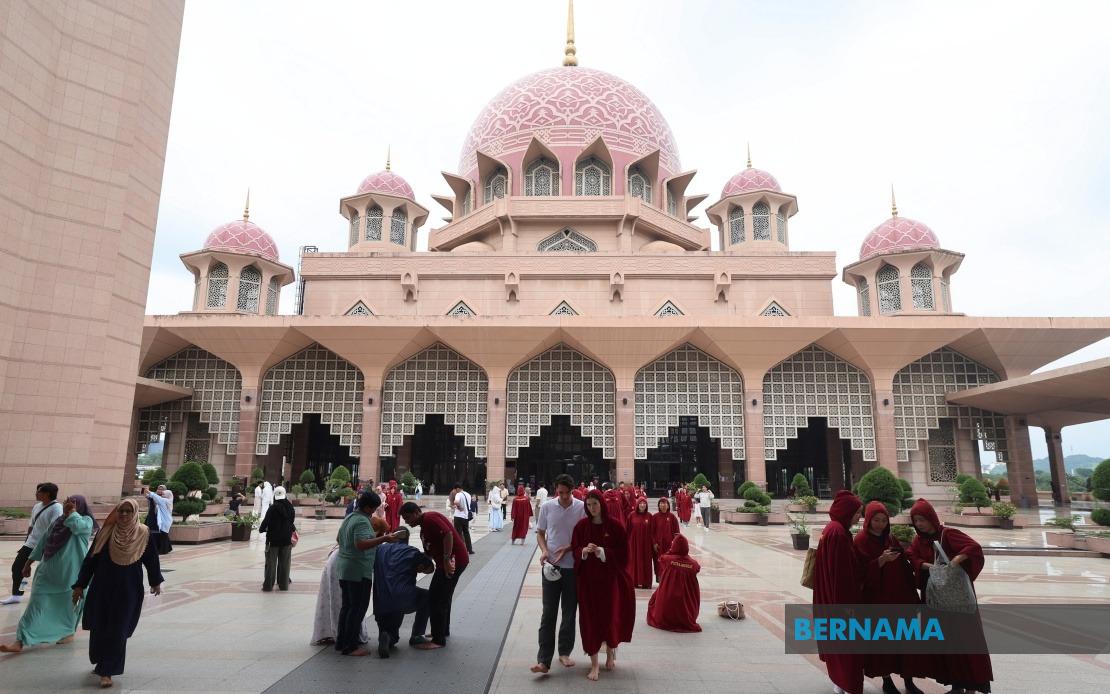
The Putra Mosque in Putrajaya is preparing to receive roughly 5,000 guests from Malaysia and abroad for the country's observance of Maal Hijrah 1448H/2026M, a significant Islamic calendar milestone marking the Prophet Muhammad's migration. The gathering represents one of the nation's foremost official celebrations of this important religious occasion, bringing together government leadership, diplomatic figures, and religious scholars under one roof to commemorate an event that fundamentally shaped Islamic history and civilisation.
Sultan of Perak Sultan Nazrin Shah will preside over the ceremonial proceedings, lending the occasion the gravitas of royal patronage. Alongside him, both Deputy Prime Ministers Datuk Seri Ahmad Zahid Hamidi and Datuk Seri Fadillah Yusof are confirmed attendees, alongside numerous Cabinet ministers, international diplomatic envoys, heads of federal departments, and senior administrative officials. This broad representation of Malaysia's political and bureaucratic establishment underscores the government's commitment to honouring the Islamic calendar and its spiritual significance to the Muslim-majority nation.
A centrepiece of the celebration will be the Sultan's formal address to the assembled gathering, which will then transition into the presentation of the National and International Tokoh Maal Hijrah Awards. These accolades carry substantial prestige within Malaysia's Islamic community, as they acknowledge individuals who have demonstrated exceptional scholarship in their disciplines, maintained exemplary personal conduct, and made demonstrable contributions to advancing Islam both domestically and on the global stage. The recognition programme essentially identifies role models and intellectual leaders whose work has enriched Islamic thought and practice.
The Department of Islamic Development Malaysia (JAKIM) deliberately curated this year's thematic approach to reconnect contemporary Muslims with the spiritual essence of the Hijrah itself. Rather than treating the occasion as merely a calendar observance, the theme encourages believers to internalise the profound lessons embedded in Prophet Muhammad's migration from Mecca to Medina. That pivotal journey symbolises not merely physical relocation but represents a transformative moment when nascent Islamic civilisation began its structured development, establishing governance systems, community frameworks, and intellectual traditions that would subsequently influence world history.
A notable innovation within this year's programme is the introduction of the Tausiyyah @ Maal Hijrah initiative, which commenced at the mosque prior to the main ceremony. This structured reflection programme centres on tadabbur—a Quranic practice of contemplative analysis—encouraging participants to extract deeper meaning from sacred verses. Beyond passive listening to accomplished qari performing recitations, attendees engage in facilitated discussion examining the textual meanings, spiritual wisdom, and practical guidance embedded within Quranic passages. This pedagogical approach bridges the gap between ceremonial observance and applied spirituality, helping Muslims translate religious knowledge into concrete behavioural and ethical modifications within their personal and professional contexts.
The deliberate pedagogical dimension of this year's celebration reflects a broader institutional shift toward making religious commemoration intellectually substantive rather than ceremonially superficial. Rather than confining Maal Hijrah observance to speeches and formal recognition, JAKIM has constructed a multi-layered programme that educates, inspires reflection, and facilitates knowledge transmission among diverse participant cohorts. This approach recognises that meaningful religious engagement requires intellectual participation and personal introspection alongside ceremonial formality.
Following the primary celebrations at Putra Mosque, the itinerary extends into subsequent programming designed to amplify the impact of the observance. The National and International Tokoh Maal Hijrah Lecture 1448H/2026 will take place at the Putrajaya Islamic Complex Auditorium, commencing at 9 am the day following the main ceremony. This forum provides the award recipients themselves with a platform to disseminate their accumulated knowledge and professional experiences to audiences of academics, religious scholars, policymakers, and lay Muslims interested in deepening their understanding of Islamic scholarship and practice.
For Malaysia's broader Islamic community and international observers, this multi-day commemoration signals the nation's sustained commitment to integrating Islamic principles into national consciousness while maintaining openness to international participation. The inclusion of foreign representatives and international award recipients demonstrates an approach to Islam that neither isolates nor dilutes local practice, but rather positions Malaysia as a bridge between Islamic tradition and contemporary global engagement. This posture carries particular relevance for Malaysia's identity as a Muslim-majority democracy navigating between spiritual commitment and pluralistic governance.
The Maal Hijrah celebration ultimately functions as more than ceremonial observance; it represents an opportunity for Malaysia to reflect collectively on principles of migration, transformation, and civilisational building that remain pertinent across centuries. By framing the Hijrah as a catalyst for positive societal change and intellectual advancement, Malaysian Islamic institutions position historical religious events as sources of contemporary guidance applicable to modern challenges including social cohesion, ethical governance, and community development. For Malaysian Muslims and the international guests assembled in Putrajaya, the celebration provides a moment to reconnect with foundational Islamic principles while considering their relevance to present-day aspirations and future possibilities.