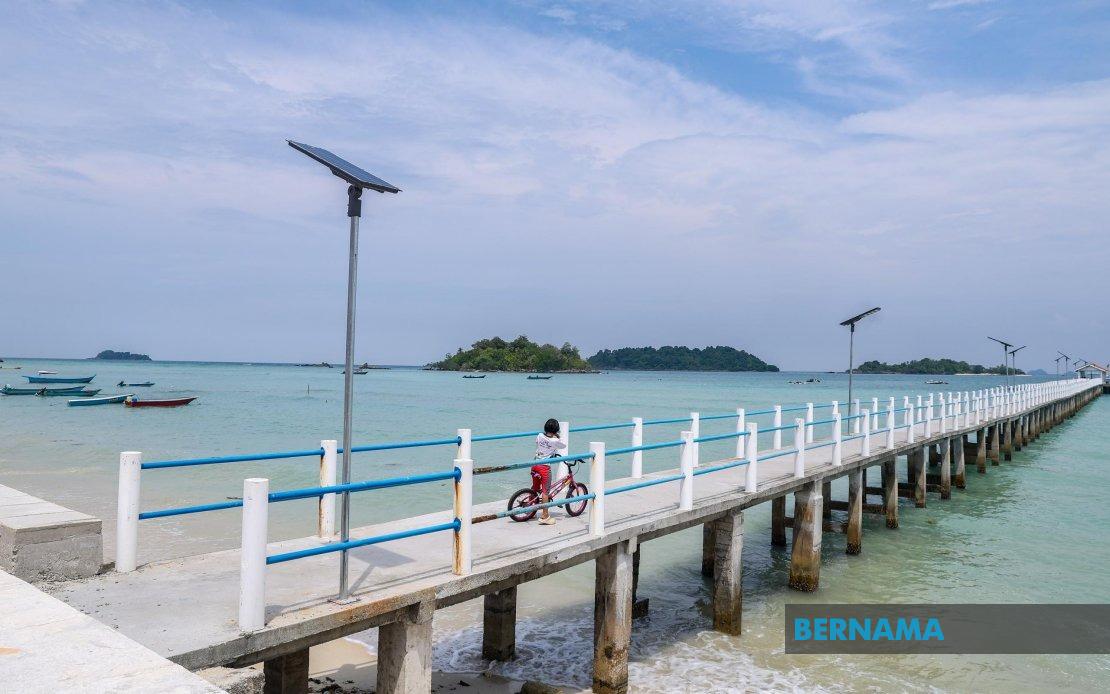
The small island community of Pulau Tinggi in Mersing faces a critical moment as voters across Johor prepare to elect a new state government this Saturday. Residents of two villages on the island have made clear their expectations: they want their elected representative to tackle the crumbling infrastructure and welfare challenges that have festered for years, threatening both their livelihoods and quality of life.
The Kampung Pasir Panjang jetty stands at the centre of these concerns. What was once a vital hub for tourists and local fishermen has deteriorated significantly since around 2017, forcing the island's residents into a precarious situation. Although some still use the aging facility out of necessity, safety has become an increasingly pressing worry. The jetty upgrade has become symbolic of the broader neglect that islanders feel they have endured, relegated to the margins of development planning despite their contributions to the region's fishing industry and tourism potential.
Paralleling the infrastructure crisis is an acute housing problem afflicting the island's poorest residents. In Kampung Tanjung Balang, the majority population consists of B40 fishermen—those earning below RM4,000 monthly—many of whom live in inadequate or incomplete homes. The gap between housing conditions and basic standards of dignity has widened, leaving families to manage their own repairs with severely limited resources. This vulnerability reflects broader patterns across Malaysian fishing communities, where economic marginalisation intersects with infrastructural abandonment.
Kampung Pulau Tinggi chief Rossana Hussin has emerged as the voice articulating these grievances to the incoming administration. Since assuming her role in 2024, she has worked to document and formalise long-standing complaints. In March, applications for both the jetty upgrade and housing assistance reached the Mersing District Office and reportedly received positive feedback—a development that has kindled hope among residents that action might finally be forthcoming. Yet the gap between positive reception and actual implementation remains a chasm familiar to rural and island communities across Malaysia.
The island's demographic realities underscore the urgency. Pulau Tinggi is home to roughly 150 people split across the two villages. This small population size has likely contributed to their marginalisation in resource allocation discussions. Larger, more politically vocal constituencies naturally command attention, leaving island communities to advocate repeatedly for basic services that mainland areas take for granted. Rossana's advocacy reflects a determination to ensure that smallness of population does not translate to smallness of entitlement.
Beyond immediate infrastructure needs lies a deeper existential challenge: economic viability and demographic sustainability. Mariam Mamat, an 85-year-old elder, articulated a concern resonating throughout rural and island Malaysia—the steady exodus of younger people seeking opportunities elsewhere. Pulau Tinggi has experienced this brain drain as families relocated to urban employment centres and Felda schemes, gradually hollowing out the community. What remains is an aging population, fewer hands for fishing, and declining economic activity that makes the island's future uncertain.
Revitalising tourism emerges as a potential lifeline, according to residents. An island with better infrastructure, accessible jetties, and stable communities could attract visitors and generate employment for younger generations tempted to leave. However, tourism development requires coordinated investment, marketing, and planning—precisely the kind of comprehensive approach that island communities typically struggle to access. Without deliberate government intervention to position Pulau Tinggi as a destination within regional tourism circuits, the island risks further decline.
The timing of these demands coincides with the 16th Johor state election, in which approximately 2.7 million eligible voters will elect 56 state representatives on Saturday. The Tenggaroh state seat covers Pulau Tinggi, and residents are clearly signalling that they expect their representative to make island welfare a priority. This electoral moment offers leverage—candidates seeking votes must acknowledge grievances, and winning representatives carry a mandate to deliver on promises.
What makes the Pulau Tinggi situation particularly instructive for Malaysian policymakers is how it encapsulates several overlapping vulnerabilities: infrastructure decay, poverty concentration, demographic ageing, and economic stagnation. These challenges are not unique to this island but are replicated across dozens of small fishing villages and island communities throughout the peninsula and Sabah and Sarawak. If systemic approaches are not developed—approaches that coordinate jetty maintenance, housing assistance, and economic diversification—such communities will continue experiencing cyclical neglect.
The applications submitted in March represent a bureaucratic beginning, but residents recognise that submission does not guarantee action. Implementation requires sustained political will, adequate funding allocation, and coordination across multiple government levels. The incoming state representative will need to champion these applications actively, liaising with district authorities, state development bodies, and potentially federal agencies to unlock resources. Rossana's hope that the elected representative and relevant stakeholders will "coordinate efforts" reflects awareness that solutions demand systemic engagement rather than isolated interventions.
For Pulau Tinggi's residents, Saturday's election is not an abstract political exercise but a referendum on whether their voices will finally be heard. The jetty can be rebuilt, housing can be repaired, and tourism can be developed—but only if their new representative treats island welfare with the seriousness that years of deterioration demand. As Malaysia continues developing, ensuring that small, geographically isolated communities are not left behind becomes not merely a matter of equity but of national cohesion and sustainable development.

