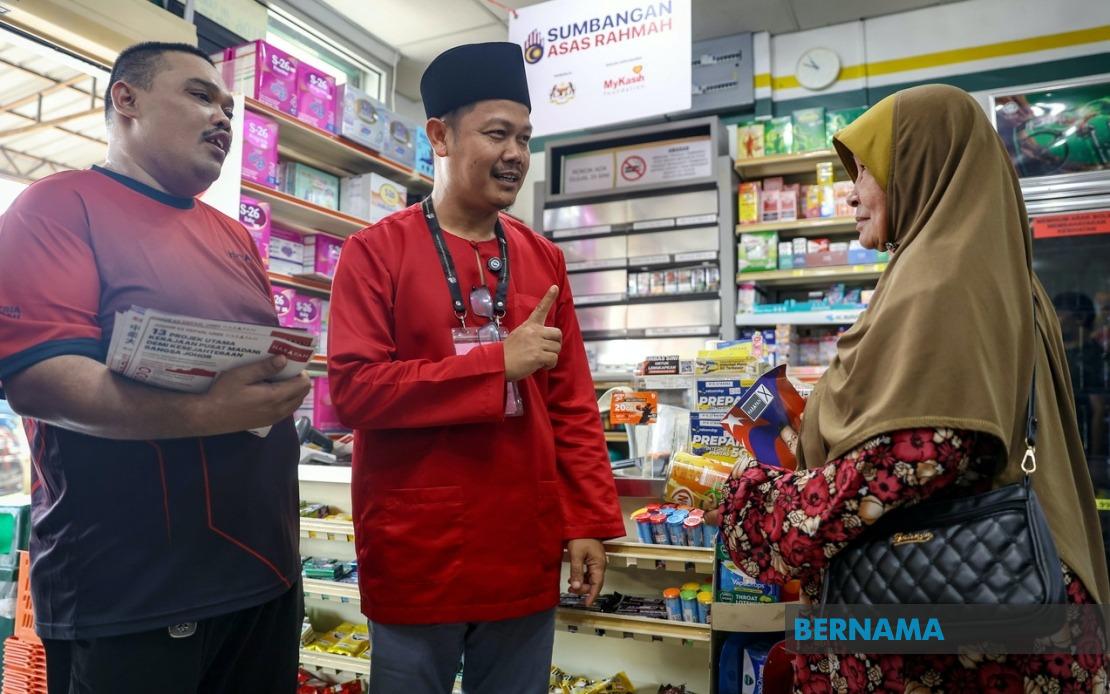
The July 11 Johor state election contest for Pulai Sebatang crystallises the broader ideological divide between Pakatan Harapan and Barisan Nasional, with the rural-maritime constituency emerging as a microcosm of competing governance philosophies. Pakatan Harapan candidate Haniff @ Ghazali Hosman, 46, is mounting a challenge centred on unlocking the area's purported latent economic potential through balanced, inclusive growth, while incumbent BN representative Hasrunizah Hassan emphasises the tangible service delivery and welfare programmes implemented during her first term representing the constituency since 2022.
Handling the Pulai Sebatang state seat requires navigating a complex local economy where traditional livelihoods coexist uneasily with pressures for modernisation. Haniff's campaign narrative frames the constituency as possessing underexploited assets—encompassing Pontian town and positioned strategically near emerging economic corridors in the broader Johor development landscape. His pitch to voters centres on attracting calibrated private and public investment that would generate employment and stimulate commercial activity without displacing or marginalising the fishing and agricultural communities that remain economically vital to thousands of households. This balancing act represents a recurring challenge for opposition parties in rural and semi-rural Malaysian constituencies, where developmental ambitions must be carefully recalibrated to acknowledge existing economic dependencies.
The candidate's previous electoral history provides context for understanding his current positioning. Haniff contested the Pontian parliamentary seat in 2013 and the neighbouring Benut state seat in 2022, suggesting a sustained investment in the broader Pontian administrative zone and accumulating familiarity with voter sentiment in the region. His campaign methodology reflects contemporary opposition party practice, emphasising granular grassroots engagement through walkabouts and household visits rather than relying predominantly on mass rallies or media projection. Haniff has flagged two specific local grievances as campaign focal points: compensation mechanisms for fishermen in the Pontian Besar locality and chronic drainage infrastructure deficiencies causing agricultural inundation in Parit Datuk farming areas. These are not abstract policy positions but material concerns affecting household incomes and agricultural productivity.
Pakatan Harapan's broader strategic calculation in Pulai Sebatang rests partly on replicating its 2018 performance in the constituency, when the coalition achieved notable gains across Johor despite retaining far fewer seats than subsequently hoped. Haniff has indicated that feedback during his extensive community engagements has been encouraging, though electoral momentum in mid-year Johor contests historically proves volatile. The constituency's voter composition—encompassing both urban Pontian town residents and dispersed rural populations—requires messaging flexibility that resonates across divergent economic interests and demographic profiles.
Hashrunizah's incumbency presents a formidable structural advantage, particularly regarding infrastructure delivery and welfare programme visibility. The BN representative has consistently highlighted the hospital expansion project at Pontian Hospital as a priority concern raised repeatedly during her campaign interactions with constituents. Procurement processes for the new hospital block have reportedly commenced following formal approval, positioning infrastructure development as an achievement-in-progress rather than an empty promise. This tangible project symbolises the broader BN campaign argument: governance produces measurable outcomes accessible to ordinary citizens through their public health, transportation, and social welfare systems.
The scale of village road infrastructure work underscores a significant portion of Hasrunizah's local governance agenda. Of 75 village road projects identified as priorities since her 2022 election, 25 remain incomplete, representing both unfinished business and ongoing commitment. This itemised approach to constituency service—cataloguing specific infrastructure projects and tracking completion rates—characterises how BN incumbents typically defend their records in rural constituencies. Whether voters perceive incomplete projects as evidence of sustained commitment or as illustration of sluggish implementation remains a crucial variable in determining the contest's outcome.
Welfare programme continuity constitutes another pillar of Hasrunizah's re-election platform. The 'Kasih Johor' assistance initiative, housing support schemes, and first-home buyer programmes represent state-level social safety net mechanisms that directly affect household financial circumstances across income strata. Opposition voters sometimes regard such programmes as paternalistic rather than transformative, yet their material benefit to recipients—particularly lower-income households—generates substantial electoral loyalty. Hasrunizah's strategy essentially argues that demonstrated delivery of tangible welfare support merits continuation of her mandate, particularly among voter cohorts with limited ability to absorb development-related economic disruptions.
BN's higher-profile party figures have invested visibly in the Pulai Sebatang campaign, reflecting the constituency's significance within the broader Johor electoral geography. Pontian Member of Parliament Datuk Seri Ahmad Maslan attended the Johor TVET MARA Roadshow alongside Hasrunizah, signalling alignment between parliamentary and state-level BN machinery and demonstrating that the federal government's development initiatives receive coordination with state-level electoral objectives. Ahmad's characterisation of Hasrunizah and Benut BN candidate Datuk Mohd Sumali Reduan as individually capable candidates possessing educational credentials and demonstrable track records reflects a personalised endorsement strategy, though such endorsements carry only limited independent persuasive weight.
The campaign timeline compresses significantly after early voting on July 7, meaning final messaging and voter contact must intensify substantially in the intervening days. Traditional campaign methodologies—house-to-house engagement, community forums, informal networks—retain considerable electoral salience in constituencies like Pulai Sebatang, where media saturation and digital outreach penetration remain lower than urban centres. Hasrunizah's integration of conventional walkabouts with social media communication attempts to bridge demographic communication divides, though the efficacy of digitally-mediated political messaging in semi-rural constituencies historically demonstrates inconsistent results.
The Pulai Sebatang contest reflects broader Johor electoral dynamics, where BN retains structural advantages through administrative capacity and welfare programme distribution, yet where opposition parties continue demonstrating capacity to mobilise voters around alternative developmental visions and grievance narratives. Haniff's emphasis on managing growth inclusively—preserving traditional livelihoods while attracting investment—represents a sophisticated articulation of sustainable development principles adapted to local conditions. Whether such messaging resonates sufficiently among diverse voter constituencies to dislodge an incumbent BN representative who has invested substantially in local infrastructure and welfare delivery remains uncertain until July 11.

