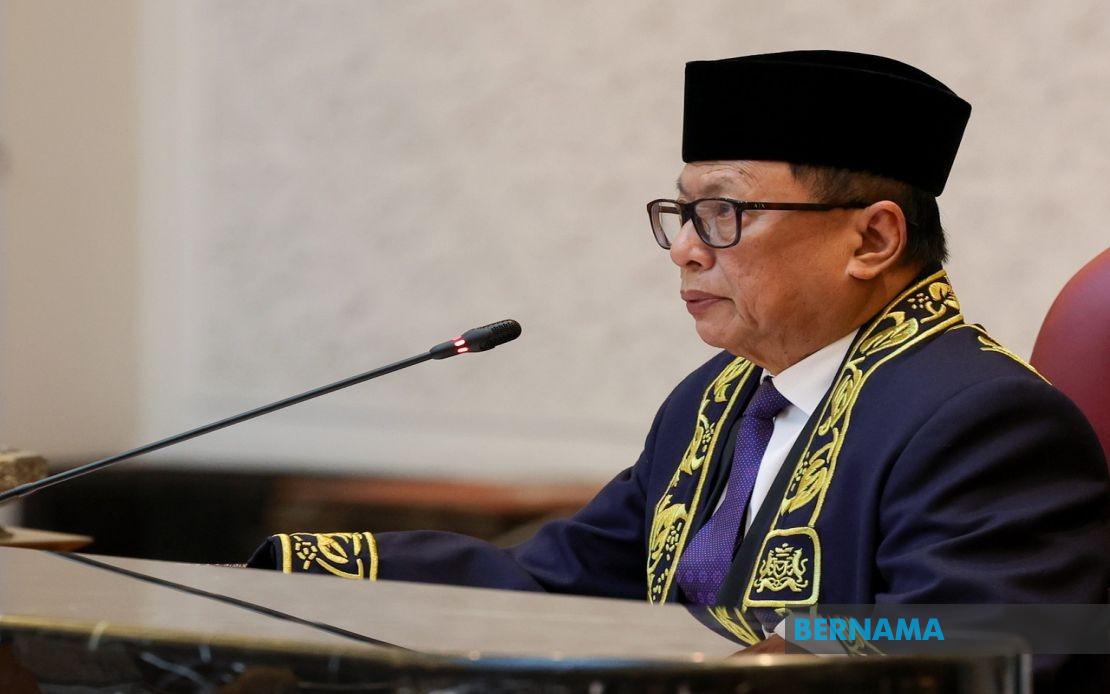
Datuk Dr Mohd Puad Zarkashi, a long-serving UMNO Supreme Council member representing Rengit in the state assembly, announced his immediate resignation from the party on June 25, signalling a significant rift within Johor's ruling establishment. The decision marked a formal break with the political machinery that has defined Malaysian politics for decades, particularly within Peninsular Malaysia's most economically vital state. His departure represents one of the more high-profile defections from a party facing internal cohesion challenges as it navigates its role within the broader Barisan Nasional coalition.
In a public Facebook statement, Puad Zarkashi framed his exit as a matter of principle rather than personal grievance, emphasising that the move was entirely voluntary and undertaken to preserve his intellectual independence. He characterised his departure as an exercise in "political courage," suggesting that remaining within UMNO would have constrained his ability to articulate alternative perspectives without facing accusations of disloyalty. This framing is significant for Malaysian politics, where party discipline traditionally demands conformity on sensitive issues, particularly those affecting internal leadership dynamics and policy direction.
The crux of Puad Zarkashi's grievance centres on his assessment of Johor Chief Minister Onn Hafiz, whom he characterised as a "pak turut" or yes-man unwilling to exercise genuine leadership autonomy. According to Puad Zarkashi, this dependency has effectively transformed Johor UMNO into what he termed a "tethered puppet," suggesting external control or excessive influence from party headquarters undermining the state leadership's decision-making capacity. This accusation carries particular weight given Puad Zarkashi's extensive experience within party and government hierarchies, lending credibility to his observations about internal power dynamics and the delegation of authority.
Puad Zarkashi's decision to step aside from contesting the Rengit seat in the forthcoming Johor state election preceded his formal departure announcement. He had initially proposed that younger candidates be given opportunity to contest, citing generational renewal within the party. However, his subsequent revelations about alleged irregularities in Barisan Nasional candidate selection processes suggested his withdrawal was driven by deeper dissatisfaction with how UMNO's institutional mechanisms were functioning under current leadership. The distinction between these narratives provides insight into escalating tensions within the state's political establishment.
The former Batu Pahat Member of Parliament carries substantial credentials that lend weight to his criticisms. He served as Deputy Education Minister from 2009 to 2013 and directed the Special Affairs Department (JASA) between March 2015 and April 2018, positions that provided him intimate knowledge of how power operates within Malaysia's federal system. Additionally, his tenure as Johor State Legislative Assembly Speaker positioned him to observe governance dynamics at state level, accumulating practical experience in legislative procedures and inter-party negotiations. This combination of federal and state-level exposure distinguishes him from critics lacking comparable institutional experience.
Puad Zarkashi's parliamentary record illustrates both his electoral competitiveness and recent vulnerabilities. In the 12th General Election, he captured the Batu Pahat constituency with a majority of 12,968 votes, demonstrating personal political appeal within his traditional stronghold. However, when he contested the same seat during the 13th General Election, he suffered defeat to PKR's Datuk Mohd Idris Jusi by a significantly narrower margin of 1,524 votes, indicating shifting electoral sentiment and the increasingly competitive landscape of Malaysian politics even in traditionally secure constituencies.
The timing of his resignation carries implications for UMNO's internal cohesion as it prepares for the Johor state election. Defections by senior figures, particularly those with established party credentials and government experience, often signal underlying organisational problems that extend beyond personality conflicts. Puad Zarkashi's departure may embolden other discontented members to voice grievances previously suppressed by party discipline, potentially creating momentum for broader organisational reconfiguration within Johor UMNO's leadership structure and decision-making protocols.
For Malaysian political observers, Puad Zarkashi's exit illustrates persistent tensions within UMNO regarding centralised authority versus state-level autonomy. The party has historically grappled with balancing federal headquarters' strategic direction against the operational requirements of state governments facing local political dynamics and electorate demands. His accusations suggest this structural tension remains unresolved, with state leaders constrained in their capacity to exercise substantive governance choices when those choices conflict with party headquarters preferences or broader coalition considerations.
The implications for Johor's political landscape extend beyond UMNO's internal dynamics. If Puad Zarkashi's allegations about candidate selection irregularities prove substantive, they may undermine the electoral legitimacy of Barisan Nasional's representation in the upcoming state election. Voters expect transparent, merit-based processes for candidate selection, and perception of arbitrary or politically motivated interventions erodes public confidence in the coalition's commitment to democratic governance standards. This trust dimension carries electoral consequences that party strategists must navigate carefully.
Puad Zarkashi's positioning as a critic rather than an outright antagonist remains noteworthy. He explicitly stated that UMNO remains a platform he respects and that his criticisms aim to expose problems before they intensify. This distinction matters because it suggests his departure represents an attempt to preserve UMNO's institutional integrity rather than to undermine the party strategically for personal or factional advantage. Such positioning may facilitate future reconciliation should UMNO's leadership address the governance concerns he has articulated.
Looking forward, Puad Zarkashi's decision to remain politically active outside UMNO's formal structure creates uncertainty regarding his future allegiances and whether his defection portends broader organisational shifts within Johor's political establishment. His extensive experience and established political network mean he retains potential influence over other functionaries considering their own organisational commitments. For UMNO leadership, particularly at state level, managing the fallout from his departure while addressing the substantive governance concerns he has raised represents an immediate organisational challenge requiring strategic attention.

