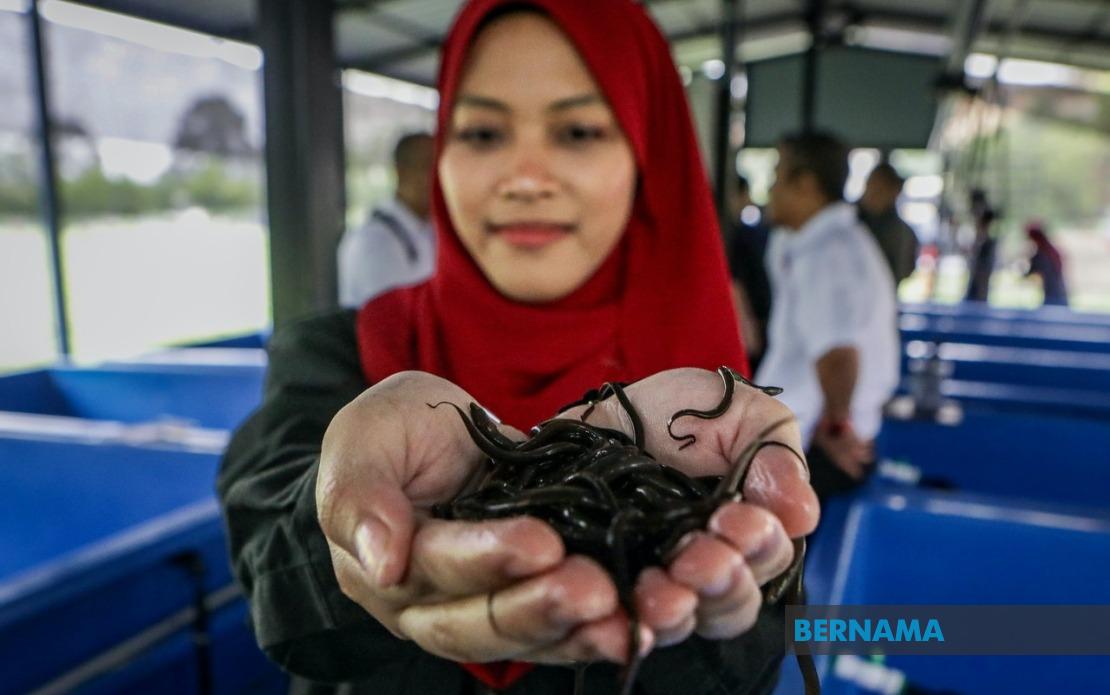
The Projek Penternakan Belut Komersial Geran Sejati MADANI, officially launched in Arau, Perlis, represents a significant milestone in how Malaysia's polytechnic system is expanding its mandate beyond classroom instruction to directly catalyse community economic development. Politeknik Tuanku Syed Sirajuddin (PTSS) has positioned itself as the implementing institution and technical backbone for this initiative, which brings together government, educational institutions, and grassroots communities in a structured effort to establish sustainable aquaculture enterprises that promise immediate income generation for rural families.
The underlying philosophy driving this venture reflects a deliberate shift in how Technical and Vocational Education and Training (TVET) institutions conceptualise their societal contribution. Rather than functioning solely as credential-granting bodies that prepare students for employment, PTSS is demonstrating that polytechnic expertise, infrastructure, and instructional capacity can be marshalled to address localised economic challenges. Director Khairul Anuar Ishak articulated this expanded role during the launch, emphasising that the institution's involvement validates the principle that TVET knowledge represents a tangible public asset capable of generating multiplier effects throughout surrounding communities when properly deployed.
The project's architecture reflects careful planning and structured implementation. PTSS assumes full management responsibility across a six-month operational window, handling every dimension from initial infrastructure development through equipment procurement, seed acquisition, comprehensive staff training, and financial management protocols. This comprehensive stewardship approach means that participating communities benefit not merely from receiving eel fingerlings, but from systematic capacity-building that establishes the technical and administrative foundations necessary for long-term enterprise viability. The RM500,000 budget allocation across five community groups demonstrates meaningful resource commitment commensurate with the ambition of the initiative.
Each participating community receives 15,000 eel seeds, representing the material foundation for what projections suggest will mature into approximately 5,000 kilogrammes of marketable eels following a growth cycle spanning five to six months. These productivity estimates are grounded in established aquaculture science, and the contract farming arrangement through which the harvest reaches markets provides participating farmers with predictable sales channels and price stability. This controlled marketing mechanism distinguishes the project from unstructured agricultural ventures and reflects strategic thinking about the vulnerabilities that typically undermine smallholder farming initiatives in Malaysia.
The experiential learning dimension proves particularly significant for PTSS students engaged with the project. Rather than absorbing aquaculture principles through textbooks and classroom demonstrations, learners encounter real production challenges, economic variables, and community stakeholder dynamics within an authentic entrepreneurial context. This pedagogical approach transforms the polytechnic classroom into an extended laboratory where theoretical frameworks encounter practical complexity, potentially producing graduates with substantially deepened understanding of agribusiness realities compared to conventionally trained counterparts.
The collaborative framework deserves attention as an indicator of evolving governance approaches within Malaysia's development infrastructure. The involvement of the Prime Minister's Department's Implementation Coordination Unit (ICU JPM), represented by Azlan Abdul Samat as director of the Perlis Federal Development Office, situates this project within high-level institutional commitment to localised development objectives. This interagency alignment suggests that the initiative accessed planning, coordination, and resource allocation through national development frameworks rather than operating as an isolated institutional experiment, thereby increasing its credibility and scalability potential.
Within the context of rural economic diversification across peninsular Malaysia, the eel farming focus deserves consideration. Aquaculture represents a capital-efficient entry point for landholding communities seeking to supplement income from traditional agriculture, particularly for smallholders lacking the scale required for competitive crop production. The relatively short production cycle—five to six months from fingerling to harvest—enables rapid capital turnover and reduces exposure to extended pre-revenue investment periods that typically constrain smallholder participation in agricultural value chains. For Perlis specifically, an inland state with substantial rural populations and increasing agricultural modernisation pressures, the creation of non-crop income streams addresses genuine livelihood diversification needs.
The sustainability architecture embedded within the project structure reflects matured thinking about development intervention effectiveness. Rather than delivering a completed enterprise and withdrawing, PTSS will progressively transfer management and operational responsibility to community stakeholders throughout the six-month implementation phase. This graduated handover approach acknowledges that sudden disengagement by implementing institutions frequently precipitates enterprise collapse once external support withdraws. By embedding knowledge transfer, financial management capability, and technical problem-solving expertise within community structures before formal project conclusion, the initiative maximises the probability of post-implementation enterprise continuity and autonomous operation.
For Malaysia's broader TVET ecosystem, this Perlis initiative establishes a replicable model for polytechnic engagement with community economic development. The portfolio of required capabilities—agribusiness technical expertise, project management competency, community facilitation skills, and capacity-building instruction—largely aligns with existing polytechnic strengths and institutional missions. Successful demonstration of this model in Perlis creates precedent and operational templates that other polytechnics might adapt to address distinct community-identified needs, whether in aquaculture, food processing, manufacturing skills development, or digital economy integration across their respective regions.
The economic implications for participating communities extend beyond direct farming income to encompass downstream employment generation and value-chain integration opportunities. Communities producing substantial eel volume may develop associated enterprises—processing facilities, logistics arrangements, or market-front operations—that employ additional household members and capture value from multiple value-chain segments. The contract farming mechanism, while providing price stability, simultaneously establishes linkages with commercial distribution networks that participating farmers might otherwise access only through intermediaries offering substantially less favourable terms.
From a policy perspective, this project exemplifies how strategic institutional deployment aligns with Malaysia's Economic Transformation Programme objectives emphasising high-income agricultural development and rural modernisation. Rather than assuming that rural communities possess indigenous capacity to independently navigate the transition toward commercial aquaculture operations, the government and PTSS have recognised that deliberate institution-building and systematic capability transfer represent legitimate public sector functions. This represents mature understanding that market forces alone prove insufficient for achieving equitable distribution of opportunities across rural Malaysia's heterogeneous landscape.
The convergence of educational, economic, and social development objectives within this single initiative suggests that contemporary development thinking increasingly rejects artificial boundaries between sectors. PTSS simultaneously fulfills its instructional mandate by providing students with authentic experiential learning, advances community economic welfare through sustainable enterprise creation, strengthens regional development coordination across government agencies, and generates empirical evidence regarding the effectiveness of polytechnic-led intervention models. This multifunctional design efficiency should appeal to policymakers confronting resource constraints, as it achieves multiple societal outcomes through integrated institutional activity rather than requiring parallel, separately-funded initiatives addressing each objective independently.

